Skip to main content
Skip to footer
Skip to main content
Skip to footer

A movie night at home. You sit with your family on the couch, popcorn ready, lights dimmed. The movie starts… and suddenly you find that you can’t hear half of the dialogues because the voices are bouncing off the walls. You turn up the volume, but then the bass rumbles and the neighbors start tapping on the ceiling.
Sound familiar? That’s exactly the sign that your living room is missing acoustic panels.
But where to mount the panels to make them really work? Let’s see.
How do you recognize that a space needs panels?
At first everything seems perfect – beautiful interior, comfortable furniture, well-chosen lighting. Everything looks as it should.
But after a few minutes spent inside, something starts to go wrong. Sounds bounce off the walls, conversation sounds unnaturally loud, and the silence – instead of calming – becomes tiring. There is an intangible discomfort that is hard to name, but everyone feels it.
This is the signal that the acoustics in the room are not working as they should.
Fortunately, you don’t have to be an acoustician to notice this.
Sometimes you just need to listen to your environment.
Check the daily signals
At home:
– TV set louder than usual, and dialogues still sound unclear.
– A phone call from the living room reaches all the way to the bedroom.
– In the children’s room, play sounds like a small drum concert.
In the office:
– The voices of co-workers echo off the walls.
– Any sound from the open space is distracting and makes it difficult to focus.
– A meeting in the conference room ends with raised voices because no one can hear each other well.
If any of these examples sound familiar – it’s a sign that your space needs better acoustics
Signals in the office and public spaces
In open space, every phone call becomes a “shared” conversation for the entire floor.
In the conference room, participants must raise their voices to be heard.
The din in the restaurant is growing, and the waiter has to repeat orders.
These are classic symptoms of poor acoustics: lack of privacy, reverberation and rapid noise fatigue.
If you feel that sounds are circulating around the room instead of “disappearing” and echoing back, that’s the first sign that the space needs acoustic panels.
A simple test: clap your hands. If it echoes like an empty hallway, you know it’s time for acoustic panels.
Simple tests for the designer
It is not always necessary to immediately reach for specialized acoustic equipment.
In many cases, the first signals can be caught on their own using simple, home methods. Here are some ways that will help you quickly assess whether your interior needs acoustic improvement:
Clap test
This is the easiest way to judge the level of reverberation. Just clap your hands – if the echo lingers for a long time or you hear a characteristic “bounce” of sound, it means that the room has too much reverberation time. In a well-designed interior, the sound should sound short and soft.
The test of talking in half voice
Ask the other person to speak to you in half-voice from the opposite end of the room. If you have difficulty understanding the words or have to ask for repetition, it’s a sign that the sound waves are bouncing around and making communication difficult.
Reverberation time reading
Architects and designers are increasingly using basic acoustic data already at the interior concept stage.
It is useful to know the approximate norms of reverberation time (RT60) – this is the average time it takes for sound to fade in a room:
- Offices: 0.6-0.8 s
- Conference rooms: 0.5-0.6 s
- Restaurants, lobbies and public spaces: 0.8-1.0 s
Too high a reverberation time causes echo and auditory fatigue, while too low a reverberation time causes unnatural “soundproofing” and a lack of acoustic energy.
Therefore, balance is the key – and well-chosen PET felt panels help achieve it without the need for complex interventions in the interior structure.
How does the felt acoustic panel work?
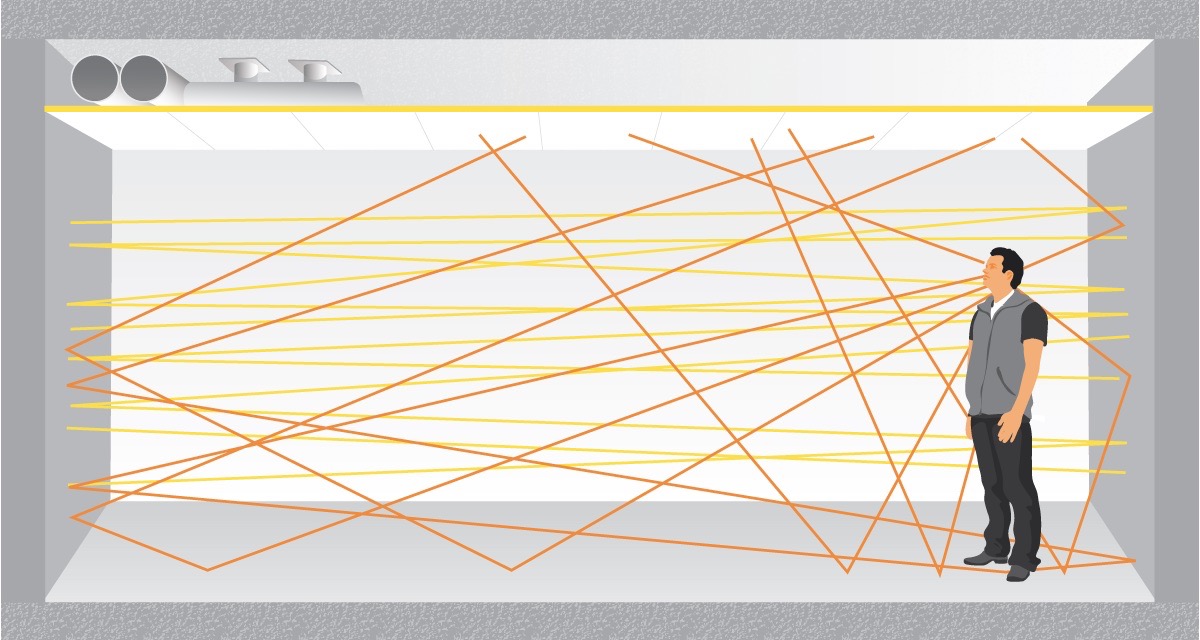
In the simplest terms: the acoustic panel does not stop sound like a wall, but absorbs it.
Compare it to an arrow that hits a haystack and disappears. This is how PET felt works – a dense structure, hundreds of fibers “catches” sound waves, disperses their energy into tiny particles, and dissipates its energy, turning the sound into thermal vibrations. You can’t physically feel it, but you can hear the difference – the echo disappears and the noise is reduced.
What does it look like in practice?
- On the ceiling – sound bouncing off the top (for example, in restaurants or open space) is absorbed by acoustic islands.
- On the walls – the side waves, which usually cause echo and “empty” reverberation, are extinguished.
- Panels with distance from the floor – act as bass traps, absorbing lower frequencies (such as the rumble of music in the living room or cinema room).
What benefits do we get from this?
It’s quieter, clearer, more pleasant. Conversations become natural, and the space stops tiring you after just a few minutes.
You could say that the acoustic panel acts like an “air filter,” only for sound. It doesn’t change the appearance of the interior, but it improves the acoustics of the interior in a way that you feel immediately.
Ceiling or walls? It depends on the space.
This is one of the most frequently asked questions by builders and designers: where is the best place to install acoustic panels – on the ceiling or on the walls?
There is no one-size-fits-all answer, as it all depends on the nature and function of the interior.
In rooms with high heights or hard surfaces (such as concrete, glass or tile), the sound bounces back more intensely and the echo is more noticeable. In such places, ceiling panels have the greatest effect – the ceiling is the first place from which sound waves return.
On the other hand, in smaller spaces where reverberation is less intense, but sound transfer between zones is in the way – wall panels will be a better solution. They allow to control side reflections and improve speech intelligibility without taking up usable space.
In practice, the best results come from a combination of both solutions – ceiling and wall acoustic panels. Such a combination makes it possible to achieve even sound absorption throughout the room, regardless of its shape or purpose.
Open space and restaurants – start from the ceiling
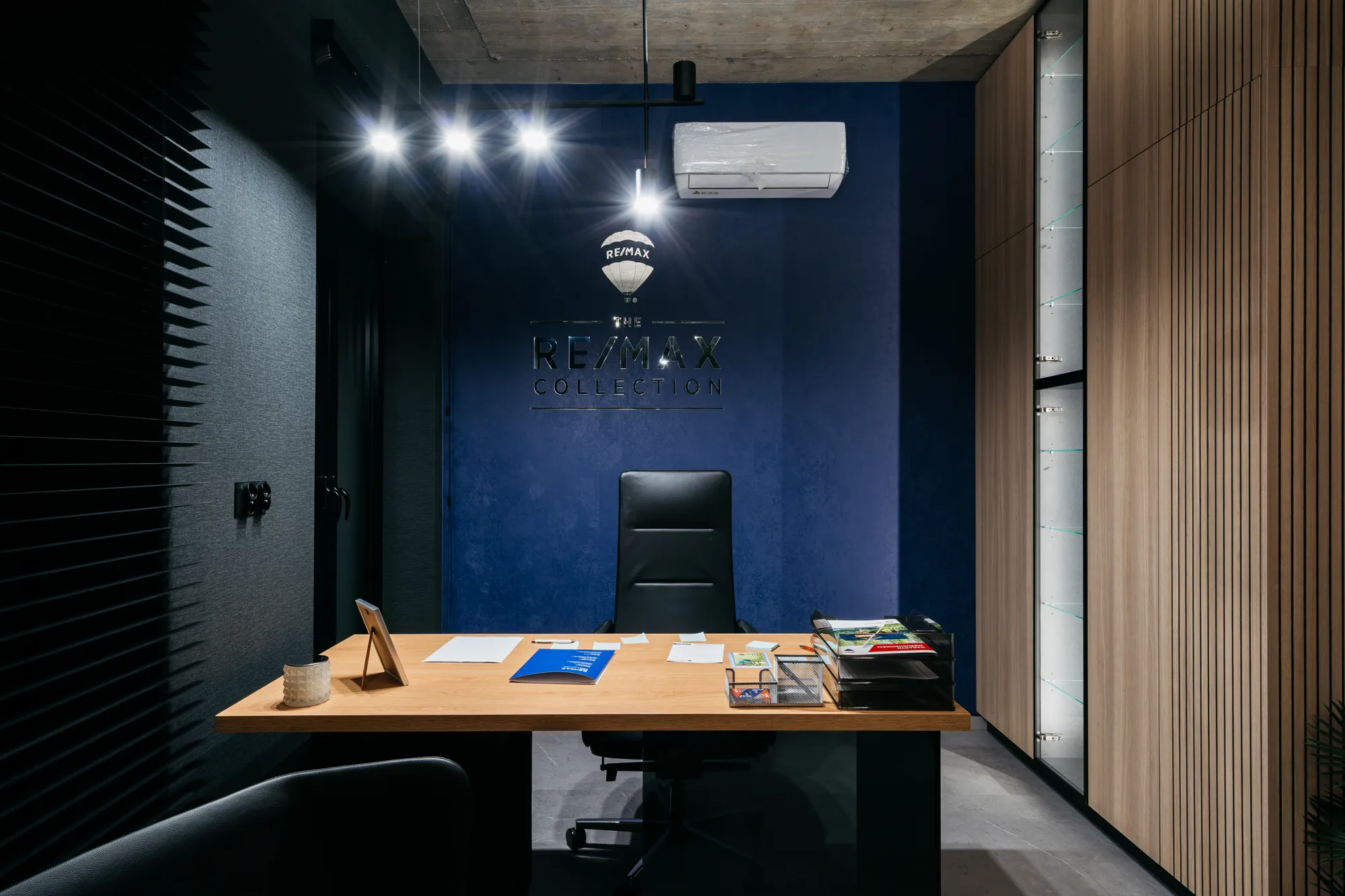
The ceiling acts as a mirror for sound. We installed SilentScape acoustic islands in a real estate office in New Market. After the first meeting, the employees themselves noticed that they didn’t have to speak in a raised tone, and everyone could hear the lecture or presentation effortlessly.
You can see the entire realization here [link].
Meeting rooms and home offices – walls are key
In one implementation, the client complained that the meeting room was unbearable – no one could understand the other person. We added TileFlex panels on the side walls and a decorative acoustic wall behind the table. The result? Online meetings are finally running smoothly, without “Can you speak louder?” comments.
Lobbies, hotels and representative spaces – acoustics + wow effect
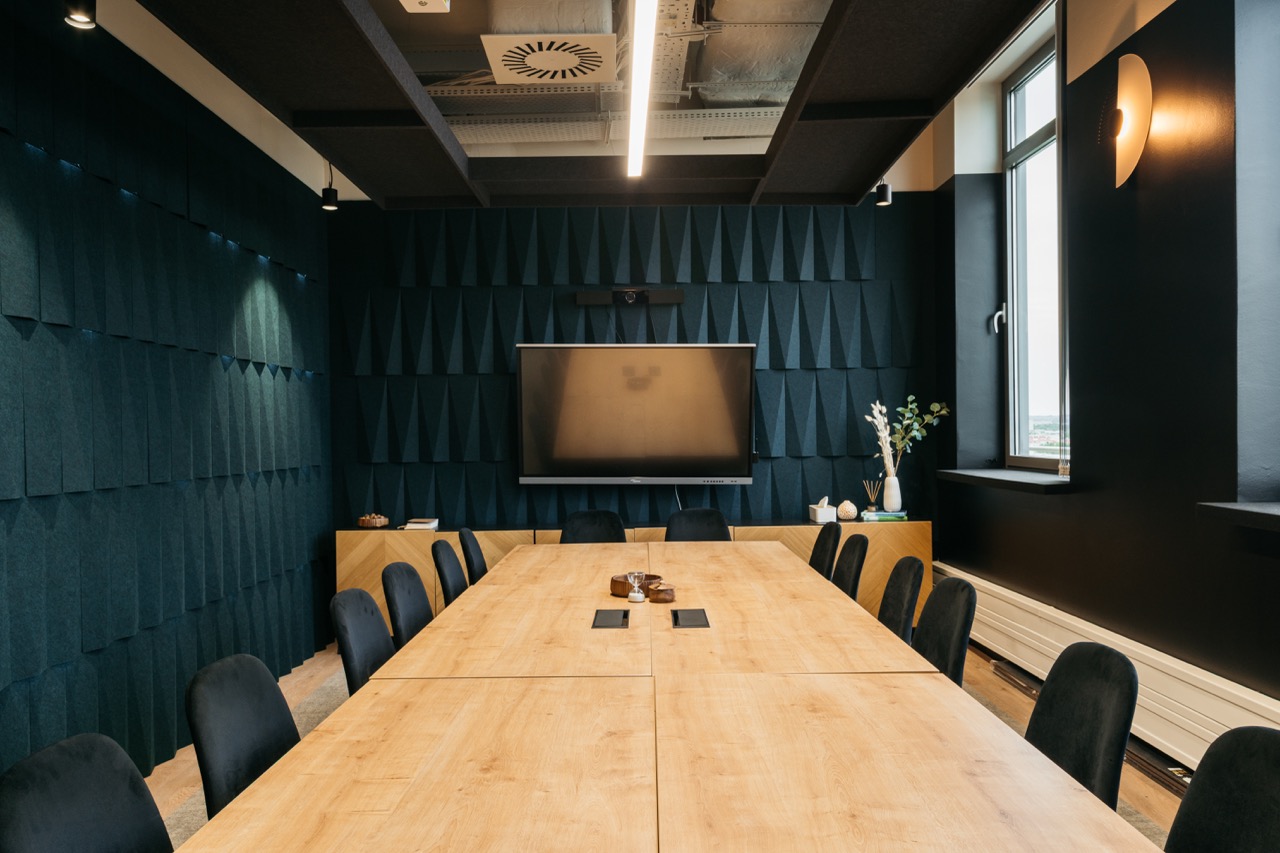
In representative interiors, aesthetics go hand in hand with function. This is where TileScratch – artistic panels inspired by linocut – perform best. In addition to improving acoustics, they create an effect of playing with light and shadow. Guests immediately feel that they are in a special place.
Medical spaces
In clinics or doctors’ offices, partitions made of felt panels provide privacy for conversations and a sense of calm. Patients feel more comfortable when they don’t have to speak in a raised voice, and sounds don’t carry over into the waiting room.
Sports and recreational zones
PET felt is increasingly used in fitness rooms, yoga clubs or even gyms. By installing it on the wall behind mirrors or the ceiling, it reduces the noise reflecting off mirrored and concrete surfaces, and at the same time introduces an interesting design element.
How many panels are actually enough?
This is one of the questions we hear most often from architects: “How many panels should I plan in the project to make the effect really noticeable?”. The answer is never universal – because it depends on the volume, ceiling height, type of surface. But to make it easier for you, we’ve prepared some simple scenarios to show you what it looks like in practice.
Small office (20-30 m²)
If such an office has, for example, 6 – 8 desks lined up next to each other, then after just an hour, phone calls and the clatter of keyboards start to become a nuisance to employees.
Here, 6-8 TileFlex felt panels on the wall and 2-3 SilentScape ceiling islands are enough to create a comfortable work space.
After installation in one Warsaw office, employees themselves admitted that they stopped wearing headphones while working – “finally you can focus without headaches.”
Conference room (40-50 m²)
In meeting rooms, echoes can be particularly troublesome. Participants raise their voices, and video conferences sound like they are conducted in a sports hall. The worst cases are when the group in a meeting has only a few people, and only that room is available.
The simplest solution? An acoustic panel over the conference table and an acoustic wall behind the presenter.
Living room at home
It’s not about size at all, but about the comfort of daily rituals. A movie in the evening, playing a console, listening to music, it all sounds better when the walls do not reflect sound. A few panels above the TV or behind the sofa can turn the living room into a real home theater.
Restaurant (from 100 m²)
Large open spaces are a real challenge. When the room is full, the noise builds up exponentially. Guests start talking louder and louder, and waiters have to shout at each other. This does not look elegant, and customers do not want to return to such a space.
As for ceiling panels in such a space, here the rule is simple: at least 40-50% of the ceiling covered with SilentScape panels.
Remember: don’t leave empty strips. If you finish the panels in the middle of the wall, the echo still lives overhead.
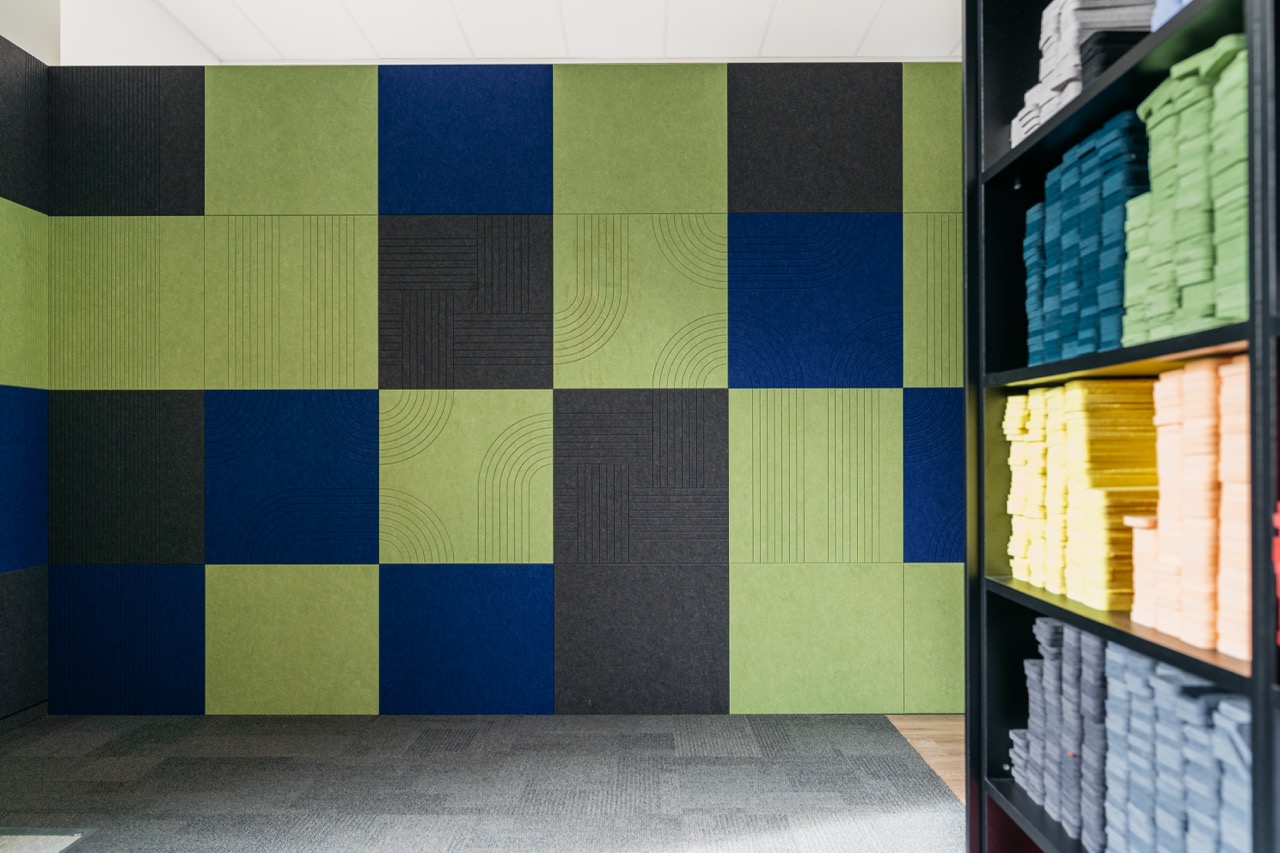
Acoustic panel mounting maps by space. Why does mounting location matter?
Acoustic panels work best where sound waves bounce most often. If you hang them haphazardly, the effect will be only negligible or only partial. But if you place them at “reflection points” (on the walls, ceiling or behind the sound source), you can eliminate echo, reverberation and noise almost completely.
In practice, this means that:
- In the living room, panels behind the TV or audio set work best,
- In the office – at workstations and in conference rooms,
- In the studio – on the side walls, behind the microphone and often on the ceiling.
Below you will find specific step-by-step instructions with examples.
Acoustic panels in practice
Acoustic panels in the home and apartment
Living room and home theater
There is nothing worse than watching a movie, where every sentence of the actor bounces off the wall. Therefore, the best place for acoustic panels in the living room is the space behind the TV and speakers. If you have a home theater, also add panels on the side walls so the sound doesn’t “escape.”
Children’s room
Children’s games, screams and musical experiments on the keyboard are a challenge for any parent. Acoustic panels in the children’s room work best on walls adjacent to other rooms. This allows toddlers to play while you have a moment of silence in the living room or bedroom.
Bedroom
Sleeping in noise is a nightmare. Therefore, in the bedroom, acoustic panels are most often used on the wall facing the neighbors or behind the bed. You will ensure quiet, coziness and a deeper sleep.
Apartment in a block of apartments
If you live in a block of flats, you know how disruptive neighbors can be. Karaoke from behind the wall? Footsteps overhead? The solution is acoustic panels for the wall and ceiling, which dampen outside sounds and give you a sense of privacy.
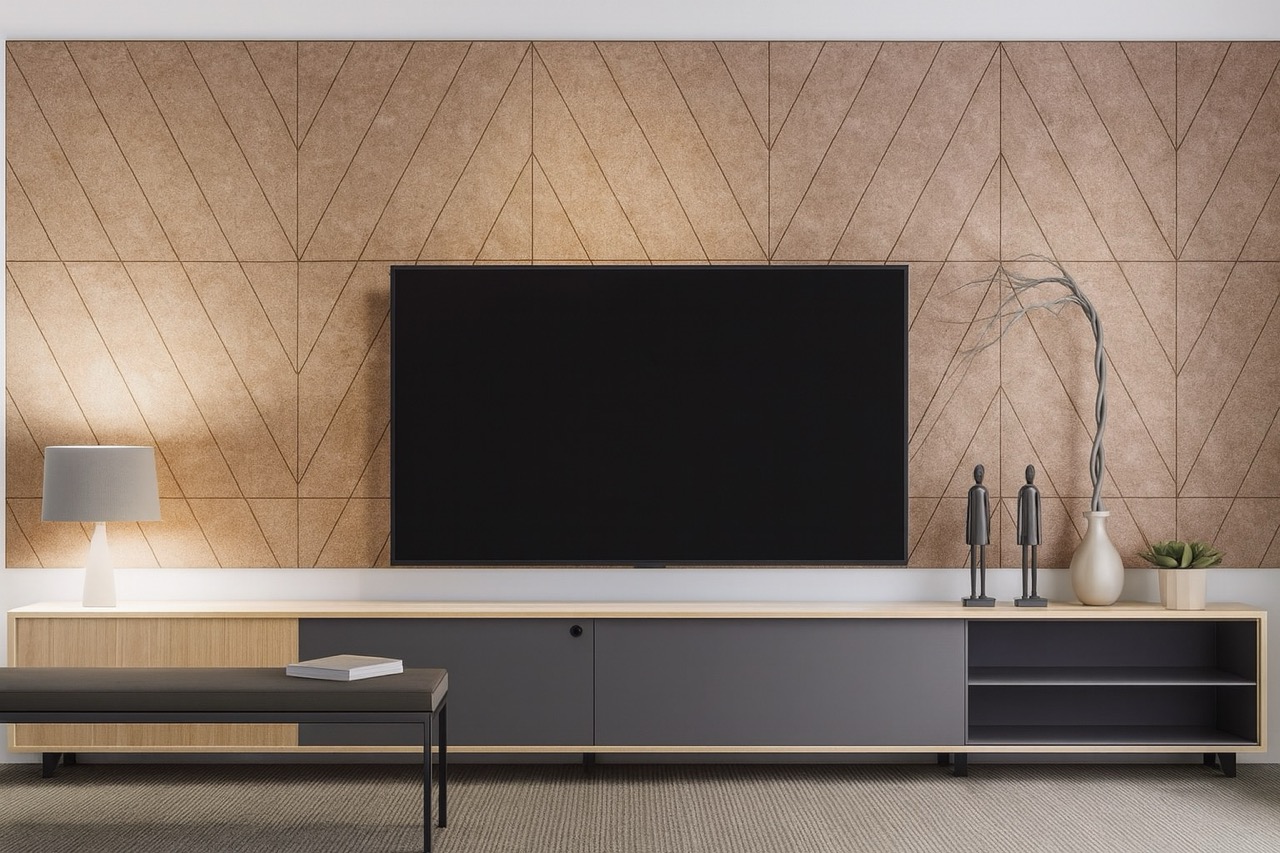
Acoustic panels in the office and open spaces
Anyone who has worked in a larger office knows that the biggest enemy of concentration is… noise. Phone conversations, the sound of keyboards, someone saying something at the coffee machine and concentration momentarily disappears. That’s why acoustic panels for the office are best installed behind employees’ desks and on the side walls. Learn more, about acoustic panels for the office, in our article.
Why is this important?
Poor acoustics is not just an “annoying echo” that can be heard when you clap. It’s a problem that affects daily life, work and the comfort of being in a place.
Mental fatigue
When the noise doesn’t stop, the brain works at elevated speeds. In an open-plan office, employees have to constantly filter through conversations, printer noise, and colleagues’ phone calls. After a few hours, they feel exhausted – not because they had too many tasks, but because their nervous system was fighting the sound.
Working in such a place means faster fatigue, more mistakes and a decrease in efficiency.
Worse user experience
Imagine a restaurant where you have to shout to talk to the person sitting across from you. No one stays there for long – and some guests simply don’t return. Acoustics translate directly into time spent in the establishment, and therefore turnover.
Lower interior functionality
A conference room where no one understands the other person. A home theater where the music rumbles and dialogue is lost in the background. A recording studio that sounds like a bathroom. In each of these cases, the interior no longer serves its purpose – even though it looks great on the visuals.
Architecture without good acoustics becomes a project “to look at,” not “to live in.”
Why else should you consider them in your project?
Good acoustics is not just a matter of comfort – it is an element that has a real impact on health, image and human relations. More and more investors and architects are paying attention to it, treating it as an integral part of modern design.
Health and well-being
Constant noise, echoes or excessive sound reflections are not only discomforting to the ear. Studies show that prolonged exposure to loud environments raises cortisol levels, increases blood pressure and causes cognitive fatigue.
Well-designed acoustics help reduce stress, improve concentration and simply make being in a space more enjoyable – both at home and at work.
Image and perception of space
A room with good acoustics immediately makes a different impression. Sound does not bounce, conversations are clear and the acoustic background is pleasant.
Such interiors are perceived as more professional, comfortable and refined, which is of great importance especially in offices, hotels, restaurants or representative spaces. A quiet space builds trust and emphasizes the quality of the design.
Relationships and communication
Acoustics is also about communication. In the office, it promotes cooperation and focus, at home – conversation and calm, and in public spaces – understanding and positive emotions.
A well-designed acoustic interior reduces tension, reduces misunderstandings and promotes a natural exchange of ideas. Silence is no longer a void – it becomes a space in which it is easier to communicate.
Details that determine the effect.
Acoustic panels work best when they are properly planned. It is the small details that determine whether the resultant effect will be average or truly spectacular.
First – do not cover the panels with furniture.
It sounds trivial, but it often happens. A panel covered with a cabinet or bookcase loses its power, it does not absorb sound waves, because the sound simply does not reach it. Therefore, when planning a project, make sure that the panels “work” in an open space.
Prepare the ground.
The wall should be clean, dry and even. Even the best panel will not do its job if you install it on a surface with moisture, dust or curves. This is not only a matter of aesthetics, but also its durability.
Avoid damp rooms.
PET felt is durable and resistant, but it is not a material for the sauna or bathroom. High humidity can weaken its properties and affect its appearance. Panels are best suited for offices, living rooms, bedrooms, restaurants or hotels.
However, for Feltdecor, nothing is impossible either – we carried out a custom project in such a space, and it required verifying the room and matching the right panels. But we did it! So if, you have an unusual idea – let us realize it.
Remember rhythm and geometry.
Panels are not only technology, but also an element of interior design. Arranged in a regular rhythm, they create the effect of a calm, orderly space. Irregular compositions add dynamism and character. In both cases, grout, line and geometry become part of the interior design, not just a “background”.
Play with light!
Acoustic panels work well with light. Combining them with LED strips or spot lighting creates a premium interior effect. The light highlights the felt structure, while the shadow draws additional depth. It’s a simple way to make acoustical improvement go hand in hand with an exceptional finish.
Thanks to these principles, acoustic panels are not just a technical add-on, but a full-fledged element of interior architecture, one that offers simultaneously on comfort and aesthetics.
Avoid these mistakes in your panel design, and you will achieve a better visual and acoustic effect at the same time.
Even the best materials won’t work if used in the wrong way. Acoustic panels are not “wallpaper” that you just stick anywhere. They are an element of acoustic architecture, which is why their thoughtful placement is so important.
“A little bit everywhere” instead of at critical points
This is the most common mistake. A few panels on each wall look aesthetically pleasing, but acoustically they have little effect.
Instead, focus on the points of first reflections (the walls opposite the sound source, the ceiling above the table, the corners). This is where the sound waves hit the hardest and where the panels have the greatest effectiveness.
Too small an area covered with panels.
One or two panels in a large conference room will not make a difference. Effectiveness increases only when about 30-50% of the key wall or ceiling area is covered with sound-absorbing material. This is a rule of thumb that works in practice in offices, restaurants or open space.
Installation only on the walls, no ceiling.
The ceiling acts as the largest mirror for sound. If you omit it from the design, especially in those with high ceilings, the effect will be half-hearted, the echo will still “come back from above.” Therefore, in offices, restaurants and conference rooms, it is especially worth combining wall and ceiling panels.
Ignoring corners and corridors
Narrow spaces, passageways and corners often generate unpleasant rumble and amplify echoes. Just a few panels strategically installed in such places can eliminate the problem and give the space a consistent acoustic character.
Incorrect integration with lighting
Sometimes architects treat panels as competition for lamps. Meanwhile, one can support the other. An ordinary lamp illuminates a space, but panels integrated with LEDs can add depth and a premium look to an interior. The light brings out the texture of the felt, while the shadow enhances its three-dimensionality. Failure to think this way is a missed opportunity for an unparalleled and dreamlike effect.
The most common mistakes are due not to the quality of the panels, but to the lack of a plan. Just reverse the approach: don’t ask “how many panels to hang?” but “where is the sound escaping and where to catch it?”. Then the acoustic design really starts to work.
How to approach the project step by step.
Acoustic panels work most effectively when they are well planned – not only in terms of aesthetics, but also in terms of function.
For optimum results, it is useful to go through some simple steps that we use in FeltDecor’s realizations:
1. audit – or get to know how your interior “sounds”
An acoustic audit is the first and key step.
It involves assessing the behavior of sound in a room – both subjectively (i.e., “by ear”) and, if necessary, by measuring reverberation time.
Start with simple observations: clap your hands, listen to how long the echo lasts, walk around the room and note where the sound bounces the strongest.
In larger projects, it is worthwhile to perform a professional acoustic measurement – it will allow you to determine exactly where the acoustics are not working and what frequencies need to be corrected.
2. concept – match the solution to the function of the interior
Every space has different sound dynamics, so choosing the right type of panels is of great importance.
SilentScape, which absorbs sounds from above, will work best in open space.
In offices and meeting rooms, go for TileFlex for speech intelligibility and focus.
On the other hand, in representative spaces, lobbies and restaurants, TileScratch will work well – it combines acoustic and decorative function.
3. selection of color, thickness and pattern
At this stage, the project takes on a character.
Thicker panels absorb low tones (e.g., bass, rumble) better, while thinner panels are enough to eliminate reverberation in the mid and high frequencies.
You can choose the color and pattern so that the panels become a natural part of the arrangement – a geometric rhythm on the wall, a subtle background or a strong accent.
4. layout and editing – layout the sound consciously
You’ll get the best results by installing the panels at sound reflection points – on the side walls, the ceiling above the table, in the corners or behind the sound source (such as the TV).
Avoid haphazard placement – even a small change in layout can significantly affect the effect.
If the space is large, it is a good idea to strike a balance between absorption and reflection, so as not to get an acoustically “dead” interior.
5. test and proofreading
After installation, check the effect with a simple test – clap, talk in half-voice from the other side of the room, listen to music.
If the echo is still audible or the sound seems “hollow,” add a panel at a critical location.
For larger projects, it is a good idea to measure the reverberation time again (RT60) – this is the best way to make sure that the interior sounds exactly as planned.
Finally, the most important, that is: customer education. Here it is useful to speak in the language of effects, not technical parameters. You don’t need to use numbers and abbreviations like “αW = 0.6,” which the customer is unlikely to understand anyway. Instead, use: “The reverberation in this room will be cut in half, and conversations will become clearer. This will make your meetings shorter and more effective.” these are the arguments that really get through to investors.
Good acoustics is not an accident. It’s the result of conscious design decisions. As you already know, after reading this article – acoustic panels work best where sound bounces the strongest: on the ceiling, on the side walls and at the points of first reflections. Properly placed, they can completely change the character of an interior: make conversations natural, music sound fuller, and daily work or meetings stop tiring.