Skip to main content
Skip to footer

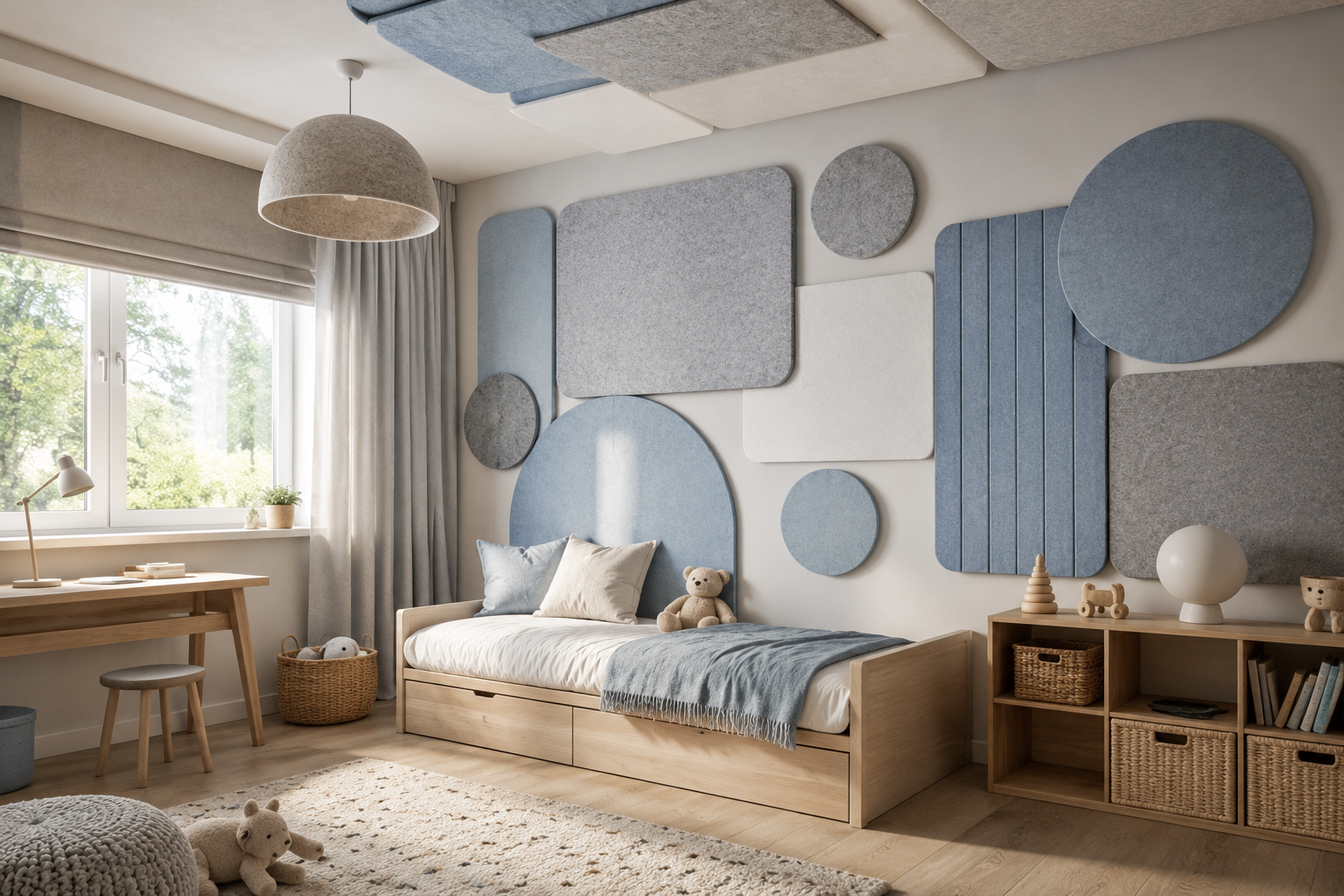
Imagine this scene: it’s late in the evening, and after a full day of work and play, a moment of calm finally arrives. Your child is already in bed; you turn off the light and look forward to a moment of peace. And… a door slams in the hallway, a loud conversation between neighbors drifts through the wall, and in the background, you can still hear music coming from the living room. Instead of drifting off peacefully, your little one starts fidgeting and crying. Sound familiar? This is an experience shared by many parents, who only realize after some time just how much a room’s acoustics affect their child’s sleep and development.
You’re probably wondering:Does noise really bother children that much?Absolutely! The WHO (World Health Organization) and environmental psychologists have been emphasizing for years that noise is one of the most serious stressors in children’s environments. High noise levels:
- disrupts sleep and shortens the deep sleep phases,
- makes it difficult to concentrate while studying or playing games that require focus,
- increases cortisol levels, which is the stress hormone,
- It may have a long-term impact on speech development, memory, and cognitive abilities.
Interestingly, studies show that children are even more sensitive to noise than adults. Sounds that are just background noise to you—such as street noise or the hum of household appliances—can be a real barrier to a child falling asleep or a source of irritation.
That is why it is so important to ensure that your child’s room is properly soundproofed. It is in a quiet environment that a child learns to speak, develops their imagination, and recharges after a busy day.
Fortunately, you don’t have to immediately undertake a major renovation or invest in expensive solutions straight out of a recording studio. Felt acoustic panels for rooms are becoming increasingly popular, offering both acoustic functionality and a modern aesthetic. This solution meets the needs of both children and parents—it reduces noise, adds a cozy feel to the interior, and can also serve a decorative purpose.
In the following paragraphs, I’ll show you why felt acoustic panels are such a good choice for a child’s room, how they work in practice, and what additional benefits they offer to both children and adults in the household.
Why is acoustic felt a good choice for a child’s room?
You’re probably wondering right now:Can ordinary acoustic panels really make that much of a difference?Acoustic felt is simply perfect for this purpose. This material is becoming increasingly popular in both private and public interior design—and for good reason. It combines safety, functionality, and aesthetics—three elements that are absolutely essential in a child’s room, as well as throughout the entire home.
Felt has a natural ability to absorb sound. This means that noise from play, adult conversations, or street sounds doesn’t bounce off the walls and ceiling but is “caught” by the panels. As a result, the room becomes pleasantly quiet, and your child can sleep, play, or study peacefully without distracting noises.
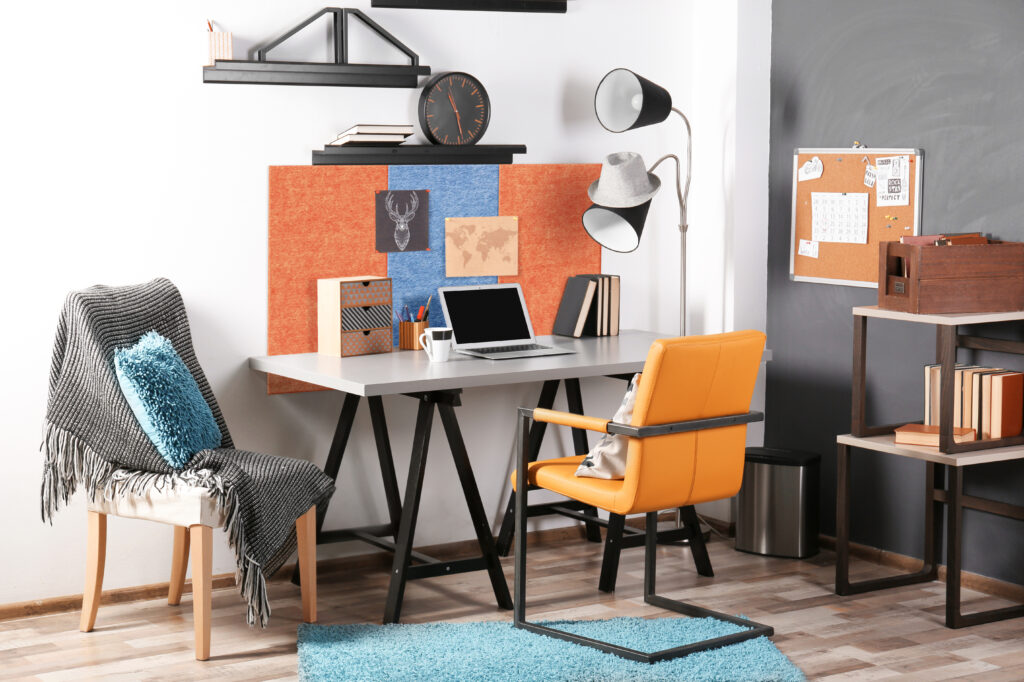
Benefits of acoustic felt in a child’s room:
- Reverberation and echo reduction—even if several children are running around the room or the family is having fun, the noise doesn’t carry throughout the entire apartment, which significantly increases comfort for everyone in the household.
- Additional protection against outside noise —the panels help soundproof the interior and positively affect how sound behaves in the room, which significantly improves comfort inside the room. It’s worth remembering, however, that felt panels are primarily designed to absorb sound and eliminate reverberation—they provide excellent support but do not replace standard, thick acoustic wall insulation. Thanks to them, your child gains a much quieter and cozier environment for sleeping, learning, and playing.
- Safety and Softness—felt is a soft and flexible material. If a child bumps into it, there is no risk of cuts or pain, which is especially important for young children.
- Hypoallergenic and toxin-free—the felt used in acoustic panels does not release harmful substances and is allergy-friendly, giving parents peace of mind when it comes to their child’s safety and health.
- Aesthetics and Decorative Appeal – Colorful acoustic panels can serve a dual purpose: they can reduce noise and decorate a space, while matching your child’s taste and the interior design style.
AChild’s Room at Home
In one of the homes, we installed hexagon-shaped acoustic panels on both the walls and the ceiling. Thanks to this solution, we were able to properly soundproof the room, making it much more pleasant to spend time there, and everyday noises are no longer a nuisance. At the same time, we created an incredibly cozy design with personalized prints that gave the interior a fairy-tale touch.
But what if the child grows up and you need to change the decor? Parents often ask if rearranging the room requires tearing down entire walls. It’s worth knowing that the panels are usually installed with adhesive, so this isn’t a “day-to-day” removable solution. However, removing them is very simple—if a single panel is damaged or stained, you can easily replace it with a new one. This allows you to refresh the room’s look or replace specific elements without having to undertake a costly, time-consuming renovation.
Functionality and Aesthetics—How to Balance Quiet with Interior Design?
You’re probably wondering:Won’t acoustic panels look like a typical, utilitarian solution? Today, felt panels are designed to retain all their properties while looking their best. They can serve as a decorative element, a creative play space, and an effective way to soundproof a room—all at the same time.
One of the greatest advantages of colored acoustic panels is their versatility. They can be selected based on:
- Colors—in practice, this means that on a single wall, you can create color combinations or geometric patterns that not only look beautiful but also effectively reduce reverberation.
- Shapes—you can use small, individual elements to add a subtle accent, or opt for larger modules that cover the entire wall, providing maximum noise reduction.
- Sizes—you can use small, individual elements to add a subtle touch, or opt for larger modules that cover the entire wall, providing maximum noise reduction.
Another huge advantage is that acoustic panels can be arranged like a puzzle—which not only allows you to personalize the interior but also involves your child in the design process. Imagine this scenario: it’s the weekend, and your little one is happily arranging geometric shapes on the wall, creating their own unique pattern. It’s not just decoration, but also an educational and creative element that fosters imagination and spatial skills.
Another huge advantage is the versatility of felt and how well it pairs with the rest of the decor. You know what I mean—shelves, lamps, posters, and educational boards go great with the panel, and the whole setup, combined with LED lighting, creates a welcoming, harmonious backdrop for learning and play.
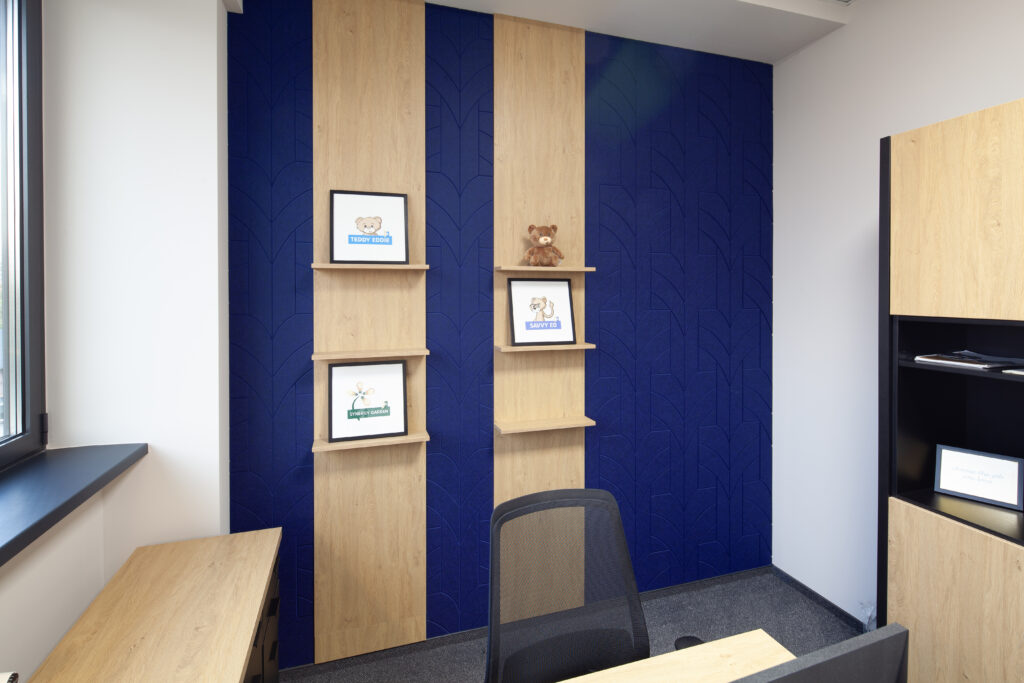
Interestingly, felt in a child’s room isn’t just for walls. It can also be used as:
- Mouse pad and keyboard mat: Interestingly, the soft felt on the desk works well with the computer mouse; it feels nice to the touch and protects the desk surface from scratches
- Furniture, cabinet, and door coverings: Felt panels can be easily installed on cabinet fronts, the sides of furniture, or the surfaces of interior doors. This is a simple way to soundproof flat surfaces that often reflect sound
Thanks to its versatility, felt becomes a cohesive and extremely practical element of the overall design of a child’s room.
Colorful acoustic panels allow youto combine quiet with aesthetics, functionality, and creative design. You don’t have to sacrifice soundproofing for the sake of appearance. On the contrary—these panels can become the centerpiece of the room’s design, inspiring your child and making life easier for parents.
Installing Panels—Easier Than You Think
You’re probably thinking:Is installing acoustic panels a complicated renovation project that will take days and require specialized tools? Not at all! One of the biggest advantages of felt panels is how quick and easy they are to install. Even if you’ve never mounted anything on a wall before, you’ll be able to handle it with no problem. The only product you’ll need is a special adhesive recommended by the manufacturer. So a parent can completely transform the acoustics of their child’s room in an hour or two—and at the same time add a pleasant decoration that’s pleasing to the eye and stimulates the little one’s imagination. For more information on installing acoustic panels, see the article“Installing Felt Panels Without Drilling—Is It Possible?” Here [LINK]
Importantly, felt panels are very lightweight. Even when hung above a bed or desk, they pose no danger. Don’t worry! This means you can create the perfect space for your child.
The Benefits of Acoustic Panels—For Children and Parents
You’re probably thinking right now:“OK, installation is simple, but what do I really gain by investing in acoustic panels for my child’s room?” The benefitsare multifaceted, for both the child and the parent. And believe me, it’s not just about a “quieter room”—it’s about a real improvement in the quality of life for the whole family.
Benefits of using acoustic panels for children:
- A more peaceful and restful sleep—research shows that children in noisy environments wake up more often, have shorter REM sleep phases, and recover more slowly. Acoustic panels reduce unwanted noise from both inside and outside the home, promoting deeper and more restorative sleep.
- Better concentration and focus — a quiet room helps your child focus while studying, drawing, or reading. Even the slightest sounds can distract a young child, and the panels effectively muffle them.
- A Creative Environment—Colorful acoustic panels can become part of play or serve as inspiration for children’s own art projects. Children can arrange the panels in various patterns or use them as a backdrop for play.
- A sense of security—soft, pleasant-to-the-touch materials have a soothing effect, creating an atmosphere of comfort and tranquility. The room becomes a place where the child feels safe and at ease.
- Healthier nervous system development—less noise means less stress on the nervous system. The child is calmer, less anxious, and better able to manage their emotions.
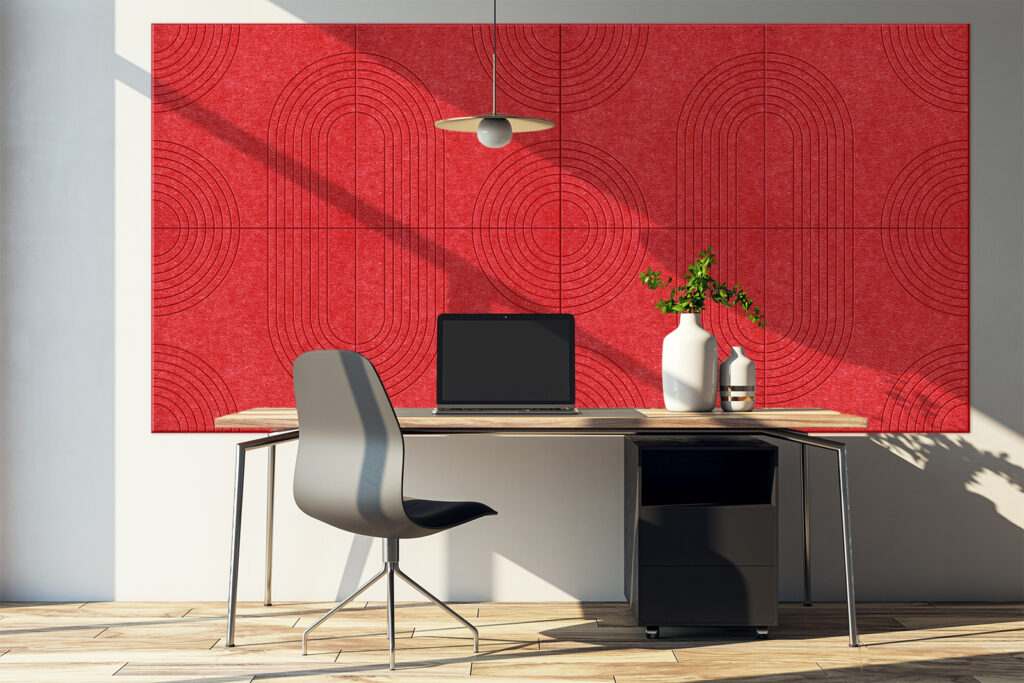
Benefits of Using Acoustic Panels for Parents:
- Quick and easy installation—no dust, noise, or costly renovations—means parents can improve the acoustic comfort in their child’s room in just a few hours.
- Safety—felt does not release toxins; it is hypoallergenic and soft, which minimizes the risk of injuries and allergic reactions.
- Easy to keep clean—the felt panels can be wiped down with a damp cloth or vacuumed. This is especially important in the rooms of very young children, where dust and dirt accumulate quickly.
- Aesthetics and decoration—panels also serve a decorative purpose, adding color and life to the interior. This means parents don’t have to choose between functionality and the room’s appearance.
- Comfort for the whole family—less noise in the child’s room means a calmer atmosphere throughout the house. Adults can relax in the living room, work, or talk without worrying that the child will be woken up by the noise.
It’s a small effort that yields long-term benefits—from better sleep and improved concentration to a more aesthetically pleasing and comfortable everyday life.
Design Inspiration – What Can Panels Look Like in Real Life?
All right, so we already know that acoustic panels work and have plenty of advantages. But you’re probably wondering: how does it all work in practice? How can you combine soundproofing with aesthetics and fun for your child? The possibilities are truly endless—you’re really only limited by your imagination. Here are a few examples:
A Preschooler’s Room
A four-year-old’s room is full of colorful toys and books. Above the desk and bed, parents install panels in various shapes and colors. Not only do they muffle noise from the hallway or neighboring apartments, but they also become an integral part of play—the child arranges them in different combinations and creates stories. The panels can feature contrasting colors, which further stimulates the child’s creativity and curiosity. In this way, the little one also learns to distinguish between colors and shapes, and the room becomes both an educational space and a place conducive to rest.
Student Room For a school-age child, learning and concentration are the top priorities. Pastel-colored rhombuses or rectangular modules mounted above the desk and bed work great here. They effectively dampen noise from the hallway, stairwell, or street traffic, allowing your child to focus on lessons, reading, and doing homework.
Interestingly, felt panels are a great alternative to traditional corkboards these days—their texture makes them perfect for use as a practical pinboard. Children can use pins to attach notes, lesson plans, photos, or their favorite memories to them.
A subdued color scheme (such as pastels or neutral tones) doesn’t distract the eye and creates a cozy atmosphere for learning. Additionally, the ability to rearrange the panels on their own fosters creativity and gives children a sense of agency in designing their own space.
Teen Room When it comes to teens, it’s worth considering modern layouts—rhombuses, rectangles, or dynamic lines. Darker colors give the interior a loft-style, designer feel while also improving acoustics for listening to music, chatting on messaging apps, or studying online. A teenager can also use the panels as a means of self-expression—by changing the layout, colors, or creating their own compositions. This turns the room into a space that’s not only functional but also reflects their individuality.
Remember that every child’s room can be unique and fully functional at the same time. Thanks to acoustic panels, parents gain much-needed peace and quiet, while children have a space where they can grow, play, and learn under optimal conditions.
You’ll find ready-made inspiration and ideas for striking designs on our website in the AbstractTile catalog.
Interesting Facts and Scientific Insights on the Use of Acoustic Panels in a Child’s Room
Noise in children’s rooms is a topic that may seem trivial, but in reality, it has a huge impact on a child’s development and the comfort of the entire family.
According to the WHO (World Health Organization), children are particularly sensitive to noise, especially at night, when the body is actively regenerating. The organization recommends that noise levels in bedrooms not exceed 30 dB(A), as sleep disturbances and problems with rest can occur even above this threshold. If sounds are louder—such as the sounds of conversations, household appliances, or street traffic—they can make it difficult to fall asleep, wake a child up at night, and reduce sleep quality. This, in turn, affects concentration during the day, well-being, and the ability to learn. [Source: https://www.who.int/Europe/news-room/fact-sheets/item/noise?utm_source=chatgpt.com]
Environmental psychologists also emphasize the importance of aesthetics and a welcoming environment. Colorful, harmoniously designed interiors reduce stress levels, stimulate creativity, and support cognitive development. In this context, colorful acoustic panels offer a dual benefit: not only do they absorb sound, but they also create an inspiring space for learning and play. Children who have the opportunity to arrange the panels on their own—combining colors, shapes, or patterns—develop spatial imagination, fine motor skills, and a sense of aesthetics. [Source: https://www.scirp.org/html/2-6304373_92974.htm?utm_source=chatgpt.com]
The global scientific literature clearly indicates that quiet in a child’s room is not a luxury, but a necessity. By reducing noise with felt acoustic panels, parents are investing in their child’s health, development, and emotional well-being, while also creating a friendly, creative, and aesthetically pleasing space.
A child’s peace of mind begins with your decision
Soundproofing your child’s room isn’t just a matter of comfort—it’s a real investment in your child’s health, development, and the peace of mind of the whole family. Felt acoustic panels in the room help your little one sleep more soundly, learn more easily, and feel safe, while you can relax without worrying about constant noise.
Colorful acoustic panels aren’t just ordinary materials—they’re elements that both dampen sound and decorate a space. You can rearrange them, play with colors, and adapt them to your child’s age and interests. This way, their room becomes a place of quiet, play, and creativity all in one.
Don’t put it off—get started today. Choose colorful acoustic panels and see how easily you can transform the atmosphere in your child’s room. You’ll gain peace, harmony, and comfort, which will lead to better sleep for your little one and a more peaceful life for the whole family.