Skip to main content
Skip to footer

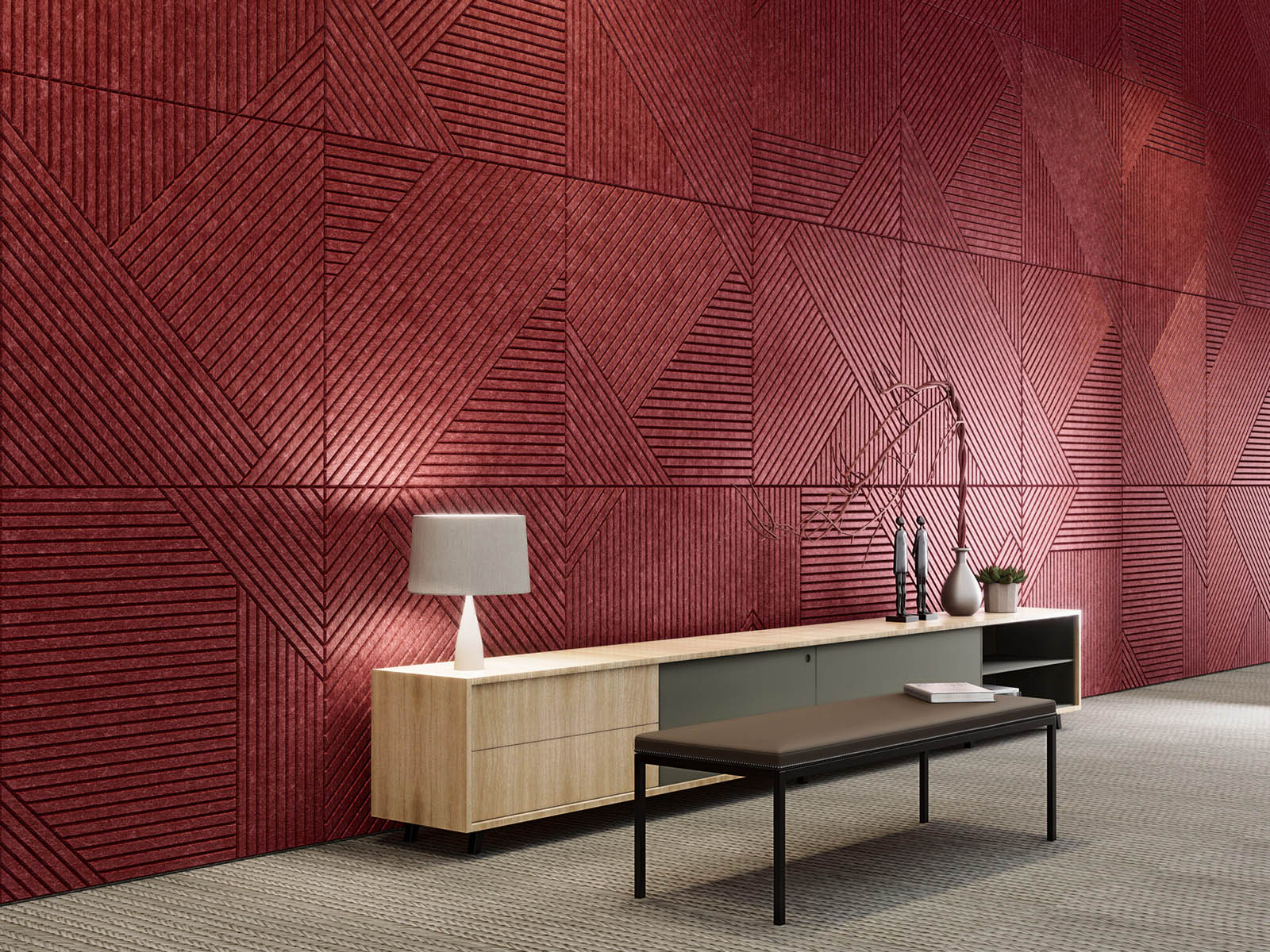
Felt acoustic panels are boards made of densely compressed fibres that absorb sound reflecting off walls and ceilings. They reduce echo in a room and make conversations easier to follow.
Most of us only think about acoustics once they start to bother us. In a living room with bare walls you hear reverberation, and in a restaurant you have to raise your voice to hear the person opposite. Felt panels are one of the simplest ways to change this without renovating, and they decorate the wall at the same time.
Architects reach for them more and more often too, planning acoustics from the start of a project, just like lighting. In this article we explain how felt panels work, how they differ from wooden ones and what to check before you buy.
What are felt acoustic panels?
A felt acoustic panel is a board of densely compressed fibres that absorbs part of the sound instead of reflecting it. Most are made of PET felt, a polyester made from recycled plastic bottles, although wool felt panels are also on the market. Every Feltdecor® panel is made from recycled plastic.

A good felt panel:
- absorbs sound in the range of human speech, where echo is most disruptive,
- does not warp or fade, even in heavily used spaces,
- is light, so it can be glued on without an additional substructure,
- is easy to keep clean.
That is why felt panels now appear not only in offices and restaurants, but also in living rooms, children’s rooms and home offices.
Wool felt is made from sheep’s wool, while PET felt is made from polyester, often recycled. It’s hard to tell them apart from a distance, but they differ in everyday use. PET felt hardly fades or ages indoors, and it’s easy to clean. Wool felt is more expensive and requires more delicate care.
Sound-absorbing vs acoustic panels: what is the difference?
In practice, sound-absorbing panels and acoustic panels are usually the same products, and shops and manufacturers use both names interchangeably. Strictly speaking, “acoustic” is the broader term, because it also covers diffusers, which scatter sound. Felt wall panels are sound-absorbing: they absorb sound and shorten reverberation.
What matters far more than the name is what these panels do not do. Sound absorption is not the same as sound insulation. Felt panels improve the acoustics of the room they hang in, but they will not stop noise from the neighbours or the street. That depends on the construction of the wall, windows and doors.
| What is the difference | Sound absorption | Sound insulation |
|---|---|---|
| What it does | Reduces echo and reverberation inside a room | Stops sound travelling through a wall |
| Typical solutions | Felt panels, ceiling clouds, textiles | Walls with mineral wool, heavy partitions, well-sealed windows and doors |
| Rating | Sound absorption coefficient αw, class A to E | Sound reduction index Rw in dB |
| When to choose it | Echo, poor speech intelligibility, background chatter | Noise from behind the wall or from outside |
How does a felt acoustic panel work?
A felt acoustic panel absorbs the energy of a sound wave instead of reflecting it. Sound enters the porous structure of the felt, loses energy through friction against the fibres and turns into an imperceptible amount of heat. Less of it returns to your ears, so the room stops “ringing”.
You hear the effect best where hard surfaces dominate: glass, concrete, tiles and bare walls. In an empty conference room, sound bounces off the walls and overlaps with the next waves. A few square metres of panels bring order to this. That is why felt panels work well in open-plan offices, but also in a living room with a large TV or in a child’s room.
Want to know more about the material itself?
See the article: What is acoustic felt and how does it affect sound in a room?

What are the advantages of felt acoustic panels?
Felt wall panels combine an acoustic function with a decorative one. Here are their main advantages.
- Acoustic performance
This is the main reason people choose panels. Well-placed elements can noticeably shorten reverberation time, and that translates into real comfort. In a quieter room we think more clearly, speak more calmly and rest more easily.
- Design and variety of forms
An acoustic panel can now double as decoration. Felt is easy to cut into any shape and to print on, so panels come as hexagons, mosaics, three-dimensional patterns or slats, in dozens of colours.
- Sustainability
PET felt is made from recycled plastic bottles, so waste gets a second life as part of an interior. For many people this now matters as much as the look.
- Easy installation
Wall panels are usually glued directly to the wall. Felt is easy to trim on site, so a standard finishing team can handle the installation, and smaller arrangements can be fitted by the user.
- Safety and durability
PET felt does not fade or lose its shape, so once installed a panel will last for years. In offices, hotels and public buildings, reaction to fire matters too. Feltdecor panels have fire classification B-s1,d0, which means they are hard to ignite, produce very little smoke and no flaming droplets.
Where do felt panels work best?
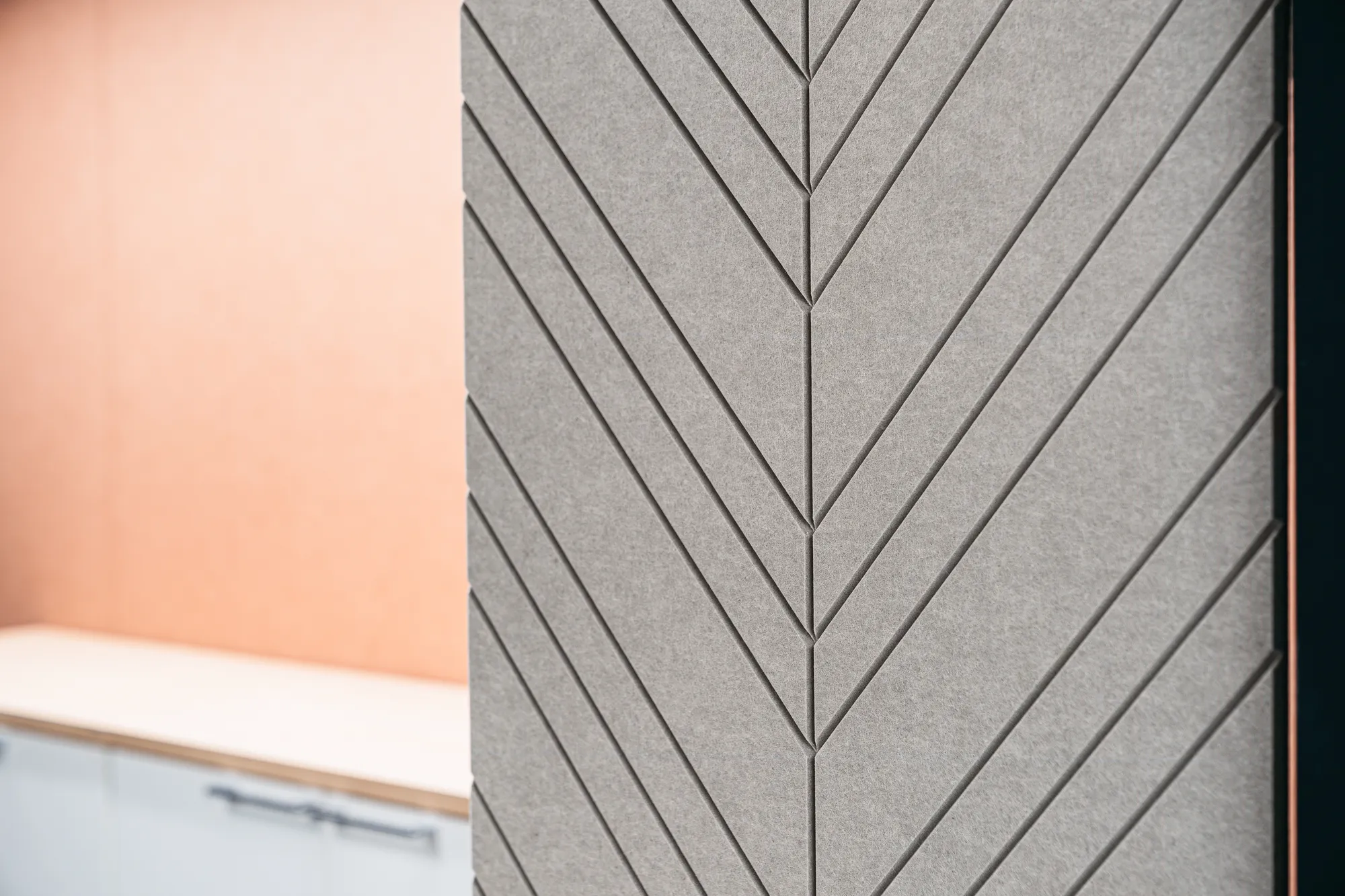
Felt panels work wherever people talk and hard surfaces reflect sound. They are most often installed in:
- open-plan offices, where background chatter hurts concentration,
- conference rooms, where speech intelligibility matters,
- restaurants and cafés, where echo drowns out conversation at the table,
- hotels and lobbies,
- homes and home offices.
What types of felt acoustic panels are there?
Felt acoustic panels differ in where they are installed and in their form. There are four main groups.
Wall panels
This is the most versatile range. They are usually stuck directly onto the wall, but they can also be fitted with a gap or on a grid, with the space behind the panel filled with mineral wool. This method of installation improves sound absorption, particularly of lower frequencies. The TileFlex system uses 600 × 600 mm modules to create geometric patterns. You’ll find all the collections in the ‘felt wall panels’ category
Ceiling modules and islands
This solution is designed for high-ceilinged rooms where sound ‘bounces back’ from above, and for interiors where there is a lack of wall space. SilentScape creates ceilings made up of baffles or individual acoustic islands. See all acoustic ceiling panels.
Acoustic dividers
They divide space without building walls and absorb sound where it is produced, for example between desks in an open-plan office. See acoustic dividers.
Printed panels
Felt can be printed with wood or stone textures or any graphic. A good choice for receptions and prestige areas. More in the printing on felt category.
See also how the thickness of acoustic panels makes a difference.

What should you look for when choosing felt acoustic panels?
Before buying, check six things: acoustic ratings, surface coverage, thickness, material, form and installation method.
- Acoustic ratings
A panel’s performance is described by the sound absorption coefficient αw. It ranges from 0 to 1: the closer to 1, the more sound the panel absorbs. Based on this, panels are divided into classes from A, the best, to E.
The result depends not only on the material but also on how the panel is installed. The same panel glued flat to a wall absorbs less than one mounted with a gap, because the air space behind it acts as an extension of the material. When comparing offers, always check in which mounting setup the panel was tested.
- Surface coverage
How many panels you hang matters too. One or two small pieces will mostly be decoration. In a home or office, a good starting point is covering 20 to 30% of the wall area, and louder places such as restaurants usually need more.
- Panel thickness
The rule is simple: the thicker the panel, the more sound it absorbs. Thin panels (6 to 9 mm) suit homes and small rooms, and thicker ones (from 12 mm) suit large offices, halls and restaurants. It is worth matching the thickness to the size of the room and the noise level, and a designer can help you balance looks and performance.
- Material
Wool felt is soft and warm in character, but it is more expensive and needs delicate care. That is why PET felt is the more common choice: it is durable, easy to clean and visually hard to tell apart from wool.
- Colour and form
Panels are not just technology, they are part of the interior design. Pay attention to colour, texture and shape. Think about whether you want geometric patterns, irregular forms or a more artistic effect. Collections such as TileFlex and TileScratch include both minimalist modules and decorative panels. Wall panels can also be combined with the ceiling for a truly striking effect. See an example in one of our projects.
- Installation and location
Decide whether the arrangement should be temporary or permanent. For a temporary setup, choose Velcro or freestanding panels; for a permanent one, use mounting adhesive or a subframe.
Wall panels are usually glued to the wall, ceiling modules are suspended on cables, and dividers stand on the floor or attach to desks. Match the installation method to the surface (plaster, plasterboard, glass) and to whether the arrangement is meant to last for years. Read more about where to install acoustic panels and which adhesive to choose.
Felt or wooden acoustic panels: which should you choose?
Felt acoustic panels are lighter, cheaper and available in many colours, while wooden ones are chosen mainly for their natural look. Both can shorten reverberation well, but they work differently.
| Criterion | PET felt panels | Wooden panels |
|---|---|---|
| Sound absorption | Through the whole structure of the material | Mainly through gaps and an absorbent layer behind |
| Weight | Light, glued to the wall | Heavier, often need a substructure |
| Look | Dozens of colours, printing, 3D forms | Natural wood, Scandinavian and Japandi styles |
| Sustainability | Made from recycled bottles | Raw material from felled trees |
| Price | Usually lower | Usually higher (solid wood, veneer) |
Acoustic effectiveness depends on the construction of the acoustic panel. Felt performs sound absorption throughout its entire structure. Solid wood is hard and reflects sound, which is why wooden acoustic panels are usually slatted: sound passes through the gaps and reaches the absorbent layer underneath. Well-designed slatted panels also effectively reduce reverberation, but they are heavier and more expensive.
Aesthetics are a matter of taste. Wood offers a warm, natural, classic look and works well in rustic, Scandinavian, or Japandi styles. Felt, on the other hand, is more versatile in terms of color, as it’s available in dozens of shades and can be printed on, so it blends better with modern, minimalist interiors. Versions with a wood-print finish, such as PrintSlat, combine the best of both worlds.
Weight and installation also make a difference. Felt panels are significantly lighter than wooden slats, which makes installation easier, puts less strain on the wall, allows for adhesive mounting without additional framing, and, as a bonus, reduces transportation costs.
There’s also the environmental aspect. PET felt panels are made from recycled plastic bottles, so we have a closed-loop material cycle here. Wood, even from certified sources, requires logging and a longer production cycle.
And then there’s the price. PET felt panels are usually cheaper than solid wood or natural veneer for a comparable surface area.
If maximum acoustic performance, ease of installation, and budget are your priorities, PET felt is the better choice. But if you’re looking for a natural, wood-like feel in your interior and acoustic performance is secondary, you should consider wooden slats or a combination of both materials in a single design.
Is it worth choosing felt acoustic panels?
Yes, if you want an interior that not only looks good but also sounds good. A well-chosen felt panel provides, above all, effective noise reduction and reduction of reverberation, but also durability that lasts for years and a look that doesn’t go out of style with each passing season. It’s a rare combination: a material that serves a real technical purpose while also looking like a deliberate design choice—not a forced compromise. That’s why felt panels work so well in both simple, home-based interiors and demanding commercial projects, where every detail counts.
Felt on the Wall: Inspiration and Trends
Felt on the wall is no longer just for offices. Designers are using it to create entire compositions, ranging from raw, soft industrial styles to pastel-colored Scandinavian living rooms. Panels replace artwork above the sofa, define zones in open spaces, and conceal uneven walls. You’ll find examples of completed interiors in our portfolio.
For more information on how felt fits into current interior design trends, check out our 2026 trend overview.
Not sure where to start?
Design your wall using the Feltdecor Studio configurator, or contact us. We’ll help you choose the right panels, colors, and quantity for your room.