Skip to main content
Skip to footer
Skip to main content
Skip to footer

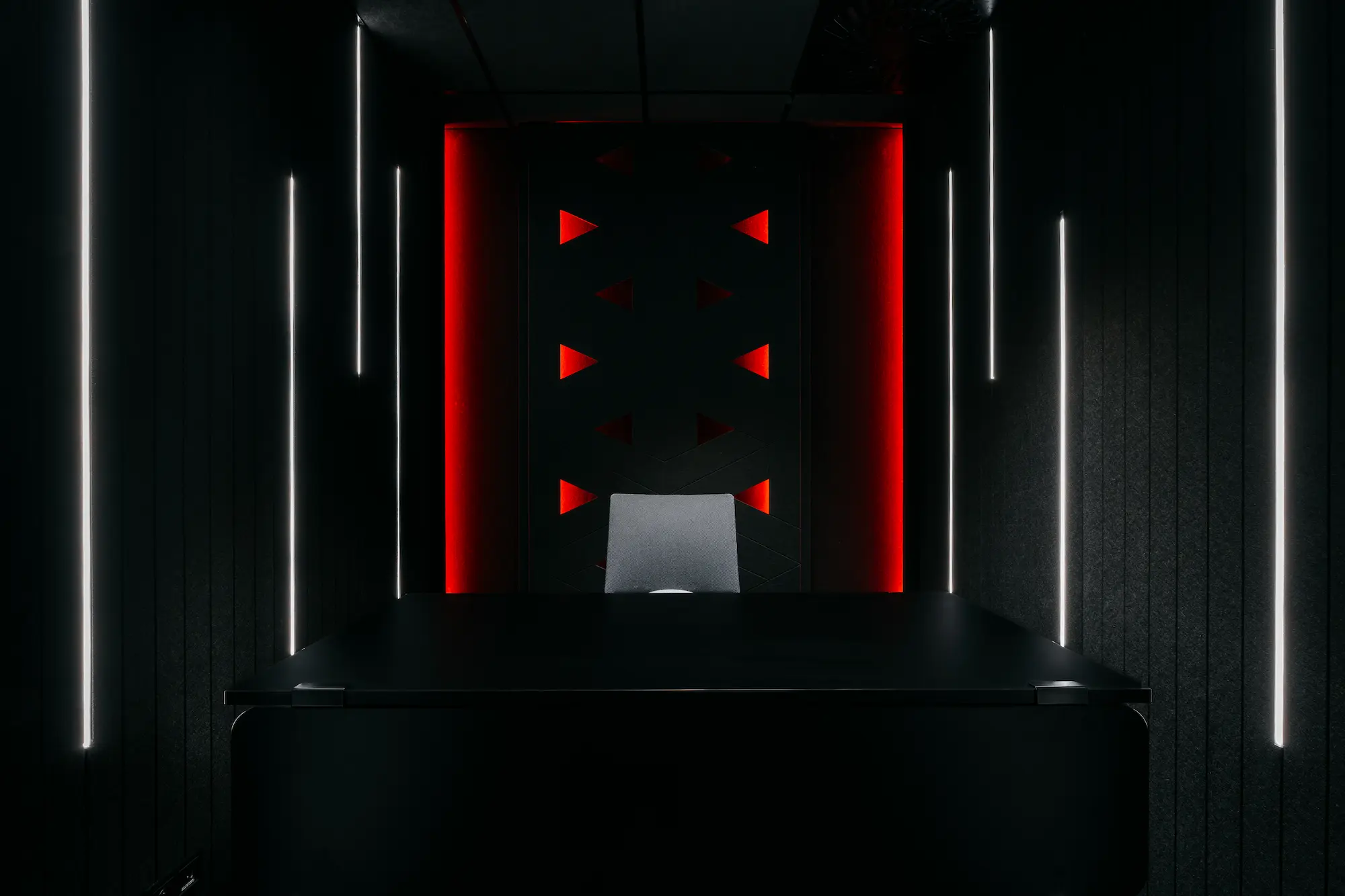
When you walk into a newly finished apartment, you often get the impression that everything is perfect. There’s beautiful hardwood flooring, natural light streaming in through the large windows, fresh paint on the walls, and a new sofa in the living room.
However, even a brief conversation with the household members is enough to sense that something is wrong. Every word spoken echoes strangely off the walls; there’s a distinct echo, and in the background, the hum of the street, sounds from the TV, or noise from the kids’ room rumbles constantly. This raises a simple question: why is it so noisy in this new, carefully designed interior, and what can be done about it if another renovation is absolutely out of the question?
At this point, the subject of acoustics ceases to be mere textbook theory. Echoes and reverberation in the living room, bedroom, or home office do not mean that the interior has been poorly designed. They result from simple laws of physics—sounds bounce off large, hard, and smooth surfaces without obstruction. While we focus mainly on what we see when designing a space, in our daily lives we simply begin to hear the negative effects of a lack of soft surfaces. That’s exactly why more and more people are looking for proven methods to effectively soundproof their homes without having to chisel into walls, deal with dust, or hire construction crews.
In this article, I’ll show youhow to reduce echo in a room without renovating—step by step, from a designer’s perspective. We’ll go over the three main sources of noise in the home (reflections from walls, outside noise, and internal sounds), and then we’ll discuss the following in detail:
- which soft materials really work,
- when ordinary textiles aren’t enough andPET acoustic panelscome into play (including thin, surface-mounted acoustic panels),
- how touse 3D wall decorations andfelt panels as a design element that also improves acoustics,
- and how to present all of this to a customer who asks, “Is there anything that can be done without renovating?”
The first step is to understand where the problem comes from. Echoes and reverberation occur when sound bounces off hard, hollow surfaces—smooth walls, bare floors, bare ceilings, and large windows. In practice, it looks like this: you move into a new apartment; the fixtures are all in place, but the living room has only a couch and a coffee table—the result isa room that’stoo loud, where every word “echoes” throughout the space. In such a situation, the natural question is:“What can be done?” —and this is wheresolutions for reducingreverberationwithout remodeling come in, meaning everything thathelps minimize echoes in a room without renovating: from simple textiles to a more strategic use of acoustic panels and wall decorations.
The 3 Main Sources of Noise in the Home (and Questions You’ll Hear from Customers)
Before you startlooking for solutions to reduce reverberation without renovating, it’s worth identifying the three main sources of the problem. This will make it easier for you to choose specific measures, and the client will understandwhytheir interior is so noisy.
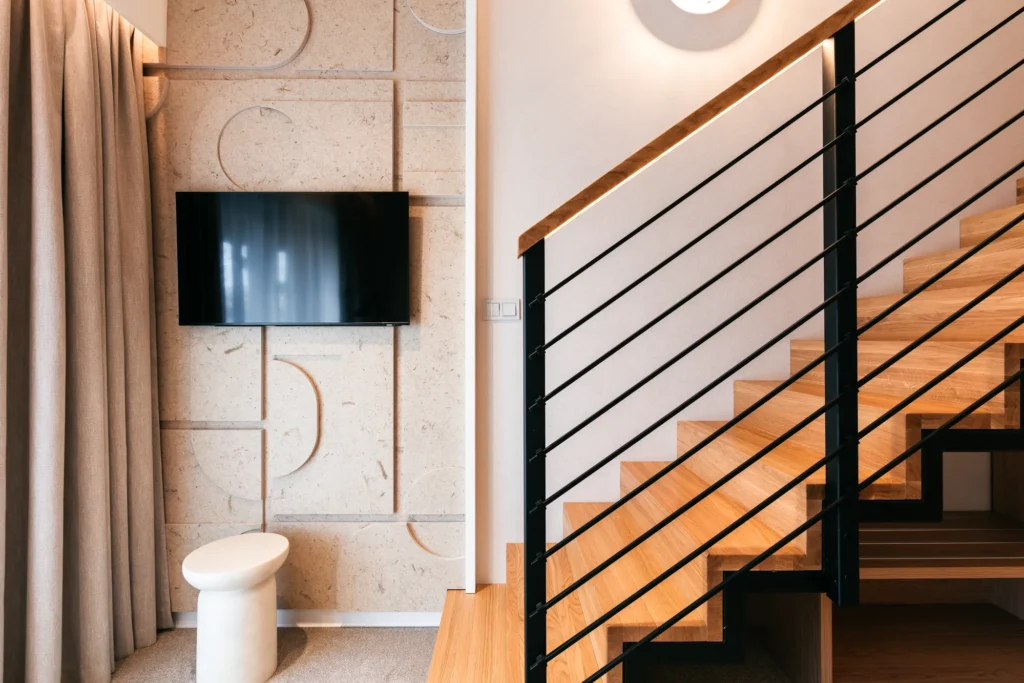
1. Sound reflections off hard surfaces—classic echoes and reverberation
This is the most common scenario. When you have:
- smooth, painted walls,
- hard flooring (tiles, laminate, resin),
- bare ceiling,
- large windows without curtains.
Sound bounces off surfaces like a ball. That’s when the question arises: “Theroom is too loud—what should I do?”
And this is where the following come into play: textiles, PET acoustic panels, thin acoustic panels forwalls or ceilings, and evenclever 3D wall decorations that are more than just decoration.
For this type of interior, you’re most likely looking for: how to reduce echo in a room without renovating —and this can be done if you plan for sufficiently large “soft” surfaces.
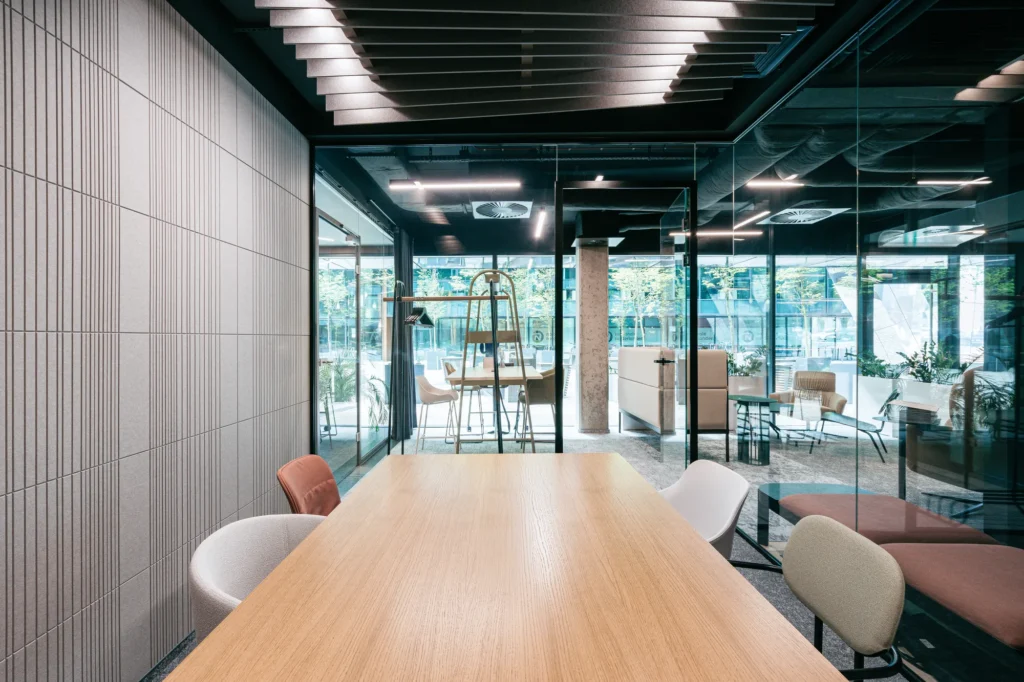
2. Outside noise—the street, neighbors, the city
The second category of problems involves sounds thatare just entering the apartment:
- traffic,
- a streetcar outside the window,
- playground,
- neighbors in the same stairwell or from the floor above.
Here, the customer has the same problem—namely, various types of noise— but the solutions are different from those for reverberation alone.
If you don’t have the budget to replace the windows and doors or insulate the walls, your only option is:
- reinforcing the barrier on the interior side (e.g., curtains, bookshelves, built-in units),
- pluslocal PET acoustic panels onthe walls adjacent to noisy areas.
These are stillsolutions for controlling reverberation without renovation, but they are more focused on dampening external noise.
3. Noise generated inside the apartment
The third type of noise is everything that happenson the inside:
- conversations in the living room,
- louder videos,
- playing video games on a console,
- home appliances, music, home audio equipment.
In apartment buildings with thin walls, these sounds tend to travel from room to room.
This often raises questionsabout how to reduce reverberation in a room without renovating, while alsosoundproofing the walls in an apartment facingthe neighbors or the hallway.
For you, this is a natural opportunity to suggest:
- thinner panels,
- PET acousticwall panels,
- orlighter 3D wall decorations that combine aesthetics with functionality.
It is worth remembering, however, that a more detailed acoustic analysis is sometimes necessary—especially in older buildings, such as prefabricated concrete apartment blocks, where sound transmission issues can be more complex. For more challenging acoustic situations, system-based solutions are used, such as mass-spring-mass systems, rubber mounts, or specialized high-density mats, which effectively reduce sound transmission due to their mass.
Three types of solutions—when another renovation isn’t an option
Customers usually say, “The flooring, cabinetry,and painting are already done.I need a quick solution that doesn’t involve renovations. But what exactly should I do?”
Below are three levels of activities you can suggest to them—from the simplest to the most advanced.
1. Textiles and Soft Materials – Quick First Aid
This is the simplest solution to the question:“How can I reduce echo in a room without renovating?”
You can use:
- a large rug instead of a bare floor,
- heavier curtains instead of just blinds,
- more soft seats,
- fabrics on the walls (throws, kilims, soft panels).
These components aren’t specialized systems, but they do effectively reduce reverberation. For many investors, this is a good first step before moving on toPET acoustic panels.
However, it’s worth making it clear: if the problem is serious, textiles alone aren’t always enough. This is especially true whena room is too noisybecause of its large size and high ceiling.
2. Acoustic panels – when you need more than just a rug
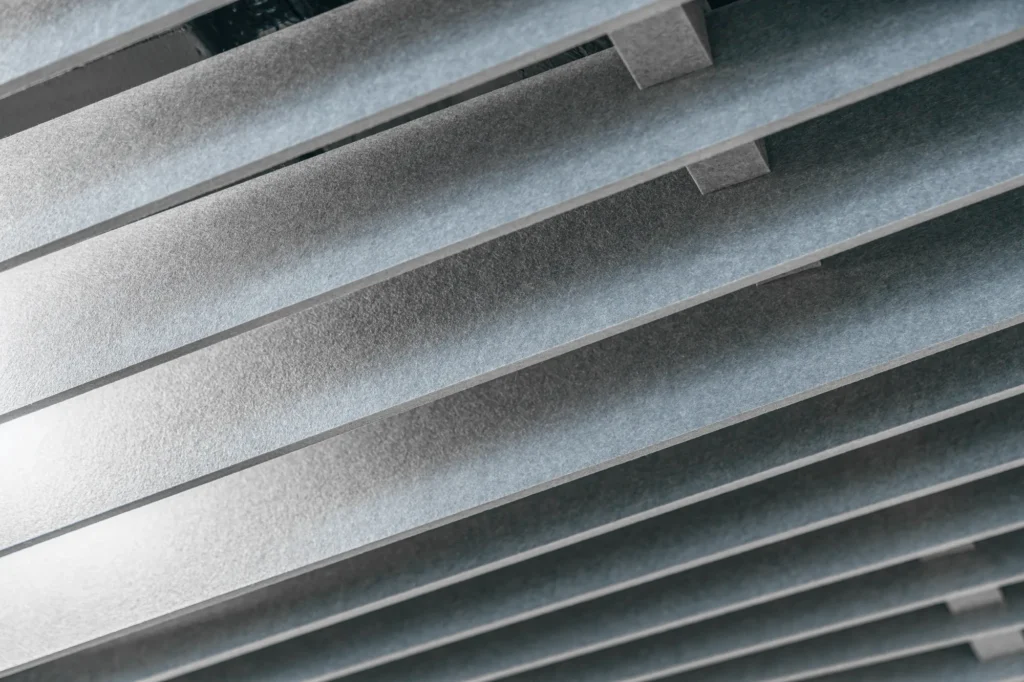
If you want more control over the acoustics,PET acoustic panels are an option.
Why PET felt?
- lightweight, non-flammable, easy to clean
- Easy to install; they can be glued to a wall or ceiling,
- do not require any structural modifications,
- They can be treated as3D wall decorations.
Thin acoustic panelswork great in homes and apartments—they’re attached directly to the wall, without a grid, and without reducing usable space.
Practical scenarios you can suggest to a client:
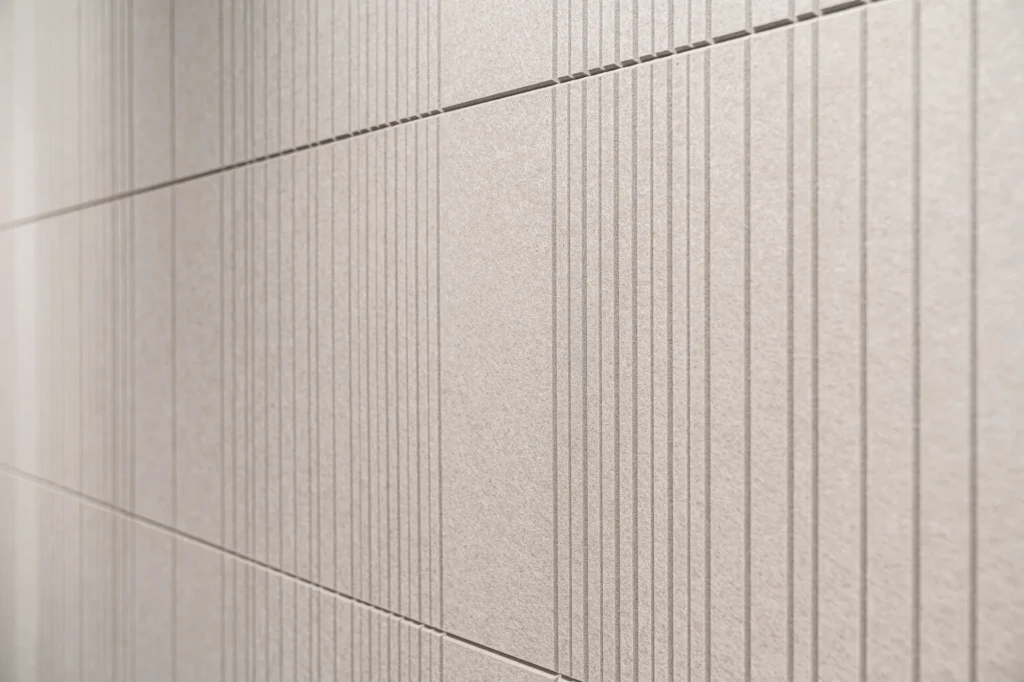
- Living Room—one large wall featuring a paneled design (e.g., using the TileFlex system), combining decoration and functionality in one.
- Home Office / Acoustic Panels for the Home Office —panels behind or in front of your desk to eliminate echoes during online calls.
- Children’s Room –colorful 3D wall decorations that look like artwork but function like regular acoustic panels.
If you’d like to learn more about panel layout, check out our article:
“Where’s the best place to install acoustic panels?”
Here, you can also learn more about Tileflex wall panels (link)
3. Clever placement of furniture and “sound barriers”
It’s a middle ground between “doing nothing” and “accessing the system panels.”
You can:
- Place a large bookshelf against the wall that reflects sound the most,
- use plants in tall planters as natural diffusers,
- add pictures, withthin acoustic panels underneath them,
- Break up the long, empty walls with different elements—some furniture,some PET acoustic panels, and some textiles.
Here, too, you canincorporate 3D wall decorations as an element that breaks up a “bare hallway” or a wall in the living room.
These are stillsolutions for reducing reverberation without renovation—you work with the layout and lightweight elements, rather than altering the partitions.
How to Present This to a Client—Three Simple Answers to One Question
When a client says to you, “My room is too noisy—what can I do without having to do a major renovation?” —you can structure your response in three steps:
- Diagnosis
– Is echo and reverberation the main problem?
– Is outside noise more disturbing?
– Or is it more of a mix of everything?
- Levels of action
– Textiles and furniture arrangement (minimum).
– PET acoustic panels and thin acoustic panels where the echo is greatest.
– 3D wall decorations where the wall “asks” for a stronger visual effect.
- A specific example:
– “Here we’ll create a design using Feltdecor panels, add curtains here, and use this wall for an acoustic panel in the home office.”
This gives the customer a clear planfor how to reduce echo in the room without renovating, instead of just a vague suggestion like, “Well… you could hang something up.”
Where does Feltdecor fit into all this?
As a designer, you can think of Feltdecor solutions as a set of tools:
- TileFlex—modular PET acoustic panels that can be arranged as wall decorations in your living room or home office.
- AbstractTile / Other Decorative Collections —When You Want to Combine Graphics with Acoustics
- SilentScape (in single-family homes)— when the space is large and a lightweight, suspended acoustic ceiling is needed.
In each of these cases, you tell the customer something simple:
“These aresolutions for reducing reverberation without renovation—we stick, hang, and mount them on the surface.We don’t touch the walls, we don’t make a mess, anda room that’s too noisyfinallystartsto feel like a place to live.”
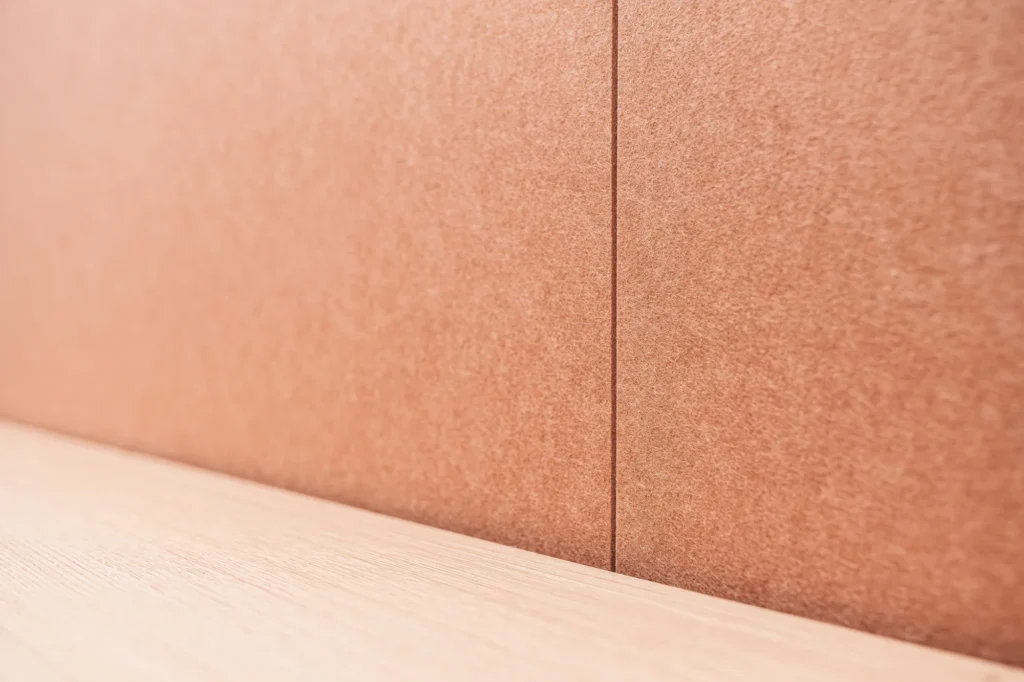
Imagine the same living room, study, or bedroom that you’re discussing with a client during the design phase—but after a few well-thought-out changes have been made. The rug is no longer just “decoration,” the curtains do more than just block out the light, and the panels on the wall are no longer random graphics, but a deliberate tool that brings calm to the space. Suddenly, conversation at the table doesn’t echo off the walls, a phone call at home doesn’t sound like it’s coming from a stairwell, and in the evening, the apartment simply feels more peaceful.
That’s exactly the difference between an interior designed “for photos” and one where you can actually live and relax. As a designer, you have a real impact on how this apartment will “sound”—even if the client clearly states that the renovation is already complete. Carefully selected textiles, clever furniture placement,PET acoustic panels, orthin decorative acoustic panels onthe wall can make a bigger difference than just another set of throw pillows.
If you want to apply these principles to a specific floor plan of a client’s apartment or home office, you can check out our PET felt solutions or read the article “Where Is the Best Place to Install Acoustic Panels?”—you’ll find useful tips there.