Skip to main content
Skip to footer
Skip to main content
Skip to footer

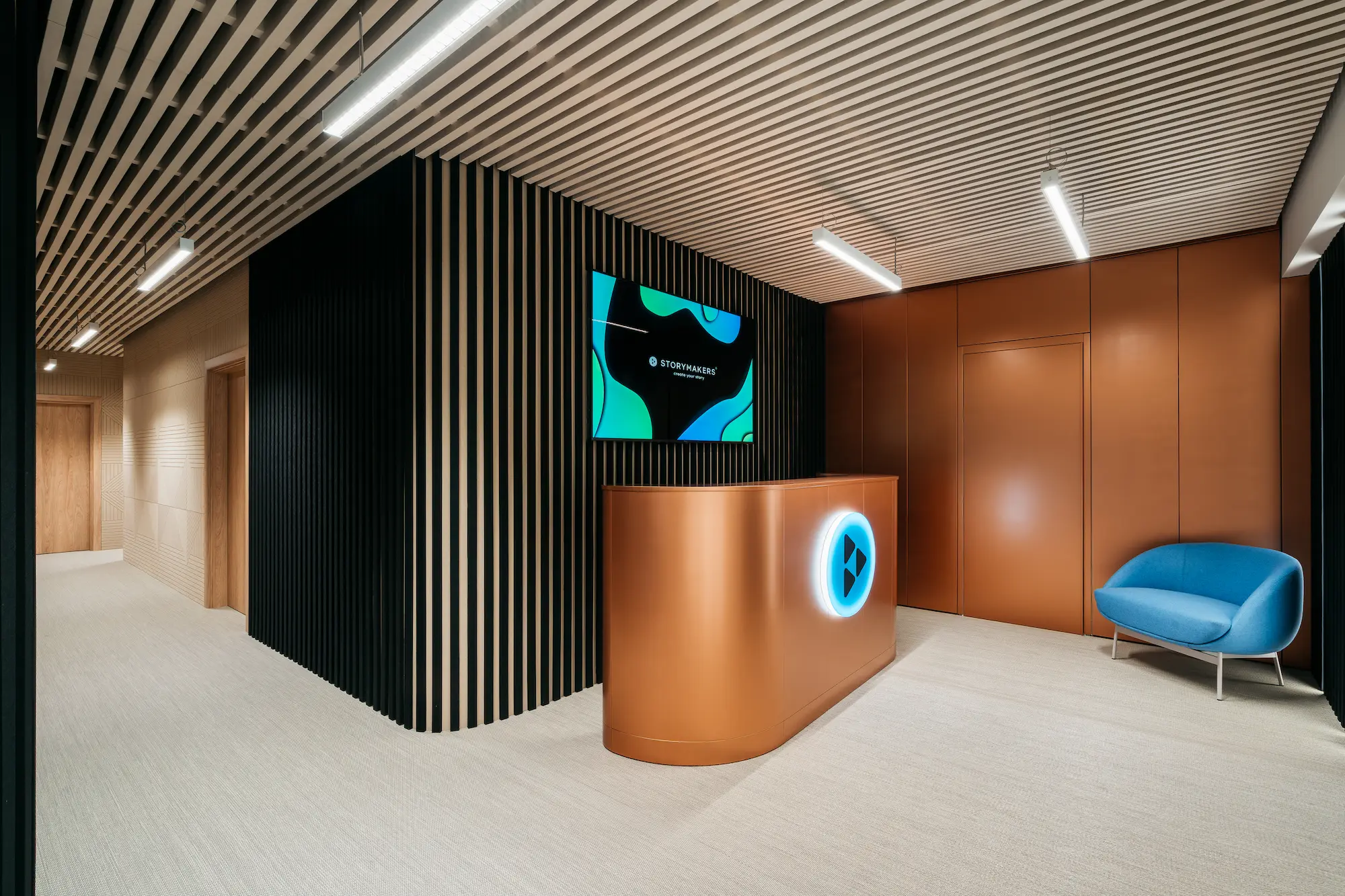
Just a few years ago, many people viewed acoustic panels as a purely technical solution. They were meant to dampen sound in a room, but not necessarily to look good. Today, that approach is clearly changing.Decorative felt panelsareincreasinglydesigned to do two things at once: improve acoustics and add character to a space.
This is important because the same problem often arises in modern interiors. There are a lot of hard surfaces—smooth walls, glass, concrete, large tables, and high ceilings. Visually, everything looks modern, but sound takes on a life of its own. Conversations echo, it’s harder to concentrate in the office, there’s a lack of privacy in hotels, and in public spaces, the noise quickly becomes tiresome. That’s whendecorative felt panels provetheir greatest value. They’re not just wall decorations. They become part of a well-designed interior.
This approach is clearly evident in Feltdecor’s projects. The brand’s website showcases installations for offices, hotels, and educational spaces where PET felt panels serve more than just an acoustic function. At the Remax Duo office, they were used in open-plan areas, conference rooms, the reception area, and common areas, combining acoustic performance with elements that reinforce brand identity. At the Kossak Hotel in Kraków, the goal was to ensure soundproofing, privacy, and a high level of comfort for guests, while maintaining the elegant, modern character of the interiors. Meanwhile, at the HMT showroom in Wrocław, the project itself was described as a fusion of acoustics and design in a modern exhibition space.
In this article, we’ll show youhow decorative felt panels canwork in various types of interiors and why they so often come out on top today compared to solutions that are either just pretty or just practical. Because the best results come when design and acoustics work together.

1. Why does felt combine design and acoustics so well?
Felt has one very important advantage: it doesn’t look like a technical material. It doesn’t give off that cold, “engineering” vibe that, in an interior, is immediately associated with acoustic correction or a solution implemented only after a problem arose. It’s matte, visually soft, reflects light well, and adds depth to a wall. As a result,decorative felt panels don’tlook like an afterthought. From the very beginning, they can be part of the wall or ceiling design—just as natural as color, built-in elements, or material divisions.
This is precisely what makes felt such a natural fit for contemporary interiors. Today, materials are expected to do more than just look good. They are meant to function within a space, meet the user’s specific needs, and at the same time create the atmosphere of a place. Felt does this exceptionally well because, on the one hand, it brings softness and visual warmth, and on the other, it improves acoustics—which very often becomes a real problem in modern interiors. This is especially true in spaces with large glass surfaces, concrete, smooth walls, high ceilings, and few sound-absorbing materials.
Another major advantage of felt is its design flexibility.Decorative felt panels canserve a wide variety of purposes. In one interior, they can create a calm, almost uniform backdrop that only subtly organizes the space. In another, they can serve as a stronger accent, drawing the eye and defining the character of an entire wall. They can also function as rhythm, pattern, division, and chiaroscuro, making them not just a finish but a compositional tool in their own right. In commercial spaces, they can even reinforce a place’s identity, highlight a brand’s style, or shape the way users perceive the interior.
You don’t have to choose between a wall that looks good and one that improves acoustic comfort. Nor do you have to hide functional elements to maintain aesthetics. With felt, one follows naturally from the other. This material, which reduces reverberation and improves the quality of conversation, simultaneously adds texture, softness, and a more refined character to the interior.
Simply put:decorative felt panels showthat you no longer have to choose between having a quieter space and having a more attractive one.

2. Interesting examples from Feltdecor projects
This is best illustrated by our projects.
Remax Duo – Felt as Part of the Workspace and Brand Identity
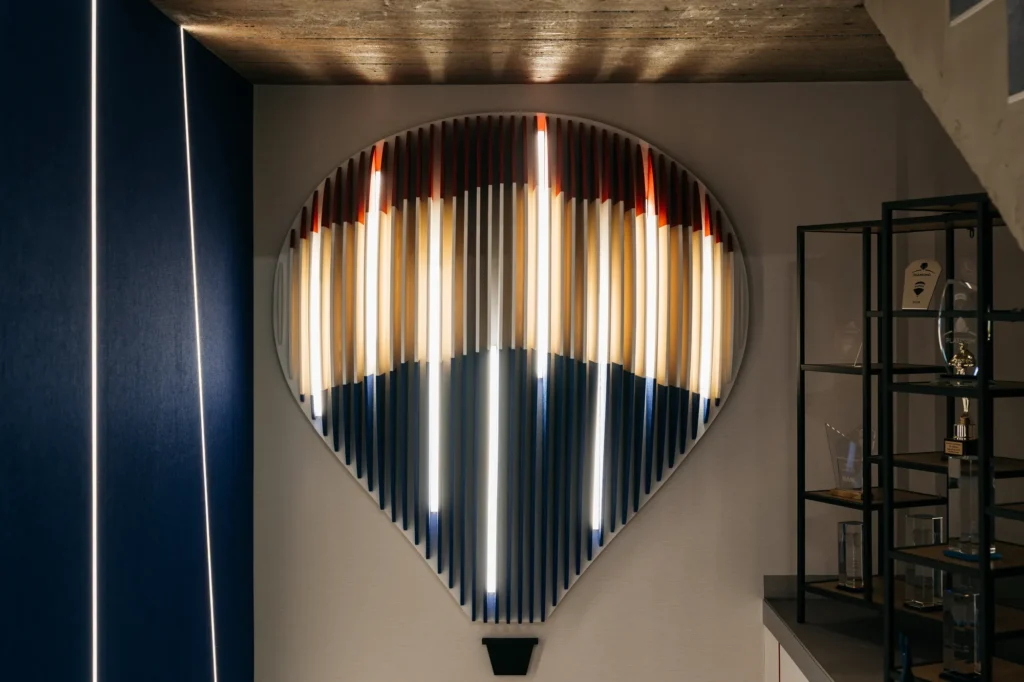
At the Remax Duo office in Nowy Targ, felt has been used for more than just acoustic treatment—it’s practically everywhere in the building. It can be found in the open-plan office, conference rooms, the reception area, and common areas. As a result, the panels don’t just serve specific areas but help organize the entire office. They reduce reverberation, improve comfort while working and conversing, and, at the same time, enhance the character of the interior and its visual cohesion.
This is a great example of howdecorative felt panels cannot only improve acoustics but also create a distinctive style for a space. In a project like this, the wall is no longer just a surface to be finished; it begins to help shape the office’s atmosphere.
Hotel Kossak – tranquility and elegance without heavy-handed design choices
At the Kossak Hotel in Kraków, felt above all “exudes class.” Here, guest comfort is the top priority: a sense of peace, privacy, and tranquility. Acoustic panels made of PET felt help reduce reverberation and improve the acoustics in the rooms, but they do so in a very subtle way. They do not dominate the interior. They do not detract from its elegance. On the contrary, they blend well with the modern, refined character of the hotel’s space.
This shows thatdecorative felt panels don’talways have to create a strong visual impact. Sometimes their strength lies precisely in the fact that they have a calm, soft, and almost “background” effect, yet they still have a real impact on how the interior is perceived.
HMT Wrocław – Acoustics That Become Part of the Exhibition
At the HMT showroom in Wrocław, felt was incorporated into a space designed to be modern, striking, and memorable. In a place like this, every material must serve a dual purpose: it must look good while also supporting the functionality of the interior. Felt panels are well-suited to this role because they visually organize the space, add depth, and help reduce reverberation—which is often a problem in showrooms and large exhibition spaces.
Here, it’s clear that felt panels canbe part of a modern interior design. They aren’t a hidden technical solution. Instead, they become a deliberate design element that enhances the overall feel of the space.
What do these projects have in common?
Although each of these spaces functions differently, they all demonstrate the same thing: felt doesn’t have to be a compromise between function and aesthetics. In an office, it promotes concentration and organizes the space. In a hotel, it helps create a sense of calm and comfort. In a showroom, it becomes part of a stronger, more expressive design composition.
3. Where decorative felt panels work best
Felt’s greatest strength lies in the fact that it can be used in a wide variety of interior settings, and in each one it will serve a slightly different purpose. In one space, it will help dampen sound and improve the comfort of conversations. In another, it will become a strong element of the design. Elsewhere, it will work more subtly, creating a backdrop and a softness that is often lacking in modern, hard spaces.
This is particularly evident in commercial and public interiors.Decorative felt panels area perfect fit for reception areas and entryways, where the wall should immediately make a strong first impression. They also work well in open-plan offices and conference rooms, where both aesthetics and the comfort of daily interaction are important. In hotels and hospitality spaces, they help create a calmer, more private atmosphere. In showrooms and exhibition spaces, they allow you to combine a striking visual effect with improved acoustics throughout the entire interior.
This is important because in spaces like these, the walls and ceilings are often large, smooth, and highly visible. If left bare, the interior can feel cold, too harsh, and simply tiring. Felt balances this out well. It adds softness, texture, and a more welcoming feel to the space, while also reducing reverberation. This means you don’t have to add separate decorations and separate acoustic solutions. A single material can serve both functions.
That is precisely whydecorative felt panelsworksowell in any space where the interior needs to be both aesthetically pleasing, impressive, and comfortable for everyday use. They aren’t limited to a single type of space. Their strength lies precisely in their flexibility and the fact that they can be adapted to a wide variety of design needs.
4. What are the benefits of decorative felt panels beyond their appearance?
The simplest way to put it would be to say that they improve the acoustics and look good. But in practice, their role is much broader. Well-designed decorative felt panels affectnot only how an interior looks, but also how it feels on a daily basis.
First of all, they help organize large surfaces. A bare wall often adds nothing to a space. It’s only when you add a panel that the wall gains rhythm, proportion, texture, and direction. As a result, the interior begins to look more intentional and cohesive.
Second, they visually warm up a space. Modern interiors are often dominated by glass, concrete, stone, metal, or smooth, lacquered surfaces. Felt adds something these materials usually lack: softness and a calmer feel. This is especially important in spaces where people spend a lot of time and where the interior must be not only striking but also inviting.
Third, they improve everyday comfort. Reducing reverberation isn’t just a technical fix. It’s a real change in how the interior is perceived. Conversations become clearer, noise is less tiring, and the space feels calmer. And that is precisely whydecorative felt panels areso valuable—because their effect can be seen and heard at the same time.
It’s also a material that offers a great deal of design freedom. It can be used to create calm backgrounds, geometric compositions, bold accents, visual identity elements, or more organic arrangements. As a result, a single material can meet a wide variety of needs while still maintaining functional and aesthetic consistency.

Check out our solutions , such as TileScratch.
The greatest strength of felt panels is that they don’t need to be hidden. They aren’t just a solution used to correct reverberation. They can be part of the design from the very beginning and consciously shape the character of the interior. That’s exactly why they work so well in modern offices, hotels, showrooms, and public spaces.
Feltdecor’s projects illustrate this well. At the Remax Duo office, felt organizes the workspace and reinforces its visual identity. At the Kossak Hotel, it fosters a sense of calm, privacy, and a more comfortable interior experience. In the HMT showroom, it becomes part of a modern, refined display composition. It functions a little differently in each of these places, but each time it combines the same elements: design and acoustics.
And that is precisely whydecorative felt panels areone of the most interesting materials used in interior design today. They don’t force you to choose between function and appearance. They let you have both at the same time.