Skip to main content
Skip to footer
Skip to main content
Skip to footer

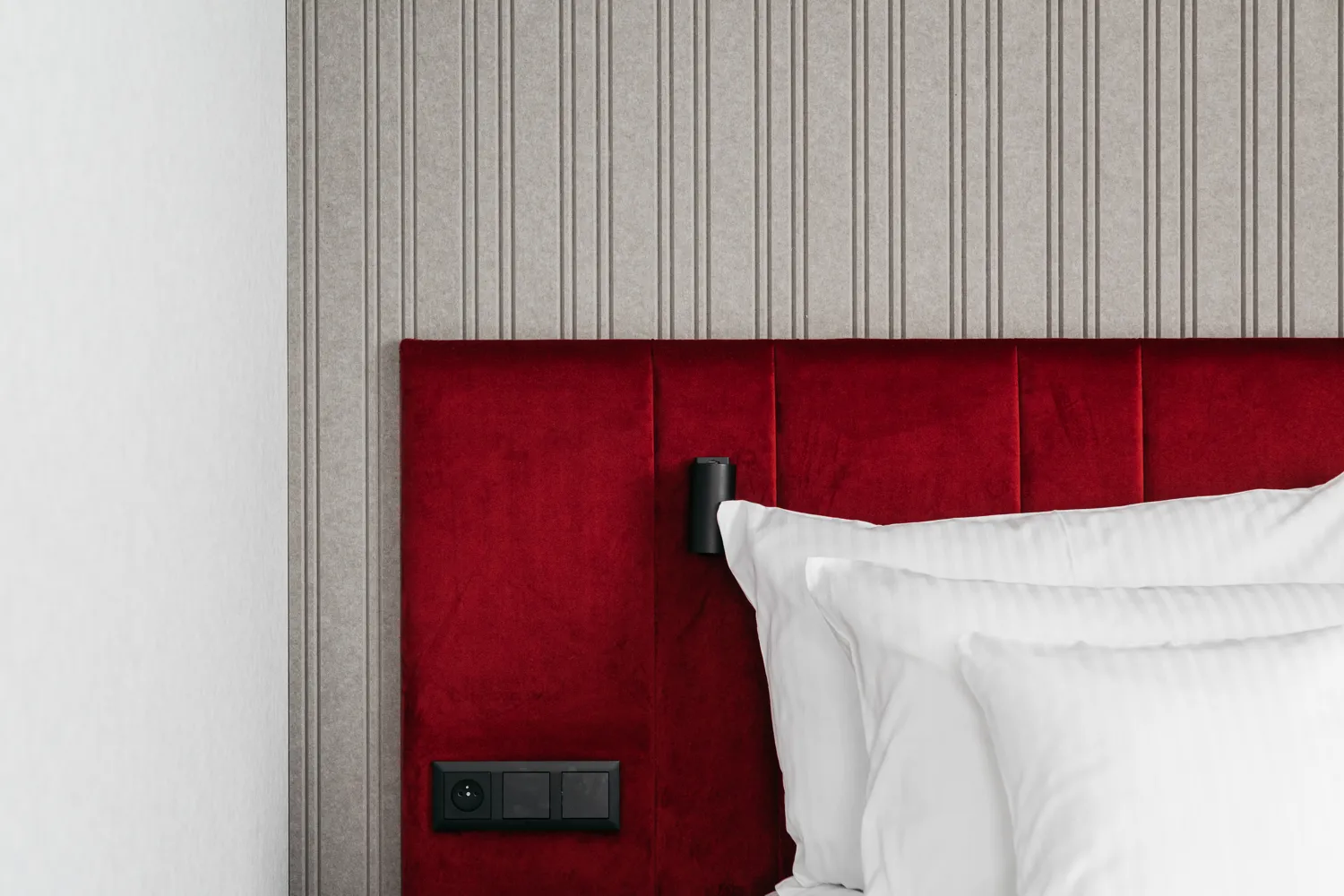
Today, investors are asking not only about the soundproofing properties of acoustic panels, but also about their impact on the health and well-being of household members. These concerns are entirely justified. If someone with allergies lives in the home, it is crucial to ensure that the new piece of furniture does not accumulate excessive amounts of dust or emit compounds that degrade air quality.
The answer is: yes, acoustic panels can be completely safe for people with allergies. However, this depends on a careful selection of the base material, high-quality craftsmanship, and documented low emissions of chemicals into the environment.
Not every product available on the market meets these criteria. For people struggling with allergies, it is important that the panel has a solid construction, is easy to clean, and that the manufacturer holds specific certifications regarding formaldehyde and volatile organic compound (VOC) emissions. Classifications such as E1 or M1 are not just a marketing gimmick—they are official, measurable confirmation that a given material has been tested for indoor air quality safety.
Below, we provide a detailed analysis of the characteristics of acoustic materials in relation to allergies, highlight which parameters to look for in technical data sheets, and explain how to maintain the hygiene of soundproofing systems in everyday life.
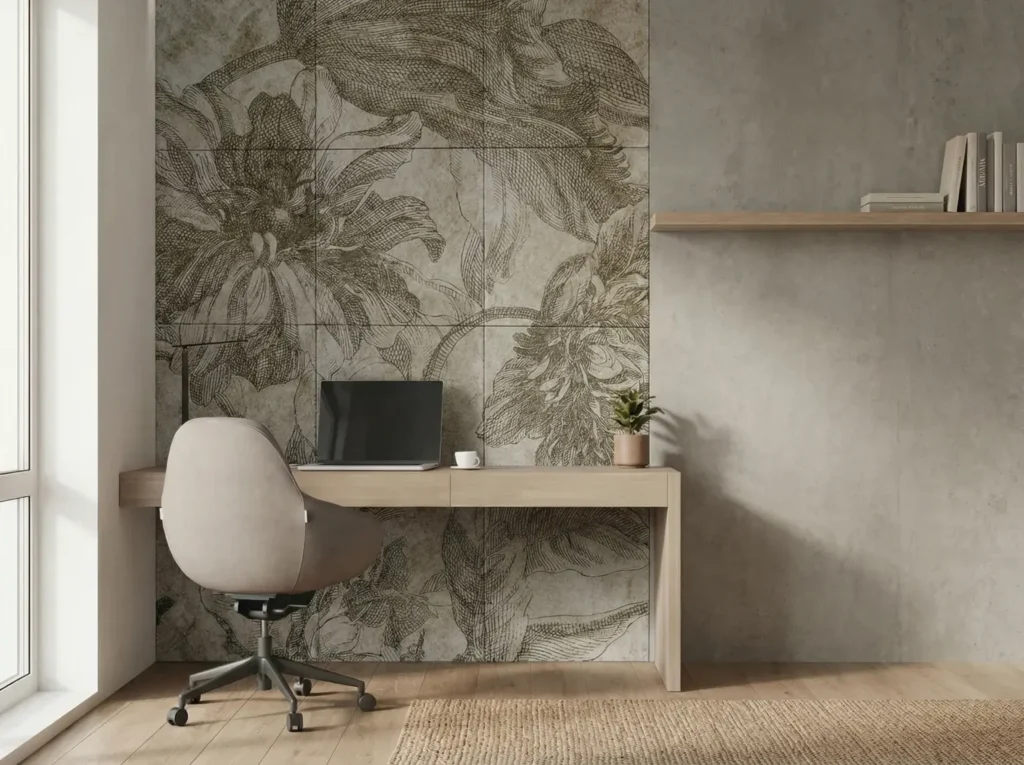
1. Which materials used in acoustic panels are safe for people with allergies?
The selection of acoustic panels for a room occupied by someone who is sensitive to dust, dust mites, or airborne irritants should be based on an analysis of the product’s physical structure. A material intended for long-term use in a bedroom or living room must be stable—it must not flatten, crumble, or release microparticles into the air during normal use.
Several product groups dominate the market. The first of these are polyester nonwovens and panels made of PET. These solutions are highly valued from a health perspective. Their structure is homogeneous and free of loose, friable filler. High-quality PET panels are manufactured using processes that do not involve aggressive solvents, which directly results in negligible emissions of chemical compounds.
The second popular category consists of systems based on mineral or glass wool. They offer excellent sound absorption, but for people with allergies, the finish is crucial. The core of such a panel must be completely and tightly sealed within a hard, intact casing or technical fabric. Exposed, damaged, or low-quality wool could release irritating fiber particles. Safety, therefore, does not stem from the name of the raw material alone, but from the installation technology and the sealing of the finished product.
The outer layer of the panel is just as important for health. Even a perfectly protected inner layer won’t do the job if the outer fabric is prone to attracting pollen and difficult to clean. For people with allergies, materials with a dense, smooth texture that can be easily vacuumed are a much better choice than fluffy surfaces, those with long pile, or deeply textured ones where dust easily accumulates. This is particularly critical when installing upholstery in bedrooms, children’s rooms, or home offices.
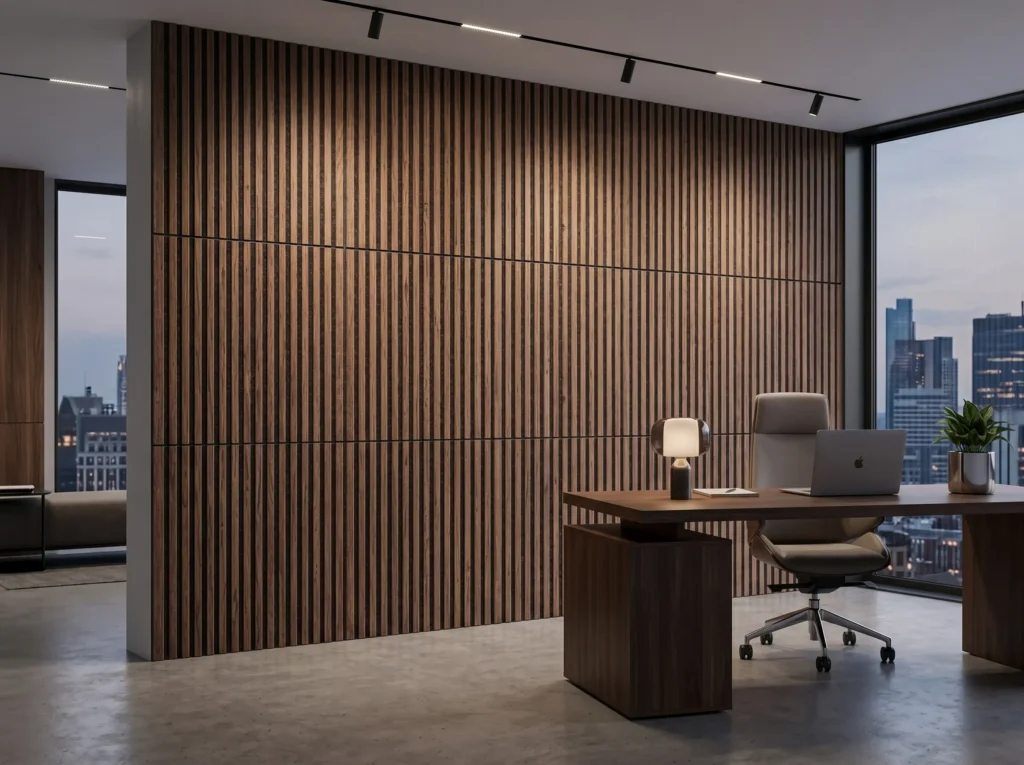
2. Formaldehyde and VOC Emissions—What You Should Really Check
Claims of “health-friendliness” should always be verified using official technical documentation. The most critical parameters are the emission levels of formaldehyde and volatile organic compounds (VOCs). These compounds evaporate from untested adhesives or dyes and have a negative impact on the respiratory system. International research institutions, including TÜV Rheinland, unequivocally identify VOC analysis as a key tool for assessing the chemical purity of interior furnishings.
When choosing panels, look for materials labeled with hygiene class E1 (which guarantees a safe, low level of formaldehyde release). An even more rigorous standard, and one that is highly sought after in Europe, is the Finnish M1 certification. This classification not only tests for VOC and formaldehyde concentrations but also takes into account ammonia emissions and the odor profile of the finished product. The presence of such certifications ensures that the product will not degrade indoor air quality in living spaces.
The complete absence of information on emissions in the manufacturer’s materials should serve as a warning sign for the buyer. If a company does not specify the formaldehyde class, avoids disclosing information about the composition of the binders used, and does not hold environmental certifications, purchasing such a product for a home where someone with allergies lives carries a high risk.
Modern polyester (PET) felt panels prove that high aesthetic appeal and acoustic performance can go hand in hand with environmental friendliness and safety. Many of them are manufactured without the use of toxic chemicals and are recyclable, making them an excellent choice for those who prioritize health.
3. Dust, dust mites, and airborne allergens—can acoustic panels make the situation worse?
Many myths have arisen regarding the installation of wall panels in the homes of people with inhalant allergies. In reality, the key to success is not the mere presence of the panels, but their texture and the regularity of cleaning.
A good acoustic panel does not compromise the sterility of a room. Unlike heavy curtains, plush carpets, or thick throws, polyester felt wall panels do not provide a suitable environment for the growth of house dust mites. If their surface is smooth and free of loose, protruding fibers, the amount of dust that accumulates on them is comparable to that on a standard-finish wall or upholstered furniture.
Only products with very complex, deep, three-dimensional structures or velour-like fabrics can be difficult to maintain. They require more frequent and thorough cleaning. When choosing a pattern, it’s therefore a good idea to follow this rule: the simpler and more compact the design, the easier it is to remove dust using a standard vacuum cleaner nozzle.
Let’s also remember that no acoustic system functions in isolation. The conditions inside a home depend on overall cleanliness, humidity, and the filtration system. Medical guidelines for combating dust mites clearly indicate the need to regularly vacuum surfaces with HEPA-filtered vacuum cleaners and to maintain indoor humidity below 50%—these are factors that effectively inhibit the proliferation of allergens.
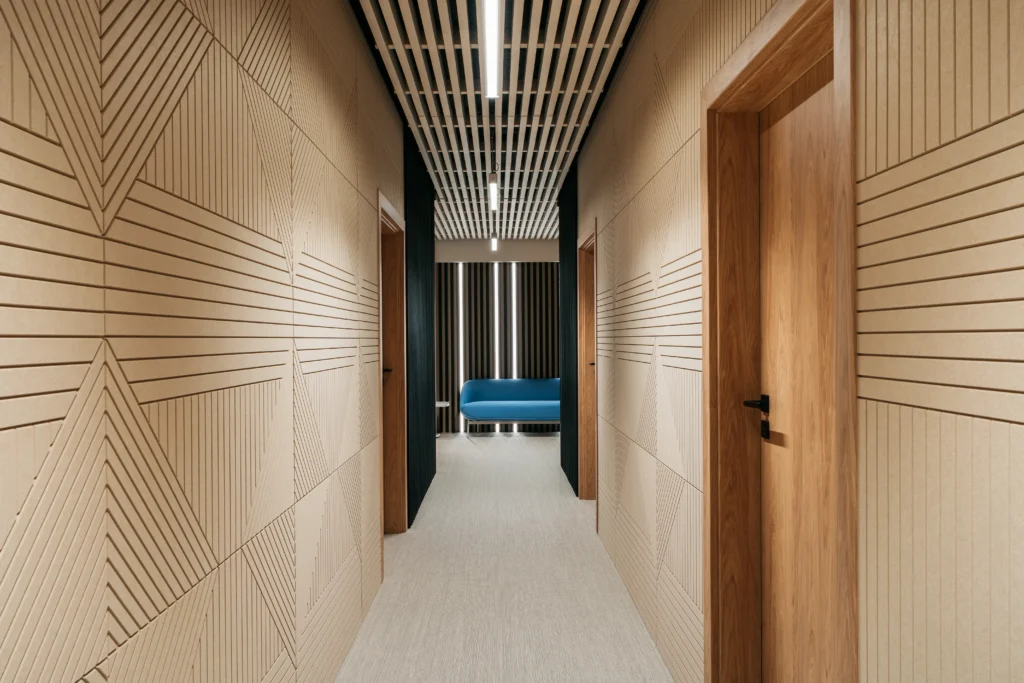
4. How to Choose Acoustic Panels That Are Safe for People with Allergies
Navigating complex technical standards can be difficult, so when choosing safe panels, it’s a good idea to use a simple checklist based on four pillars:
- Opt for dust-free materials:Choose physically stable components that do not release microfibers when touched or exposed to air movement. Pressed PET felt panels and molded polyester nonwovens work exceptionally well in this regard. Avoid products that are brittle, loose, or prone to fraying.
- Check emission certifications:Look for confirmation of low VOC and formaldehyde emissions in the product specifications. Symbols such as E1 and the M1 standard are the best guarantee of clean air in your home.
- Choose surfaces that are easy to clean: The surface of the panels must allow for easy vacuuming. Compact, smooth, or lightly textured surfaces without long pile will be the most practical for everyday use.
- Avoid materials that are prone to damage:Panels that are prone to scratching, peeling, or wearing down will eventually generate micro-waste and dust. Choose products with high mechanical resistance that are designed for heavy-duty household use.
By following these few guidelines and combining them with good habits (regular ventilation, vacuuming with a HEPA filter, and humidity control), you can completely eliminate the risk of allergic symptoms flaring up.
Summary
Modern acoustic panels are a safe addition to a home where people with allergies live—provided they are purchased with care. The key to success lies in analyzing the material’s physical properties, verifying the technical documentation, and ensuring they are kept clean afterward.
From a health perspective, the best systems are dust-free, with research-confirmed low chemical emissions and a compact structure that makes vacuuming easier. Before making a final purchase decision, it’s worth setting aside purely visual or price-based criteria and thoroughly analyzing the product’s technical specifications. Maintaining adequate cleanliness and monitoring indoor air parameters (including humidity at around 50%) ensure comfortable and healthy living conditions.
High-quality acoustic systems do not pose a threat to respiratory health. On the contrary—by reducing disruptive noise and reverberation, they improve physical and mental well-being and facilitate daily rest without introducing any irritants into the interior.