Skip to main content
Skip to footer
Skip to main content
Skip to footer


You think the office is already polished to the last button! Furniture from top brands, light designed like in a catalog, every detail worked out. And yet, when you step inside… something is wrong. Echo. The reverberation reflects every word, every walk across the room, conversations overlap, and the whole aesthetics of the interior lose their meaning, because the acoustic comfort is zero.
Perhaps, at the design stage, you didn’t think about it at all? It seemed unnecessary, or you couldn’t find an aesthetically pleasing solution and as a result gave up…. Architects and designers face this problem almost every day. Fortunately, there are solutions that will combine these two worlds – aesthetics and functionality.
Acoustic wall panels are not only a way to create silence and focus, but also a design element that adds character to a space.
In this article I will show you how to choose panels for the wall, what are the inspirations and which realizations are worth knowing.
Why is surface selection so important?
When we talk about acoustics, the first association is often the ceiling – especially in offices or restaurants. But in practice, walls are the most common culprit of reverberation because they affect the lateral sound field, or reflected waves that run horizontally. They are large, smooth and hard, so they act as mirrors to reflect sound waves. They are the ones that make you get the impression of talking in a tunnel instead of having a one-on-one conversation.
Anyone who has moved into a freshly finished apartment knows this effect all too well. You haven’t yet had time to hang the curtains or shelves, and after the first clap, you get the feeling that the echo circulates throughout the house. You go to the kitchen, and the sound of footsteps carries all the way to the bedroom. This is natural – a blank wall reflects everything it hears: conversations, music, the clatter of a keyboard or the clatter of dishes. After a few hours in such an interior, you feel tired, even if you haven’t done anything demanding.
Now think of that wall covered with acoustic panels. Instead of reflecting sound waves, it begins to absorb and disperse them. You can feel the effectiveness immediately after installation – conversations sound natural, music gains depth.
Importantly, the walls also offer great design possibilities. Panels can be a subtle background that blends with the interior, or a strong decorative accent that builds the character of the entire room.
Types of acoustic panels for the wall
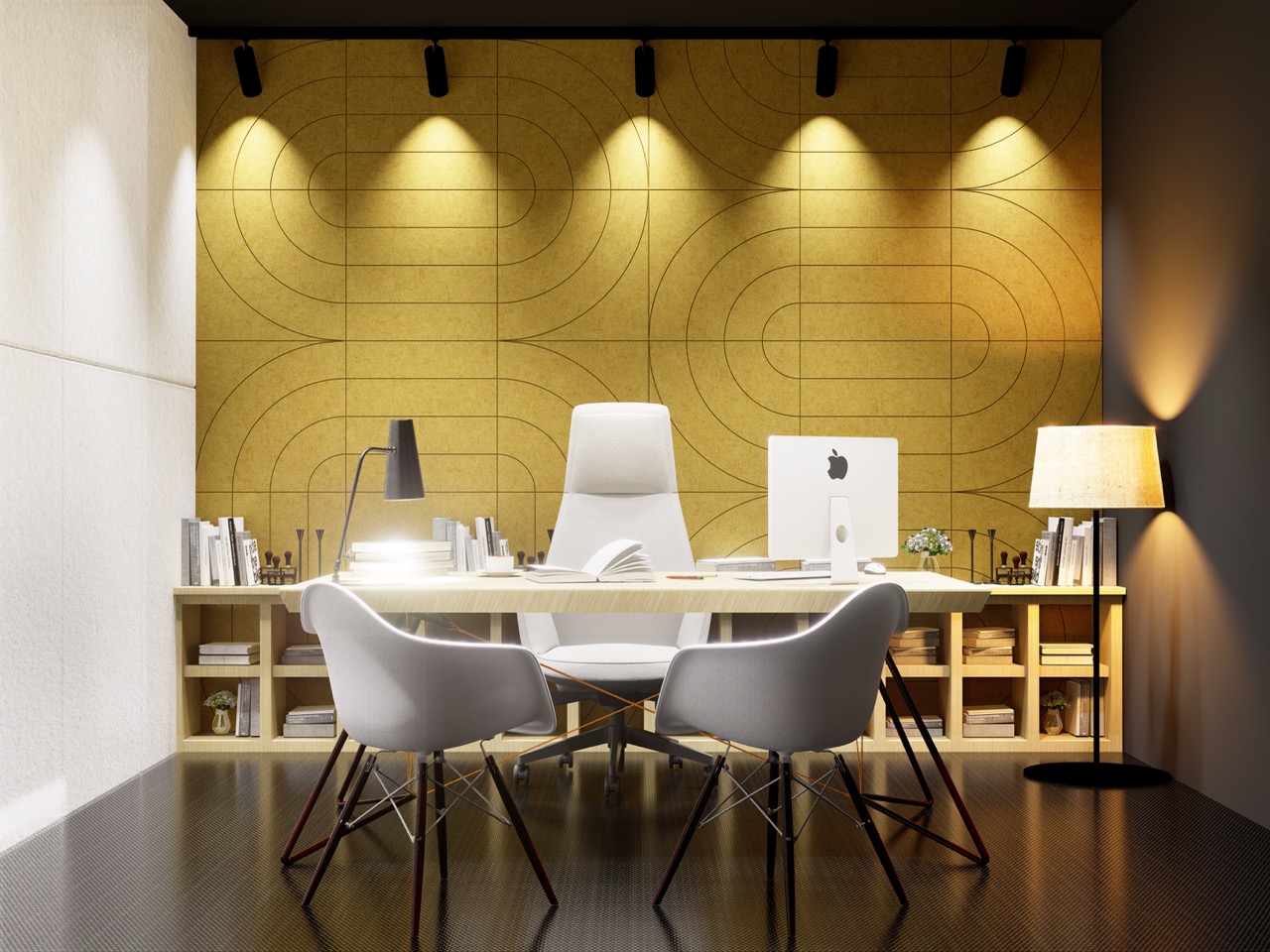
PET felt wall panels can come in many forms and colors. From simple and discreet to those that immediately become the focal point of the interior. It is up to you to decide whether the panels will be the background or the main decoration of the design.
Flat panels – simple and effective
This is the most classic form of sound-absorbing panels. Smooth felt panels that absorb sound while blending into the space.
Where is the best place to use them? In home offices, smaller offices, home living rooms, that is, where acoustics need to be improved in a simple and preferably inexpensive way.
The benefits of using flat panels include the fact that they are quick to install and discreet so, improve comfort, but do not dominate the interior design.
Milled and geometric panels
Here the felt is no longer just a plane. Thanks to decorative V-cut cuts, light and shadow create an additional visual effect on the wall. Such panels improve acoustics and at the same time add character to the interior, make an ordinary wall turn into a decorative element using only a felt panel.
Where do milled panels perform best? In offices, creative studios, conference rooms, coworking spaces, theaters, but there is nothing stopping them from being used in a clinic, hospital office or smaller space.
Art panels – acoustics in the form of art
It’s a solution for representative spaces, where the entire interior, not forgetting the wall, must impress. Linocut-inspired patterns, thicker material, and an effect that changes with the lighting and time of day – this is probably what you are looking for.
In such an interior, each wall looks like a work of art, while absorbing even more sound than standard panels. Thanks to, a really impressive visual effect, in hotels, theaters or libraries, it can even be the only decoration.
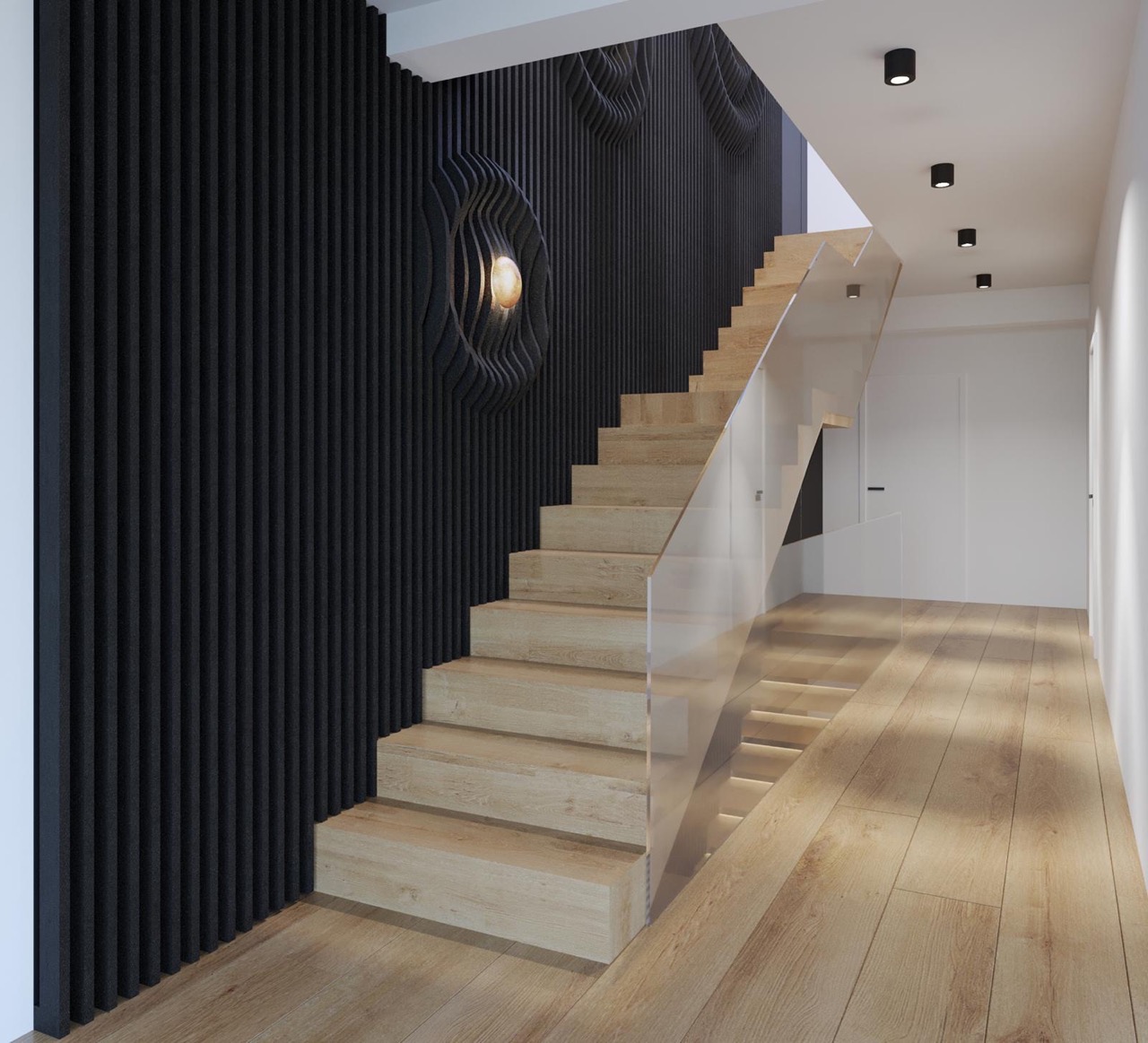
Decorative 3D walls and modular felt panels – premium wallpaper
Decorative 3D walls and modular felt panels are a solution for those who want to bring a distinct spatial effect to the interior. The entire wall turns into a composition, in a matching character, from modern to art deco.
You even treat such panels as premium wallpaper, which is decorative, while also dampening noise and improving acoustic comfort. They are best suited for large offices, conference rooms, reception areas and living rooms, where you want to clearly emphasize the style of the interior and relate to the geometry of the rooms.
Thanks to irregular shapes, you can choose from triangles, rhombuses or hexagons, and you can combine the modules into any composition. The interior gains a unique style and comfortable acoustics over the entire wall surface.
If you decide to combine decorative wall panels with acoustic ceiling baffles, you will achieve a truly surprising effect and make a great impression on visitors.
Design Inspirations
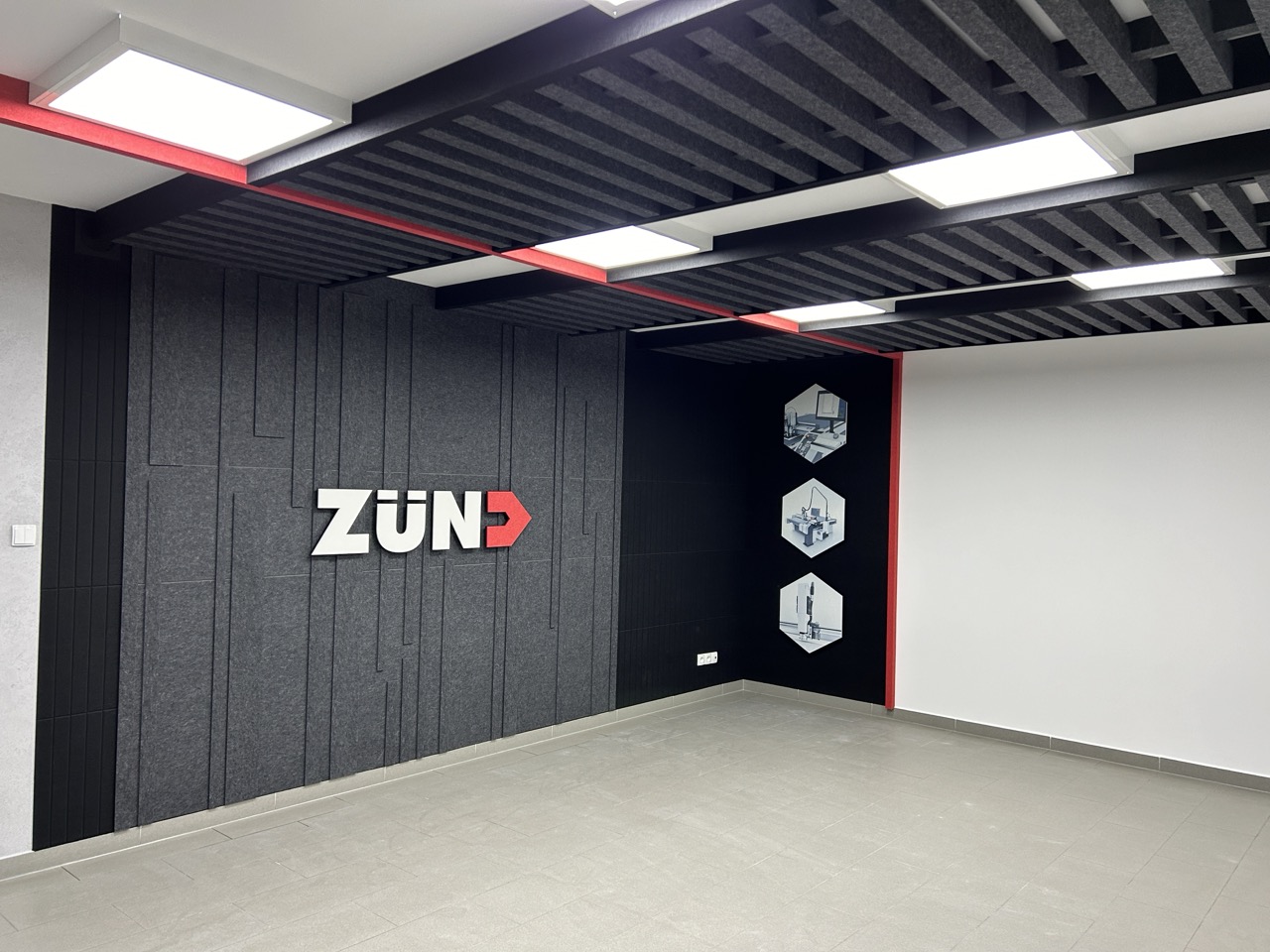
In offices, it is the walls that become the biggest acoustic challenge. They are the ones that reflect phone calls, amplify echoes and make the noise of the open space begin to dominate work. As a result, even the most beautifully designed interior can prove tiresome and ineffective for daily use.
Well-chosen acoustic panels or felt wall coverings can completely transform the character of a space. They absorb excess sound, improve speech intelligibility and create a background that promotes concentration.
In modern offices, they are increasingly treated not only as a functional element, but also as an aesthetic design tool – you can use them to shape the character of the interior, accentuate work zones or make the space unique.
Example of implementation: KSM, New Market
At the KSM office, we used dedicated 3D acoustic panels with the logo on the walls of the conference room. The felt lining was created from several layers of acoustic panels superimposed according to the design which, together with the logo, created the perfect backdrop for meetings with clients. Additional side walls were supplemented with personalized graphics on felt, adding to the atmosphere of the interior
See full project Implementation of KSM]
Restaurants and cafes
In gastronomy, the atmosphere is already half the battle – it’s not only the taste of the food that counts, but also how guests feel about the place. However, nothing spoils the atmosphere more than excessive noise. When the sounds of conversation, the clatter of dishes and music begin to overlap, acoustic chaos ensues, causing guests to raise their voices, finish their meal faster and return less often.
Well-designed acoustics can keep them for longer. The use of PET felt wall or ceiling panels can significantly reduce reverberation, thereby improving the comfort of conversation and the perception of the entire space.
In restaurants and cafes, solutions that combine acoustic and decorative functions are great – panels in geometric arrangements, suspended islands over tables or partitions made of soft materials that absorb sound and at the same time introduce a cozy atmosphere.
Such an interior becomes warmer, calmer and more “welcoming”. Customers can talk freely, and background music sounds natural. Good acoustics in a restaurant is not just a comfort, but an element that realistically translates into customer satisfaction and higher revenues.
Hotels and lobbies
In hotels, every detail counts like nowhere else – from the quality of the bedding to the light in the hallway. But true comfort begins where there is peace and quiet, allowing guests to truly relax after a long day. Even the most elegant decor loses its meaning if conversations can be heard from behind the wall and corridors rumble with every step.
Well-designed acoustics are an invisible sign of a high standard and quality of stay. In the lobby or reception area, it helps create an atmosphere of calm and professionalism, sounds are subdued, and voices of conversation do not carry throughout the space. In hotel rooms, acoustic panels and felt wall coverings absorb sounds and dampen outside noise, making the interior a haven of tranquility.
In common areas, such as hotel restaurants, corridors or meeting rooms, acoustics are important not only for comfort, but also for brand image. Guests who relax in silence subconsciously perceive the place as more luxurious, thoughtful and refined.
With acoustic panels made of PET felt, it is easy to combine aesthetics with functionality, their forms and colors can be matched to the style of the interior, and installation does not require complex structural changes. You gain harmony , tranquility and discreet elegance, which guests remember as much as a comfortable bed or excellent service.
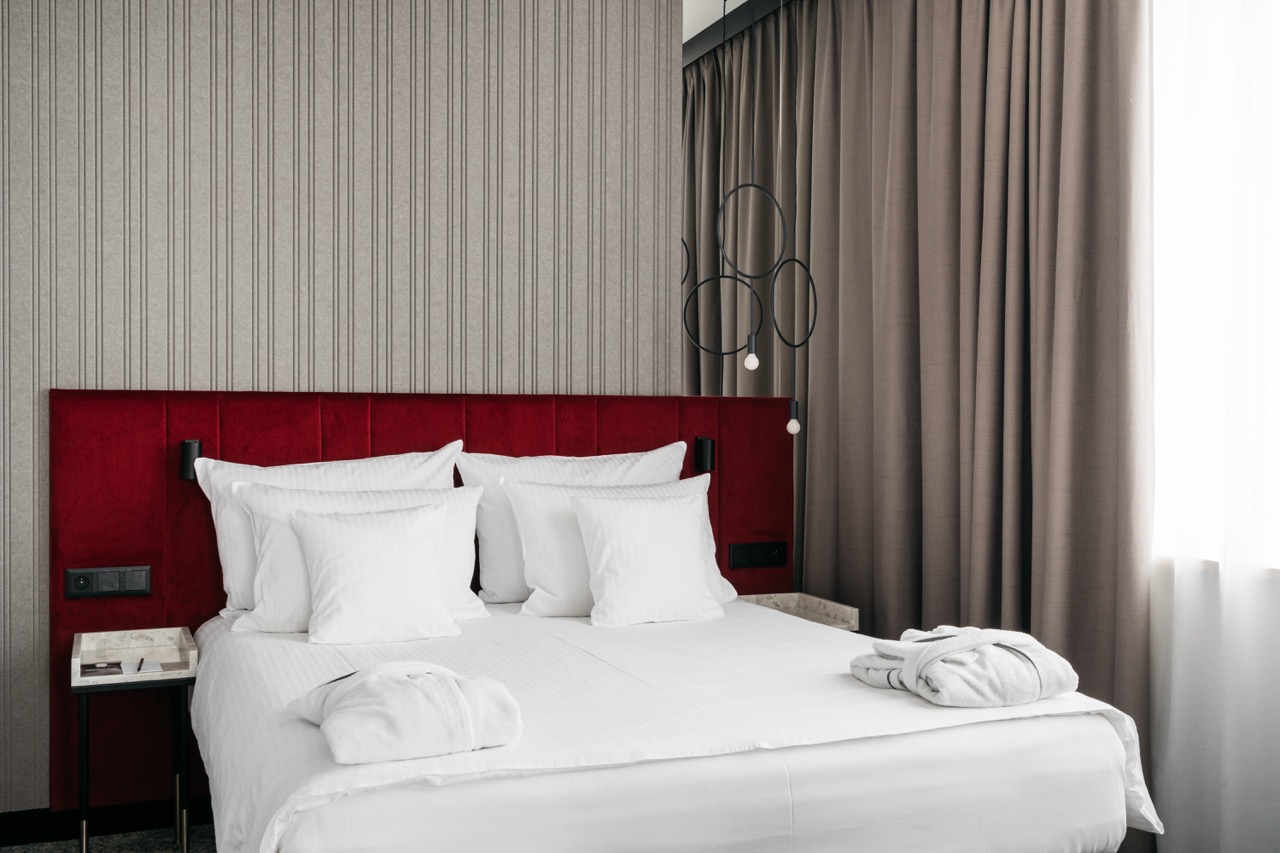
Example: Kossak Hotel, Krakow
In this project we focused not on the lobby, but on the hotel rooms and corridors. That is, the place where guests should feel most comfortable and cozy. We used acoustic panels for the dimensions of the walls adjacent to adjacent rooms. Behind the beds and televisions. The effect of the panels can be felt immediately, so guests gained privacy and sleeping comfort, and the hotel emphasized the premium standard of its rooms.
Importantly, the panels not only improved acoustics, but also became a design element, fitting in with the company’s elegant interior style and color scheme.
See our implementation: [Kossak Hotel].
Houses and apartments
Increasingly, felt panels are also finding their way into private interiors, not only for acoustic reasons, but also for aesthetics. Just a few panels behind the sofa or over the TV can change the acoustics of an entire room. Movies sound like in a real cinema, and you don’t have to worry about disturbing other household members.
In a home office, one panel behind the desk makes the microphone stop catching echoes and your online speeches sound professional. In addition, the wall becomes an aesthetically pleasing backdrop for video calli.
Instead of a painting over the bed in the bedroom – an acoustic panel. It looks unique, and at the same time muffles sounds from the corridor or staircase. Sleep comfort and aesthetics assured.
Standards and practical tips
When designing interior acoustics, it is worth remembering a few simple rules. It is not necessary to get into specialized parameters or complicated calculations right away, and it is more important to understand where and how many panels are enough to make the effect really noticeable.
It is useful to know indicatively the values of the recommended reverberation time (RT60) – that is, the time it takes for the sound to fade in the room after it is emitted. Too long a reverberation time causes echo and speech distortion, while too short a reverberation time causes a “dead” sound impression.
A good rule of thumb is to cover about 20-30% of the wall area. This is already enough to notice the difference, that is, the reverberation shortens, conversations become natural, and the noise stops tiring.
Small halls and offices (20-30 m²): here 6-8 panels of 60×60 cm are usually enough. In practice, this means one larger composition on the wall or several panels placed in strategic locations. In conference rooms, walls behind the speaker and those that reflect sound directly to the listeners work best.
The most common mistake we see! This is the installation of panels “a little bit everywhere”. A few panels on each wall may look aesthetically pleasing, but acoustically it has only a minimal effect. It is much more effective to focus on critical points, i.e. places of first reflections: behind the speaker’s back, opposite large windows, along parallel walls, which amplify the echo.
In acoustics, as in lighting, it is not quantity but quality that counts. It is better to install fewer panels in well-chosen places than to cover an entire wall with random elements. It’s a bit like with lamps – one well-placed one can build atmosphere and bring out the character of the interior, while five placed chaotically will only introduce clutter. Consciously placing panels at key points of sound reflections gives a more natural acoustic effect, while maintaining a consistent balance of the design.
How to choose panels for the wall?
The selection of acoustic panels begins with a simple question: What do we want to achieve in a given interior?
In a conference room, the goal will be to reduce reverberation so that conversations sound clear and natural. In hotel rooms, privacy and protection from behind-the-wall noise will prove crucial. In a home office, on the other hand, it’s all about work comfort and clear sound during online meetings. Each of these scenarios requires a different approach and different types of panels.
Once we know why we are installing the panels, it’s time for aesthetics. Here the choice is really wide. Simple, flat panels work well where discretion is important, such panels improve acoustics, but are not visually imposing, making them easy to blend into the design of a living room or small office.
A completely different effect is given by milled and geometric panels, here the light builds an additional effect on the wall, which introduces dynamism and modern character. However, if the project requires a strong accent, artistic panels come into play. Artistic forms, thicker and more spacious, change with the light and time of day, so that the wall begins to resemble art.
There is also no escaping the topic of budget. The simplest flat acoustic panels are an economical solution, good for private interiors and home offices. TileFlex is the middle of the golden compromise – simple to install, aesthetically pleasing, often chosen for offices or conference rooms. TileScratch, on the other hand, is already the premium shelf – more expensive, but the effect they make in restaurants or boutique hotels often determines the perception of the entire space.
In the end, it’s worth taking a broader look, not only at aesthetics and price, but also at durability and the material’s impact on the environment. Feltdecor panels are made from PET felt derived from recycled bottles. This is not only a conscious eco-friendly choice, but also a tangible added value in commercial or tender projects. The material is hypoallergenic, safe for everyday use, and meets stringent fire standards (class B-s1,d0), allowing it to be used in public spaces without safety concerns.
In addition, PET felt retains its properties for years – it does not crumble, does not yellow and does not need to be replaced after a few seasons, as often happens with foams.
In practice, this means that the choice of acoustic panels for a wall is always a combination of several decisions: the function to be performed, the aesthetics that will fit into the project, the investor’s budget, and the awareness that it is worth betting on sustainable and environmentally responsible solutions. It is these four elements that make a project work not only on the day of commissioning, but also after many years of use.
And if you want to see what it looks like in practice – take a look at our “realizations” tab and get inspired by the panels that will fit any project and space.
If you’re wondering whether it’s better to choose walls or ceilings for panel installation, we have a separate article in which we elaborate on this topic step by step: “Where is the best place to install acoustic panels?“.