Skip to main content
Skip to footer
Skip to main content
Skip to footer

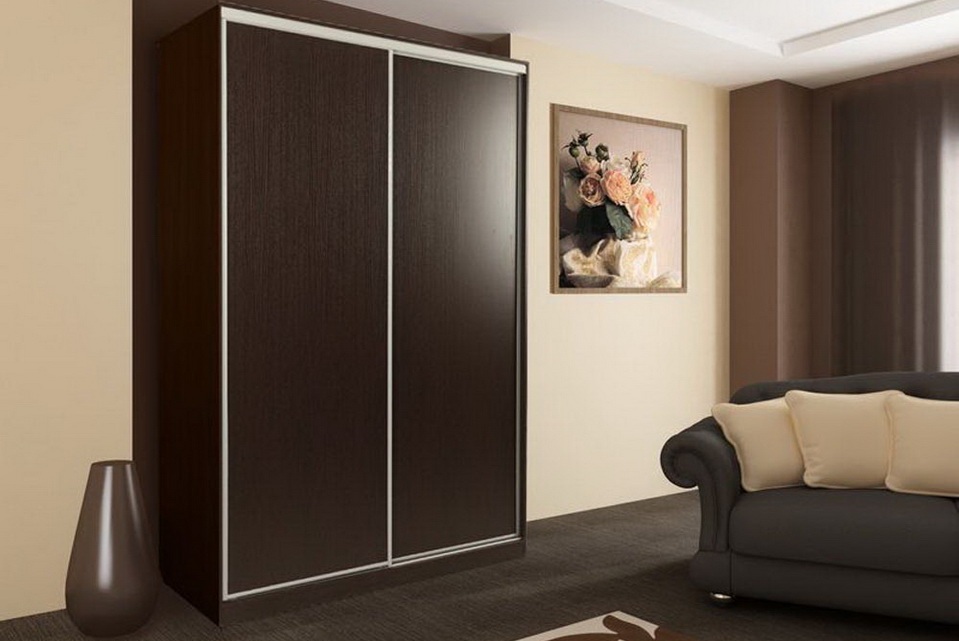
Take a look at old photo albums of Polish flats from before 2006. Can you see it? Dark, chunky furniture in a wenge shade. Glossy stucco on the walls, often in an apricot colour. Add to that suspended ceilings with fanciful arches, densely studded with halogen spotlights, and between the kitchen and the living room stood the ever-present wall of glass blocks. Heavy, frilly curtains hung in the windows, and on the shelf, the obligatory giraffe figurine brought back from a holiday.
Sounds funny? Perhaps a little. But the truth is that just twenty years ago, that’s exactly what we considered the height of modernity and luxury.
It is worth pausing for a moment to reflect: what exactly has changed and, more importantly, why?
From status symbols to true relaxation
In the mid-2000s, interior design often had one hidden aim: to prove that we could afford it. Hence, all those wall finishes, Venetian stucco, laminates imitating fine wood or marble, and glossy cupboard fronts. The aesthetic of imitation reigned supreme. The point was to show off one’s status.
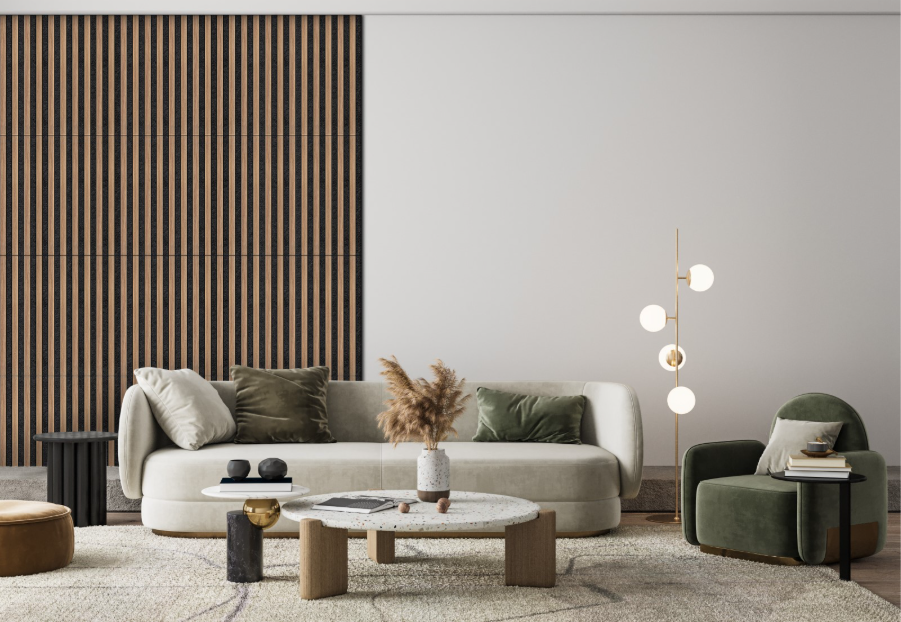
By 2026, this way of thinking about space had completely run its course. Today, an interior is meant, first and foremost, to serve you, rather than to represent you to your guests. We’re looking for warm minimalism, organic shapes and natural materials whose texture you can feel. We’ve stopped trying to impress others. Instead, we simply want to feel at ease in the place where we live and work.
This isn’t just a matter of changing trends. It’s a complete shift in our approach to our own home.
What have we said goodbye to for good?

The list is long, but a few elements stand out particularly strongly.
First and foremost, gloss has given way to matt. That ubiquitous sheen of the 2000s, shiny MDF fronts, marble-effect tiles and high-gloss lacquered wood, has all given way to matt surfaces. Today, it is not just the appearance that counts, but also the tactile sensation. So-called haptics – that is, how a material feels under our fingers – has become crucial when choosing a finish.
Dark wenge wood has all but disappeared. It has been replaced by light oak with a distinct grain pattern, warm walnut and light, rounded furniture shapes. We’ve done away with heavy, massive pieces. Furniture can finally breathe.
We have also moved away from saturated colours: pistachio, deep apricot or vivid terracotta. These have been replaced by a soothing palette of earthy tones: sandy beiges, taupe, delicate sage green and muted reds. It’s worth mentioning that Pantone has announced ‘Cloud Dancer’ as the colour of the year for 2026 – in short, a broken white. This probably best sums up the direction we’re heading in.
And what about those complicated plasterboard constructions? Hardly anyone thinks about them these days. Clean, simple lines, have ultimately triumphed over arches and decorative alcoves.
What has stood the test of time?
Sure, not everything from that era has been consigned to oblivion. Many solutions have simply matured and evolved.
Take cork, for example. It used to be associated mainly with school blackboards, but today it’s a fully-fledged, great-looking decorative and acoustic material. It’s often seen in the form of modern 3D panels, hexagons or interesting wall structures.
Lighting has also undergone a transformation. We’ve moved away from a single, central chandelier and rows of halogen spotlights. Now we’re focusing on layers: subtle wall lights, frosted glass lamps that give off a soft glow, and concealed LED strips in warm tones. This concept of ‘layering’ light first appeared in more upmarket designs two decades ago and has been going from strength to strength ever since.
Natural fabrics? They’re always a safe bet. Linen, wool or the recently fashionable bouclé – these materials never go out of fashion because they’re not just a passing trend. They look great and feel incredibly soft to the touch.
Acoustics: no longer a luxury, but now the norm
This is probably the most significant change, one we rarely think about when looking at photos of interiors.To prawdopodobnie najistotniejsza zmiana, o której rzadko myślimy, patrząc na zdjęcia wnętrz.
Back in 2006, hardly anyone regarded soundproofing as an important part of home design. Noise was either ignored or people tried to tackle it using home remedies. Who doesn’t remember sticking foam to the walls in the hope that it would make the room quieter? There was also a common confusion between sound insulation (i.e. preventing you from hearing your neighbours) and sound treatment (i.e. preventing sound from reverberating in your own room). And these are, after all, two different matters.
Nowadays, acoustic design is just as important as choosing the colour of the walls or the right light fitting. Why? Because we have finally realised just how much noise affects our health. Constant noise is tiring, makes it difficult to sleep, and can even raise blood pressure. A home where we cannot find peace and quiet simply fails to fulfil its role as a safe haven.
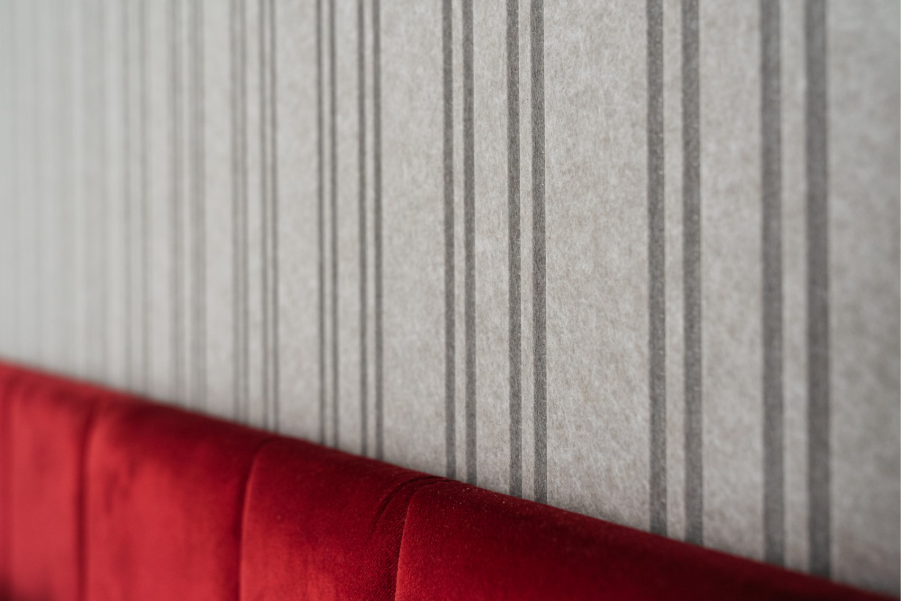
That is why acoustic panels made of felt (often recycled!) have become so popular. It is not because they are cheap or heavily advertised. They meet a genuine need: they improve acoustic comfort whilst looking great. They come in a wide range of colours and shapes. A simple yet highly effective solution. This is precisely why acoustic panels for offices and homes are so popular today — they fit in with the modern approach to design, where aesthetics, comfort and function go hand in hand.
What does this mean for you in practice?
Whether you’re furnishing your own flat or designing for someone else, one clear conclusion emerges from this overview. A good interior in 2026 is one that engages all the senses. It’s not just pleasing to the eye, but also has a pleasant texture and… sounds just right (or is completely silent, when we want peace and quiet).
Aesthetics, texture and acoustics have finally come together as a whole. Designers who understand this create spaces you simply don’t want to leave.
If you’re curious to see how these principles work in practice, we invite you to take a look at our latest projects, including the installation of acoustic panels. Alternatively, you can simply get in touch with us – we’ll be happy to help you find the right solutions for your project, so that your interior is not only stylish but, above all, a pleasant place to live.