Skip to main content
Skip to footer

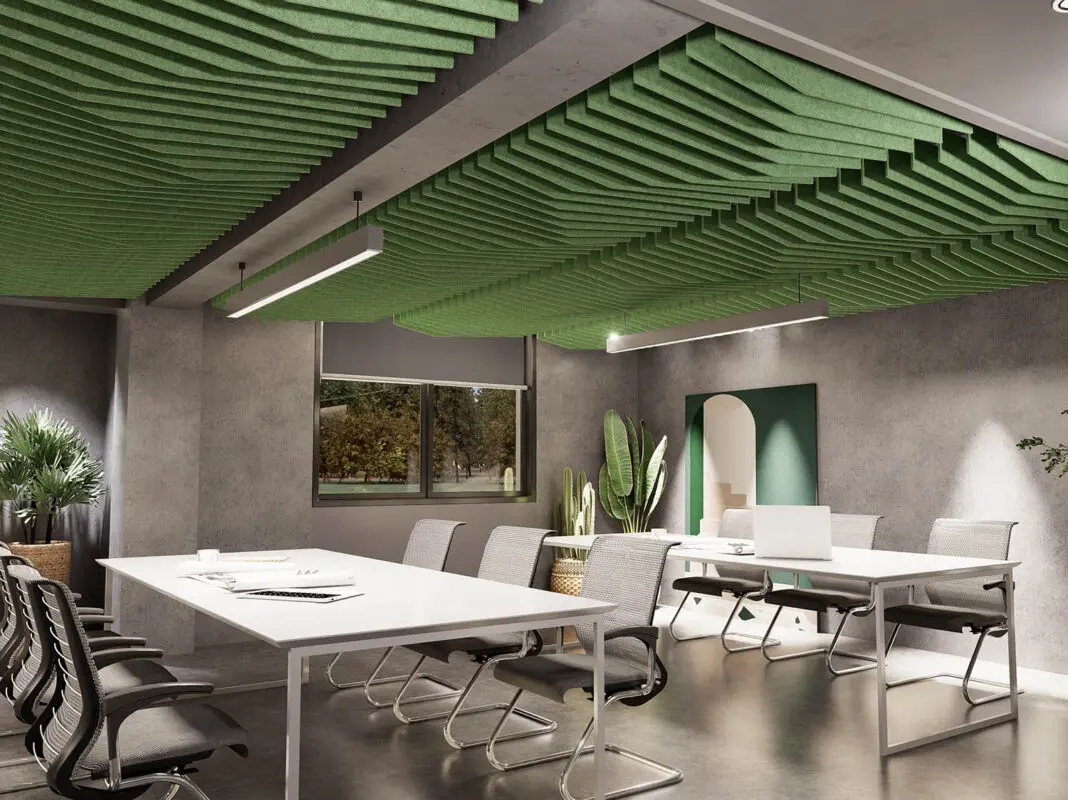
Imagine this scenario: You walk into a modern conference room. A table, elegant chairs, glass walls, designer lamps—everything looks perfect. You take a seat, the meeting begins… and suddenly a problem arises. Every word echoes, someone at the far end of the table can barely hear the person speaking, and the moderator has to raise their voice. Sound familiar? A similar scenario often plays out in a recording studio: there are curtains, some furniture, maybe even a rug, and yet the recordings sound hollow and require hours of post-production.
And here’s the question: where does this come from? You’re probably thinking it’s the walls’ fault. But very often, the culprit turns out to be… the ceiling. Yes, the very same one we usually don’t pay much attention to. Yet it’s the largest, flat surface in the room, which also reflects sound waves with tremendous force. The result? Echoes, rumbling, and a lack of clarity—in other words, everything that ruins the quality of recordings or business meetings.
An acoustic ceiling panel is a solution that can work wonders in such cases. It doesn’t require remodeling the entire room or complicated technology, and it delivers tangible results right from the start. That’s why you’ll find it more and more often not only in recording studios, but also in conference rooms, open-plan offices, restaurants, and libraries.
An acoustic ceiling panel is a system of panels or modules made of PET felt that are attached to the ceiling or suspended from it, which provides sound absorption and reduces reverberation in the room. Felt is lightweight, does not produce dust, and does not require a heavy substructure, so this type of ceiling can also be installed in an occupied office or apartment.
In this article, I’ll walk you through the most important aspects of soundproofing interiors through the ceiling. You’ll learn:
- In what situations is an acoustic ceiling panel an absolute must-have?
- How does an acoustic panel for the ceiling work, and what are its actual benefits?
- What are your options for soundproofing the ceiling—from simple panels to more advanced solutions,
- How to choose an acoustic ceiling panel that not only meets your acoustic needs but also complements the style and interior design.
Sounds interesting? Let’s get started—because you probably want to know if an acoustic ceiling panel really makes sense for you. I’ll answer that in a moment.
When is an acoustic ceiling panel necessary?
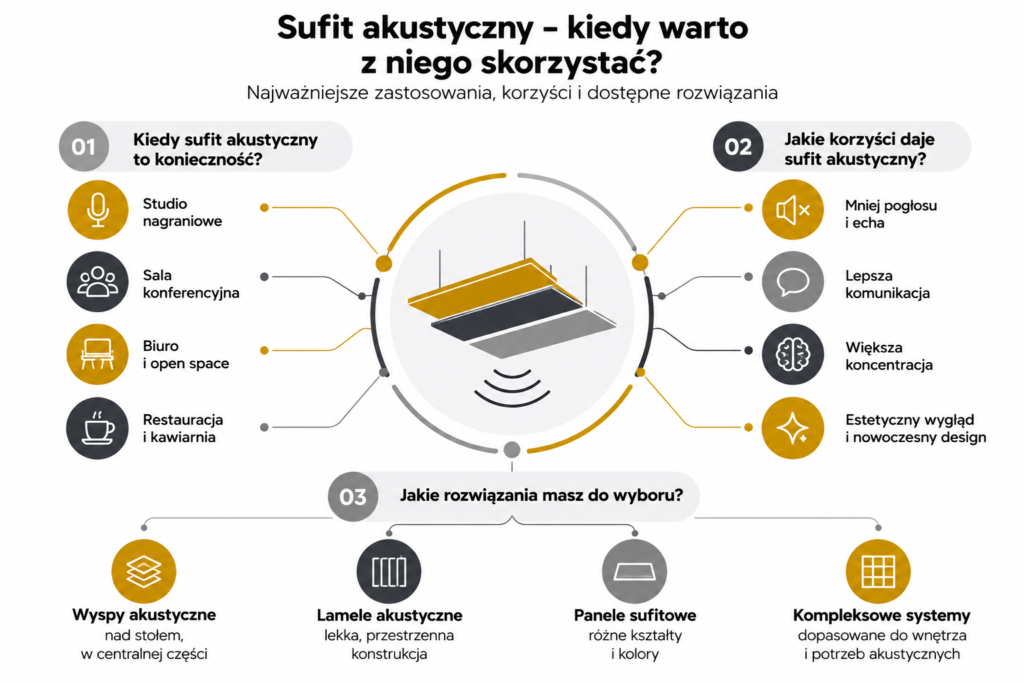
You’re probably wondering: Does everyone really need acoustic ceiling panels? I’ll answer that right away—no. But there are situations where the lack of ceiling panels is so noticeable that it’s hard to work, hold meetings, or record.
Imagine a few scenarios:
- Recording studio —you’re recording vocals, a podcast, or instruments. You notice that, despite the panels on the walls, there’s still reverb. Why? Because sound travels upward, bounces off the hard ceiling, and returns to the microphone with a delay. The result: your voice sounds unnatural, and the recordings require extensive editing.
- Conference room —12 people are seated around a large table, and half of them can’t hear the facilitator clearly. Instead of a substantive discussion, chaos ensues as people start talking over each other. Sound familiar? That’s the result of not having an acoustic ceiling panel.
- An open-plan office or a traditional office —many people are talking at the same time, phones are ringing, and printers are humming. Sound reflections off the ceiling cause the noise to “hang” in the air instead of dissipating. Instead of comfort, fatigue sets in and concentration wanes.
- Whether it’s a restaurant or a café, guests want to have a good time, but instead of conversation, they hear the clamor of voices, plates, and music. Without acoustic ceiling panels, the echo amplifies every sound, and the sense of chaos only grows.
And this brings us to an important point: an acoustic ceiling panel is not a frivolous luxury or a gadget for audiophiles. It is a practical solution to problems that affect the quality of work, communication, and the user experience in a room.
So when should you consider installing an acoustic panel on the ceiling or fully soundproofing the interior?
- if there is often an echo in the room,
- when recordings sound “hollow” or “metallic,”
- when meeting participants complain that they can’t hear each other,
- if the noise level quickly becomes tiring,
- when the reputation of a company or project suffers due to poor sound quality.
In short: if sound in your space is a distraction rather than a help, it’s a sign that it’s time to look into soundproofing the ceiling.
In a moment, I’ll show you how an acoustic ceiling panel works and why this simple change makes such a big difference.
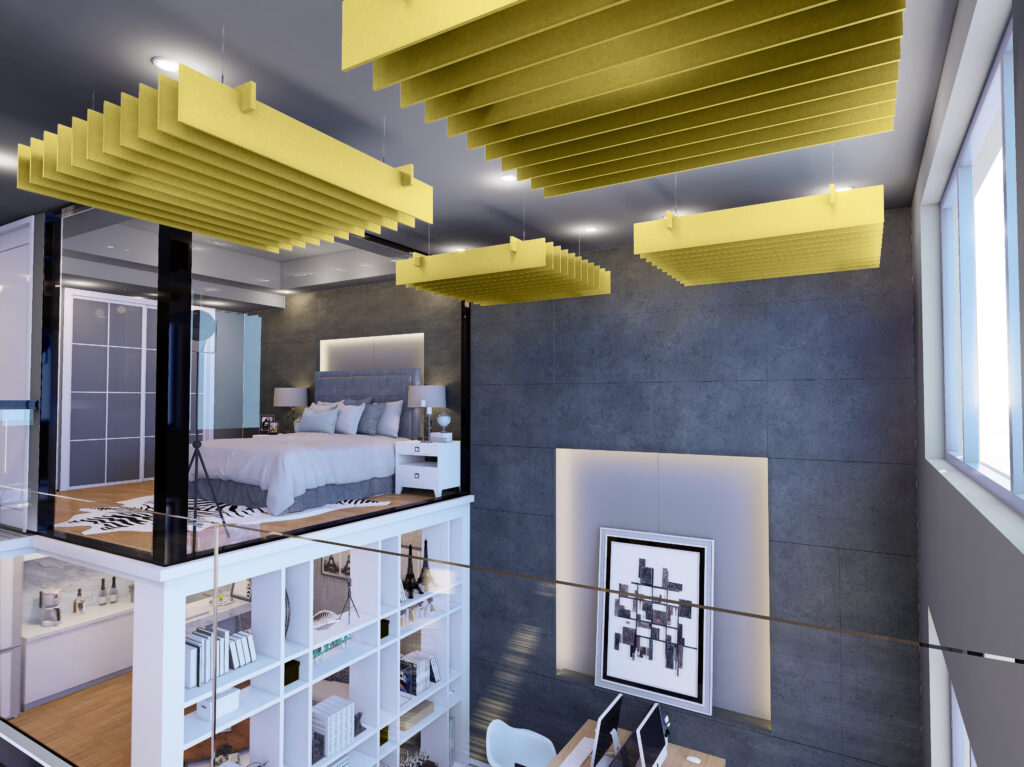
How do acoustic ceiling panels work?
You’re probably wondering, “OK, I know an acoustic ceiling panel helps, but how exactly does it work?” Let me explain—the way ceiling panels work is based on a simple but extremely effective principle of sound absorption.
When sound waves bounce off the hard surfaces of the ceiling, they create echoes and reverberation that mix with the original sound. An acoustic panel absorbs some of the energy from these waves, dampening them and reducing reflections, so that speech and music sound natural.
Here are some key features of ceiling panels:
- Reduce reverberation – absorption panels minimize sound reflections, which improves the clarity of speech and recordings. In a recording studio, this means fewer post-production edits; in a conference room, it means better communication.
- Low- and high-frequency control —a carefully selected control panel adjusts both the bass and the treble. The result? No single frequency dominates the others, and the sound remains balanced throughout the space.
- Improved concentration – soundproofing the ceiling reduces “background noise,” allowing people working in open-plan offices or meeting participants to focus on their conversations or tasks.
- Aesthetics and integration with the interior —felt ceiling panels can be installed in various shapes and colors. They not only provide a functional surface but also serve as a design element that enhances the appeal of the space.
Here’s an example from a recording studio: Imagine you’re recording vocals, and the microphone is also picking up echoes from the ceiling. Every word is repeated several times, sounding unnatural. After installing acoustic panels on the ceiling, these reflections are largely absorbed, and your voice becomes clear, crisp, and natural.
It’s also worth knowing that ceiling panels are lightweight and can be easily adapted to your existing interior design. There’s no need to tear down the ceiling or undertake a costly renovation—installation is quick and easy, and the results are noticeable almost immediately. It’s an investment in sound clarity, user comfort, and interior aesthetics. In a moment, I’ll show you the available options for our acoustic ceiling panels and what to look for when making your selection.
You can learn more about this topic in the article“Acoustic Felt—How Does It Work, and Why Should You Have It in Your Home? The answer might surprise you!”
Which acoustic ceiling panel should I choose?
You’re probably wondering, “If acoustic panels work, what options do I have to choose from, and how do they differ?” Let me answer that—today, acoustic ceilings aren’t limited to just one thickness or one type of material. Depending on your needs, you can find the perfect solution for your studio, office, or restaurant.
Here are our main options:
SilentScape suspended acoustic modules are a solution that combines functionality with striking design. They catch the eye at first glance—their elegant, modern forms transform the ceiling from a mere backdrop into an attractive element of the interior.
‘s SilentScape collection of suspended modular panelsconsists primarilyof 5 modern solutions for soundproofing the ceiling in your space:
- WhisperWave – a ceiling panel system consisting of corrugated modules that effectively diffuse and provide sound absorption. Ideal for open-plan offices and conference rooms where even acoustics and a stylish visual effect are needed.
- FlexiTone – flexible ceiling panels with an adjustable configuration, allowing you to tailor the layout to the character of the room and the type of sounds. They work great in recording studios, offices, and coworking spaces.
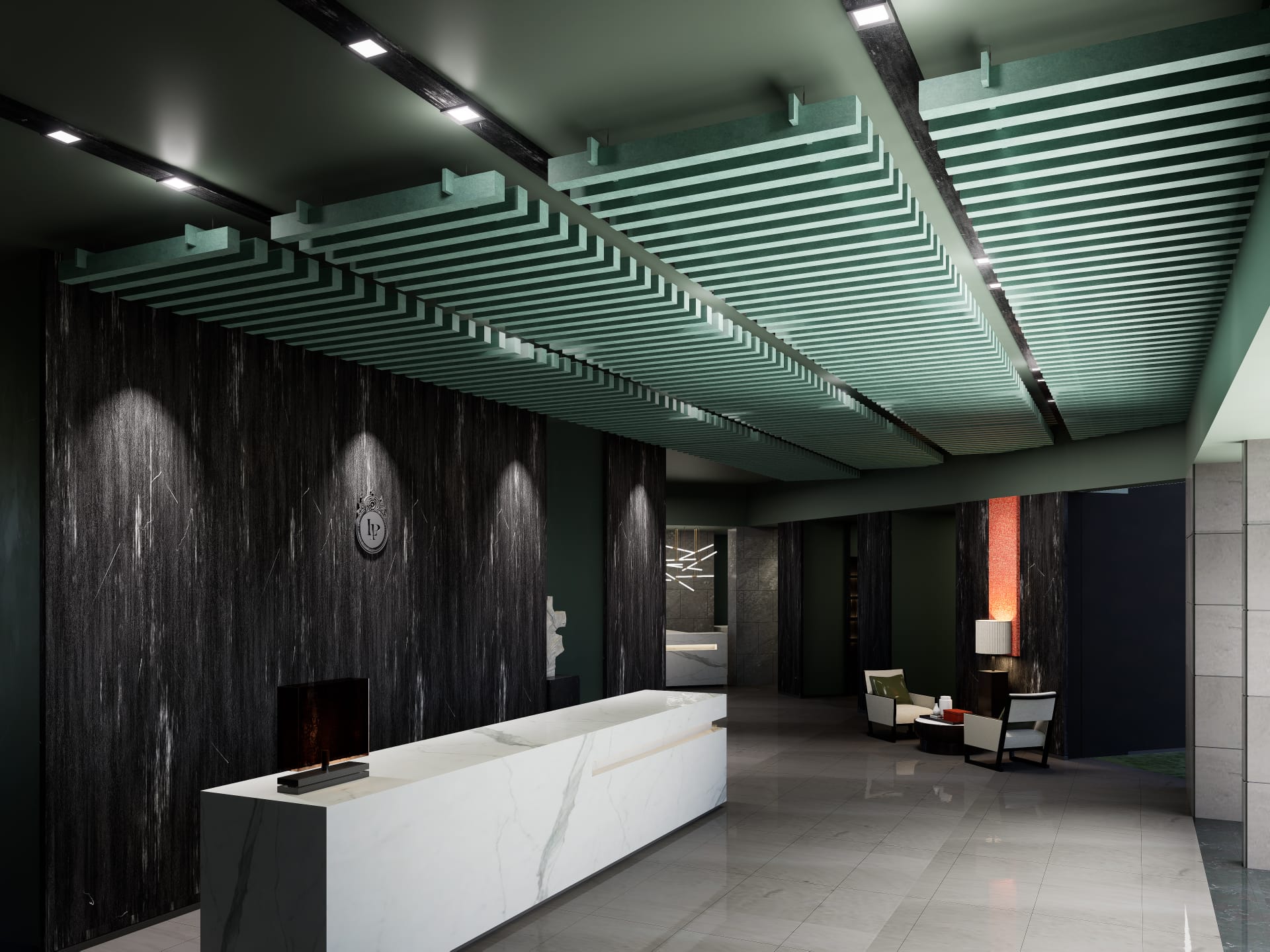
- HarmonyGrid – a system of modular panels arranged in rows or irregular patterns. It features wider baffles that cover most of the ceiling, which is why it performs better than other products on the market. It perfectly combines sound absorption functionality with aesthetics, allowing you to create spatial rhythm and visual harmony in a room.
- SilentTune – ceiling panels similar to the HarmonyGrid system, but with even wider baffles/panels, optimized for full reverberation absorption and low-frequency control. They are ideal for spaces requiring precise acoustics, such as conference rooms, studios, or restaurants, where listening comfort and sound quality are important.
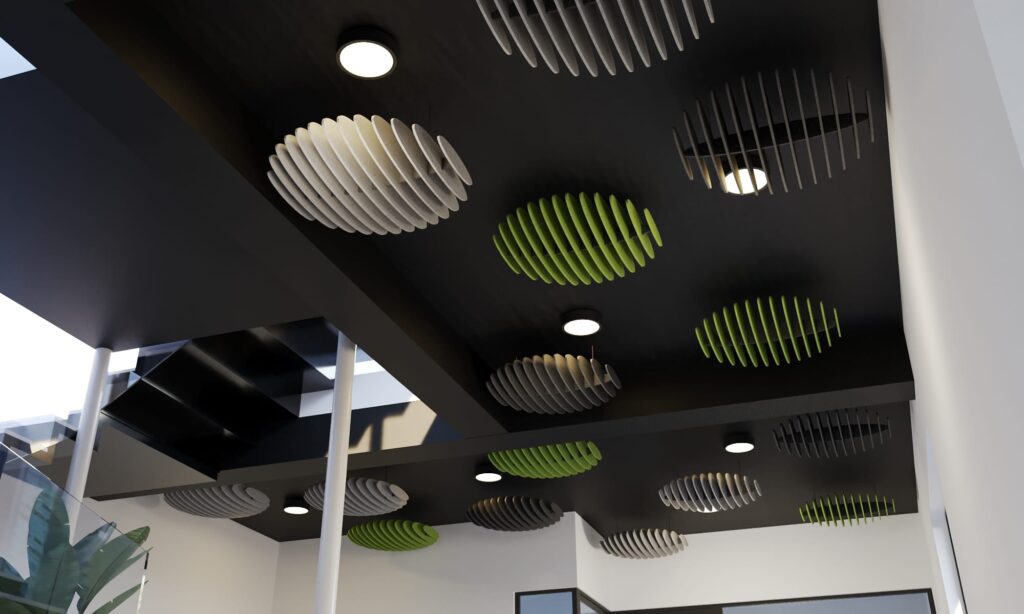
Another option to consider is the acoustic cloud systems from the SilentCloud collection—imagine a ceiling that not only absorbs sound but also “floats” in space, giving the interior a sense of lightness and a modern character. SilentCloud suspended acoustic islands are exactly that—modular panels suspended from the ceiling that effectively absorb echoes and excess reverberation.
A classic suspended ceiling made of mineral boards covers the entire ceiling and requires a grid; installing it usually involves renovating the room. PET felt panels and suspended acoustic modules are hung at specific points where they’re needed, without covering the entire ceiling or the wiring. They also offer more flexibility in terms of color and shape, which is why they are more often chosen for lofts, offices with exposed ceilings, and interiors where the ceiling is meant to be part of the design.
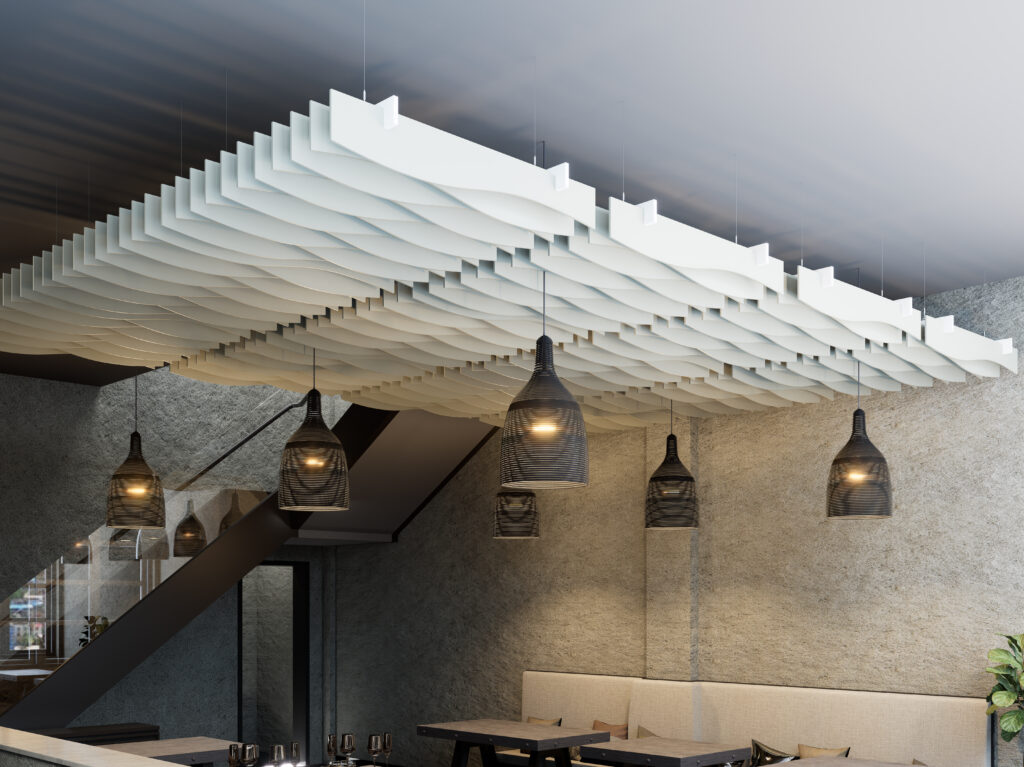
Advantages of ceiling-mounted acoustic systems:
- Installation flexibility – the panels can be hung in various configurations and at different heights, creating interesting visual compositions and adapting them to the room’s acoustic needs. For more information on installation, see “Can You Soundproof a Ceiling? The Answer Might Surprise You” here [LINK]
- Design and lightness—SilentCloud islands create a “floating ceiling” effect, adding lightness and modern style to the space. They can be installed individually or in groups, creating rhythm and dynamism in the interior.
- Integration with the interior—the colors and shapes of the panels can be tailored to the decor, and the islands blend seamlessly with the lighting, ventilation, and other elements of the room.
An example of how they’re used? In an open-plan office, islands suspended above work areas reduce noise from conversations and machinery while adding a stylish design element. And in a restaurant, island-shaped panels improve acoustic comfort for guests while creating a cozy atmosphere.
Why should you choose felt ceiling panels from Feltdecor?
- Sound absorption —felt of the appropriate thickness reduces echoes and reverberation even in rooms with poor acoustics.
- Aesthetics – a wide selection of colors, shapes, and patterns allows you to match the panels to your interior. They not only serve a functional purpose but also enhance the space.
- Environmental Sustainability – Panels made from recycled PET felt are an eco-friendly solution that supports sustainable development.
It’s important to remember that choosing the right acoustic ceiling panel depends on the nature of the room, the type of sounds, and the effect you want to achieve.
Design and Aesthetics of Acoustic Ceiling Panels
You’re probably thinking, “An acoustic ceiling panel—that sounds technical and boring, doesn’t it?” Let me tell you—it doesn’t have to be that way at all. With felt ceiling panels, you can add character to your interior and create a look that highlights the room’s style.
Felt panels are available in a variety of colors, shapes, and configurations. They can serve not only as a functional element but also as a decorative feature that catches the eye and defines the space. You’ll surely agree that aesthetically pleasing and harmoniously designed interiors influence users’ well-being and productivity—in other words, an acoustic ceiling panel not only reduces noise but also enhances the experience of being in the room.
This is a great way to turn the ceiling from just a backdrop into an active element of interior design.
How can you use the ceiling to add character to a room?
I’ll show you a few inspiring options:
- Minimalist style —simple shapes, solid colors, and muted shades of felt create an elegant, serene space.
- Modern designs —geometric shapes, irregular patterns, and dynamic compositions—add energy and originality to a room.
- Integration with lighting —felt panels can be installed to complement lamps, LED strips, or spotlights, creating interesting visual effects and highlighting a specific area.
- Customization options – the colors, shapes, and layout of the panels can be tailored to a company’s visual identity, interior theme, or personal preferences.
As an example, I’ll show you a few combinations that are very popular:
- In a conference room, it is a good idea to install a suspended acoustic ceiling panel in the form of a large island positioned directly above the conference table. This layout concentrates sound absorption precisely where people sit and hold discussions, significantly improving speech intelligibility and reducing noise in the room.
- In an open-plan office, ceiling panels are ideal for defining zones—they allow you to create distinct quiet zones designed for focused work and reduce the overall background noise level throughout the entire open space.
- In a restaurant or café, felt ceiling panels create a cozy, warm atmosphere while also improving acoustic comfort for guests by dampening the sound of conversations and the clatter of dishes.
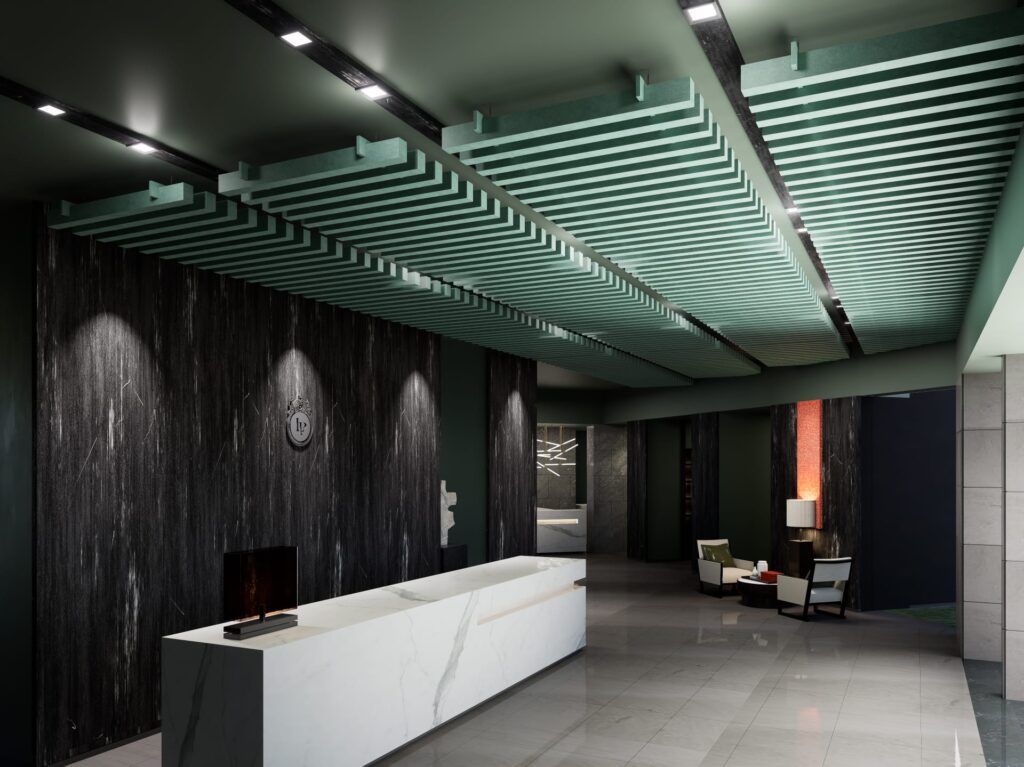
It’s time to install an acoustic ceiling panel in your home
You’re probably thinking right now, “OK, I know acoustic ceiling panels work, but where do I start?” The best place to start is by analyzing your own space. Think about where the sound is most disruptive, which reflections are causing echoes, and to what extent this affects the comfort of your work, meetings, or recordings.
Remember:
- An acoustic ceiling panel not only reduces reverberation but also improves concentration and comfort in the room.
- The acoustics can be tailored to the interior style—whether minimalist, modern, or unique—to match your brand.
- An acoustic ceiling panel provides a real improvement in sound quality, but it also enhances the aesthetics of the room and the experience of those using it.
- Ease and flexibility of installation: An acoustic ceiling panel does not require complicated installation—you can easily hang it yourself using the suspension kits included directly with the set. Keep in mind, however, that these types of panels are designed for sound absorption and reverberation reduction inside a room, but they do not serve as ceiling insulation and will not block noise coming from the floor above.
Don’t put it off—try out different panels, layouts, and colors, and see how the acoustics and appearance of the interior change. A small investment in acoustic ceiling panels can dramatically improve the comfort, efficiency, and image of your workplace or commercial space.
Do you want your studio, office, or restaurant to sound and look better? Start by choosing a Feltdecor acoustic ceiling panel—it’s a step that really makes a difference.