
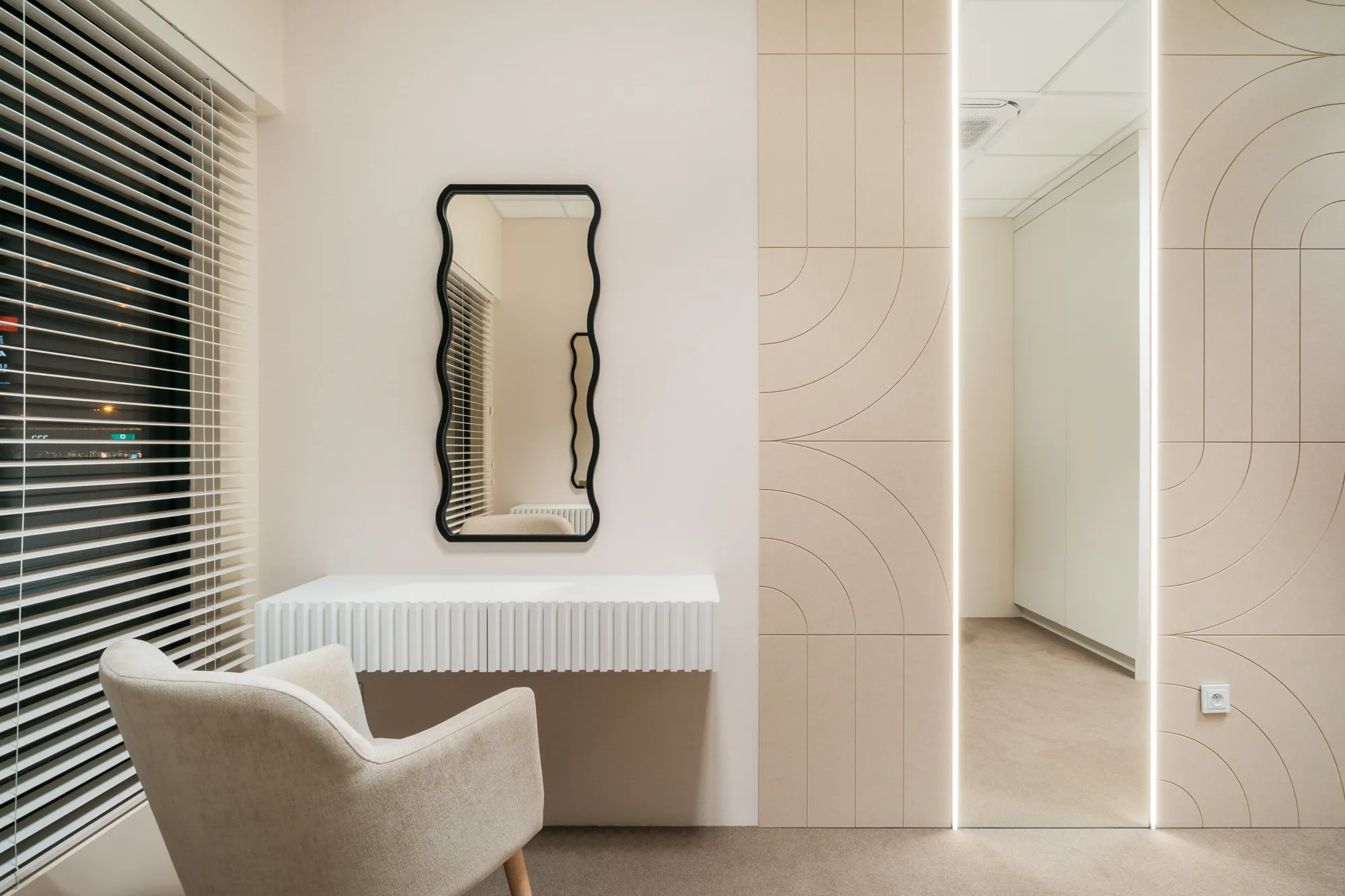
When you design an interior, you take care of every detail – light, colors, ergonomics, materials. The client looks at the end result, smiles… and suddenly a sentence falls:
“It’s beautiful, but it’s impossible to work here.”
You ask: “But why?”
The customer replies: “Do you hear the reverb? It’s just too loud.”
It’s a scenario that many of us are familiar with. Acoustics are sometimes neglected, because at the concept stage we focus on the visual side of the project. Only later does it turn out that an interior that looks like it came out of a catalog is tiring and distracting in everyday use.
That’s why this guide was created. If you’re creating office, residential or commercial spaces, you’ll find here everything you need to know about felt acoustic panels – from how they work and their performance, to the different types and collections available on the market, to practical tips on how to talk to your clients about them.
You’ll also see examples of felt applications in offices, hotels and private homes that will show you how to combine function with aesthetics and make acoustics a natural part of the design, rather than a later “patch on the problem.”
Why choose felt?
You’ll find many materials on the market to improve acoustics – from polyurethane foams to mineral wool to perforated wood. Each of these solutions has its advantages, but in recent years it is PET felt that has become the first choice in the design of offices, hotels or modern apartments. Why?
First – ecology
Clients are increasingly asking architects about environmentally friendly materials. PET felt is made from recycled plastic bottles, so it is a viable example of a closed-loop economy.
This is a ready-made argument to talk to the customer:
“Your office is silenced by materials that not long ago were plastic waste. Now they have been given a second life.”
Second – security
PET felt meets the B-s1,d0 fire class standard, which means that it does not spread fire and emits minimal smoke and flaming droplets. This makes it safe for use in offices, hotels, schools and other public buildings.
Third – aesthetics and flexibility of form
Felt does not limit the architect to one form. It can appear as:
- wall panels,
- milled geometric modules,
- suspended ceiling islands,
- decorative baffles.
It works acoustically, and at the same time is a full-fledged part of the arrangement.
Fourth – ease of installation
PET felt is lightweight, easy to transport and quick to install. It can be:
- glue,
- Mount on slats,
- suspend on cables.
This makes it possible to improve acoustics even in a finished space already in use – without lengthy renovations.
Fifth – sustainability
Unlike foam, which yellows and crumbles, or mineral wool, which dusts and requires development, PET felt retains its appearance and properties for years. This is a real savings in the long term.

What are the benefits to you as an architect and designer?
You have in your hand the material that:
- meets technical standards,
- gives great aesthetic possibilities,
- It is in line with ecological trends.
You can use it both in a large open space and in a private apartment. That’s why PET felt appears so often in the architect’s guide – because it combines function, safety and design.
How does the felt acoustic panel work?
The principle is simple: the sound wave falls into the fiber structure and loses energy.
- Thin panels (about 9 mm) – effective at medium and high frequencies (speech, keyboards, restaurant noise),
- thicker panels (12 mm) – operate over a wider frequency range,
- Suspended panels – absorb sound bilaterally.
Simply put: the felt panel acts as a sound cage. Instead of bouncing off hard surfaces, the sound wave is absorbed and dispersed. The result? Fewer echoes, more natural conversations, more acoustic comfort.
In the documentation you will meet parameters such as αW (ISO 11654) or NRC, but in conversation with the customer a simple message works much better:
“Thanks to the panels, reverberation will be reduced by up to half, and conversations will be clearer.”
When is it a good idea to add felt panels in a project?
It’s not about a specific room, but about the effect you want to achieve.
Glamour interiors
Art panels from the TileScratch collection play with light like jewelry. They dampen echoes in spaces full of marble and glass, while building a spectacular visual effect.
Minimalist interiors
TileFlex ‘s simple, geometric panels melt into the space. Acoustics cease to interfere, and the interior retains purity of form.
Industrial interiors
Concrete, brick and metal are acoustically demanding. Felt balances their harshness and makes it possible to talk normally in the loft.
Leisure and wellness interiors
Spa, yoga, fitness – here silence and harmony count. Felt panels dampen noise and promote an atmosphere of tranquility.
Premium commercial interiors
Boutique hotels, fine dining restaurants or lobbies – PET felt acts as a “silent luxury technology”. Guests feel comfort without even knowing why.
Feltdecor collections worth knowing
SilentScape – when silence is the priority
Suspended islands and baffles that work on both sides. Ideal for open space, lobbies and large volumes. The ceiling becomes a design element rather than an empty surface.
TileFlex – a balance between order and design
Geometric wall modules that organize space and improve acoustics. Seven collections of styles and hundreds of possible arrangements.
TileScratch – when acoustics become art
Linocut-inspired panels that change with the light. A focal point of the interior and also an effective acoustic solution.
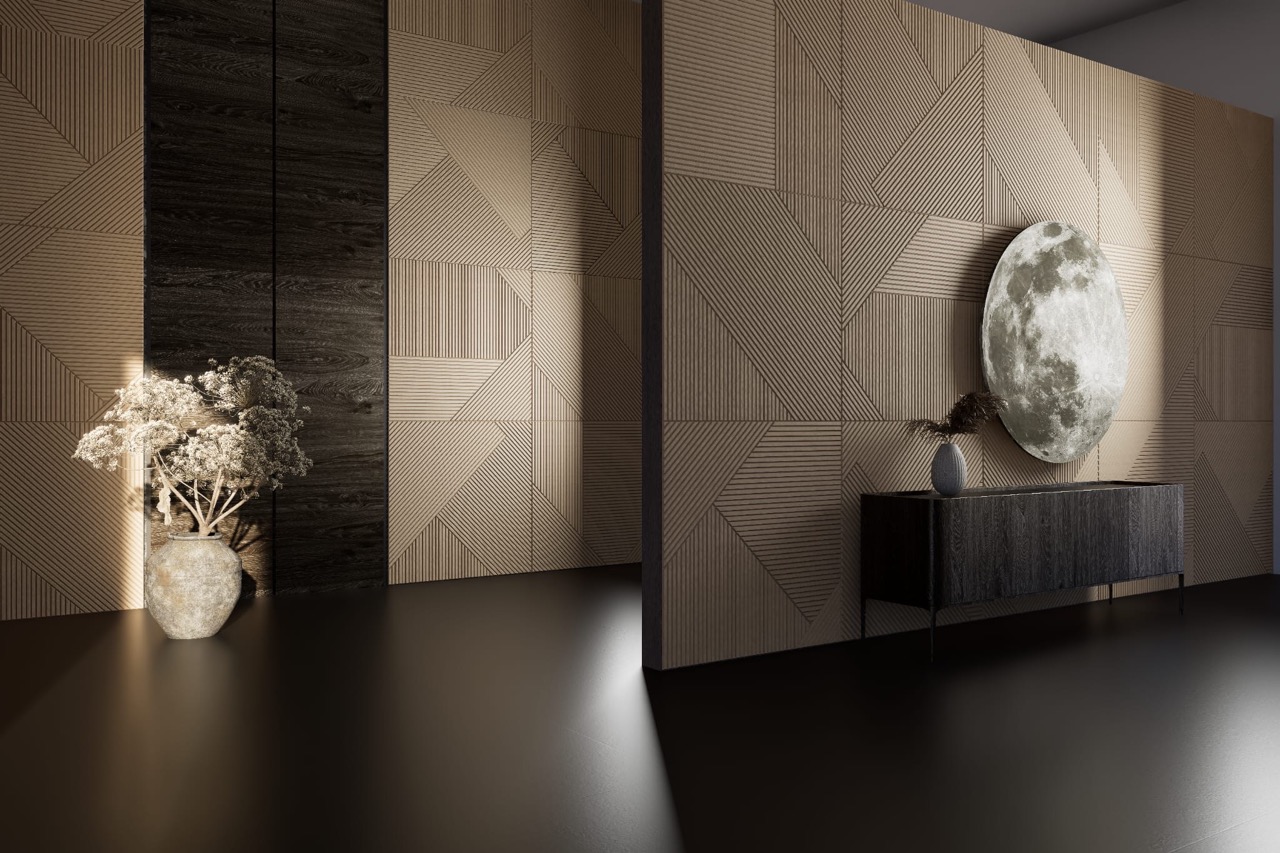
Aesthetics = acoustics
Felt panels are not technical “contraptions”, but elements of interior design. They can be a subtle backdrop, a spectacular installation, or a quiet hero for improving comfort.
Ecology and standards
PET felt is a material:
- manufactured from recycled materials,
- durable and resistant to aging,
- Meeting the fire class B-s1,d0,
- Complies with ISO 11654 and DIN 18041 standards.
As a result, it speaks at the same time:
- To the investor – sustainability and economy,
- To the user – comfort and aesthetics,
- For documentation – standards and certificates.
How to introduce panels into a project – step by step
- Diagnosis of the problem – echo, background noise, lack of privacy.
- Selection of collections – SilentScape, TileFlex or TileScratch.
- Colors and form – background or accent.
- Assembly – gluing, suspension, light walls.
- Customer education – speak the language of outcomes, not parameters.
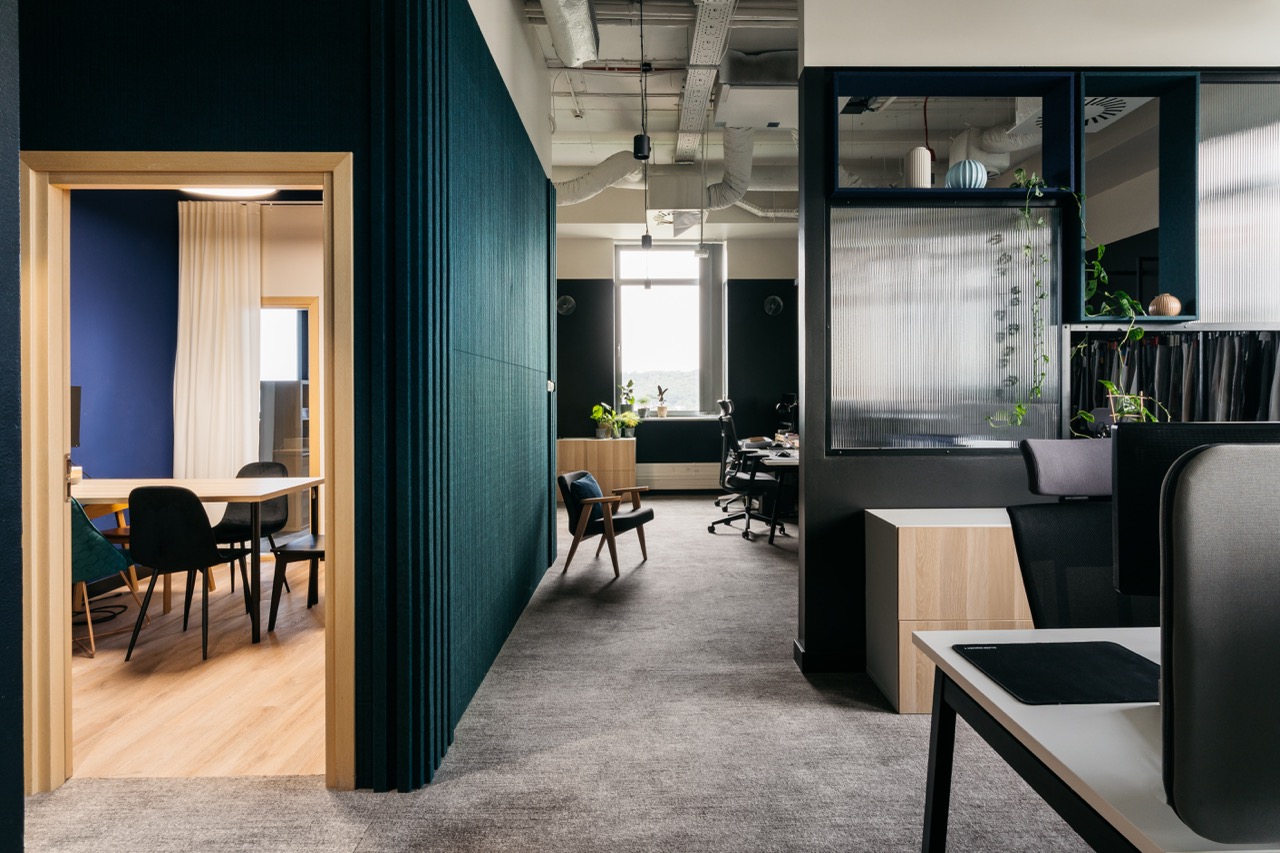 Summary
Felt acoustic panels are not a detail at the end of a project, but an element that changes the perception of the entire space. They make interiors not only look good, but also sound good.
Feltdecor gives you ready-made design tools:
- SilentScape – silence in large spaces,
- TileFlex – order and rhythm of the walls,
- TileScratch – acoustics as applied art.
This guide was created to help you design interiors that really work – with less reverberation, more comfort and a better quality of daily use.
If you’d like to see felt panels in real-life implementations, take a look at the “Realizations“ tab or on our social media.