Skip to main content
Skip to footer
Skip to main content
Skip to footer

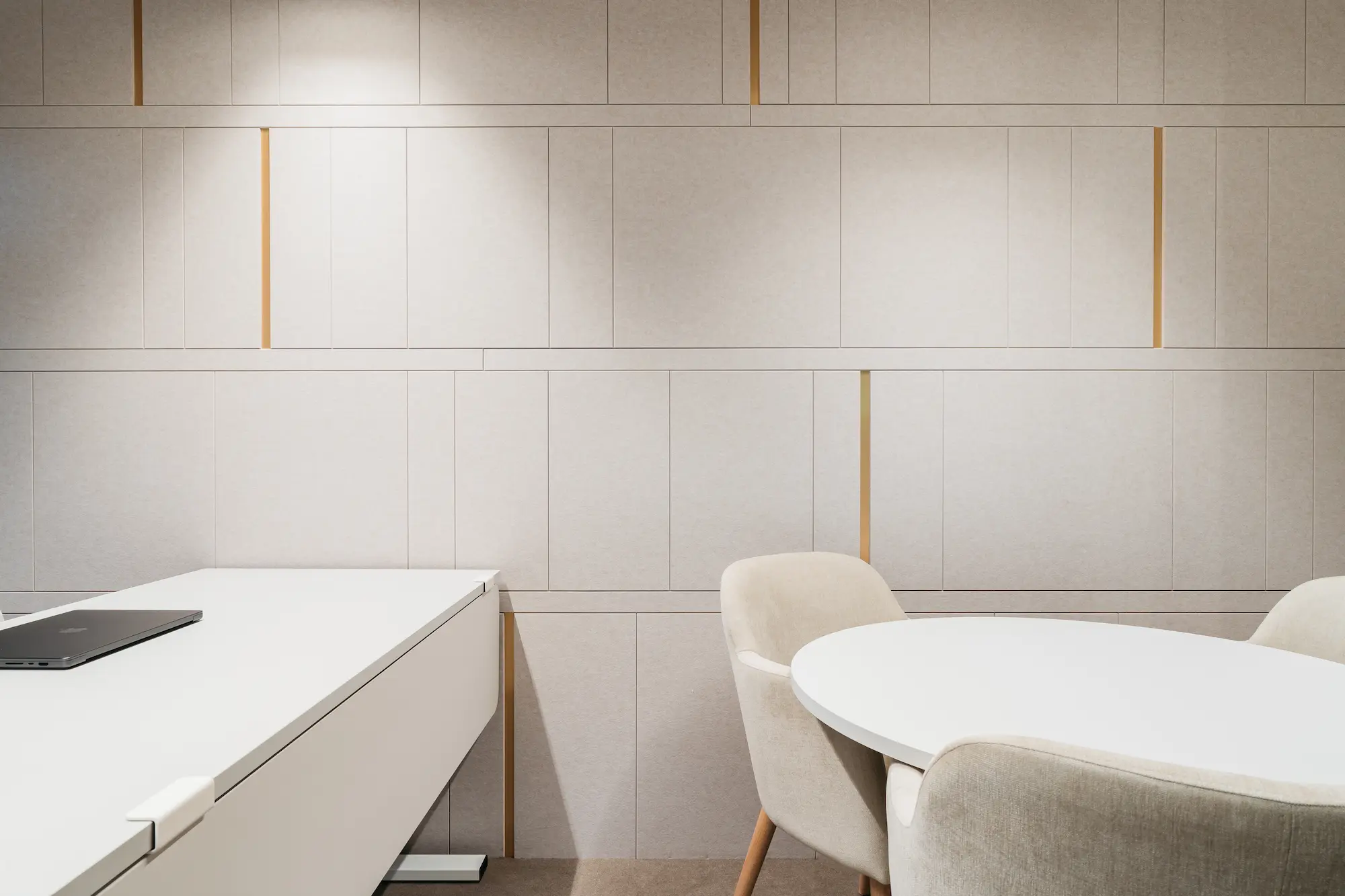
Have you ever been in a situation where a client asks,“How much do acoustic panels cost? Can we have them custom-made, but within our budget?” This question comes up again and again for our sales representatives on nearly every project, and it’s no wonder.Custom-made acoustic panels aren’t just wall decor or a way to personalize your branding—they’re a real tool for improving acoustic comfort. The difference between “cheap” and “good” only becomes apparent after a few months of use, when you’re either enjoying peace and quiet along with an attractive design—or you’re starting all over again. In this article, we’ll take a look at what actually affects the price of acoustic panels, why a “cheap acoustic panel” might be a false economy, and when it’s worth opting for tailor-made solutions—both literally and figuratively.
What really affects the cost of custom-made acoustic panels?
The price of a panel doesn’t come out of thin air. It’s not just a “piece of felt” on the wall, but an entire process involving design, technology, and logistics. And this is where the conversation begins—one you can have with the investor in terms of benefits.
Material—the foundation of the price—the cheapest options, such as foam or sponge, only work on paper. In practice, they quickly turn yellow, crumble, and fail technical inspections. An acoustic panel made of PET felt produced from recycled bottles is something entirely different—it offers durability measured in years, fire safety, and environmental benefits that the investor can highlight in the documentation. It’s no longer just a “cost,” but a selling point in a bid or a conversation with the end customer.
Size and customization—standard panels are less expensive because they can be produced more quickly and in larger batches. But if you need a custom-sized acoustic panel tailored to a specific wall, with a non-standard color or a milled logo, the price goes up. Why? Because each element is a unique design. On the other hand, thanks to this customization, the wall can become a showcase for the company or the space.
Technology and production—CNC cutting, milling, printing on felt, suspension systems for acoustic islands—each of these stages increases the cost, but also guarantees precision and consistency in the final result. The architect doesn’t have to worry that the client will come back with a complaint a year from now. Once installed, the panels simply last for years.
Installation and logistics—adhering panels to the wall is a quick and inexpensive method. However, if the project requires ceiling-mounted panels or large-format panels, there are additional costs associated with installation at height, as well as extra production and transportation time. Here, it’s worth showing the investor that it’s not just about the unit price of the panel, but about the entire process, which culminates in a smooth installation. The visual result will certainly satisfy them as well.
Design – the final result – in the end, the question remains: Do you want the acoustic panel to be just a “quick fix for noise,” or part of the interior design? TileFlex and TileScratch panels show that aesthetics and acoustics can go hand in hand. It’s the difference between a piece of foam on the wall and an element that contributes to the interior’s atmosphere.
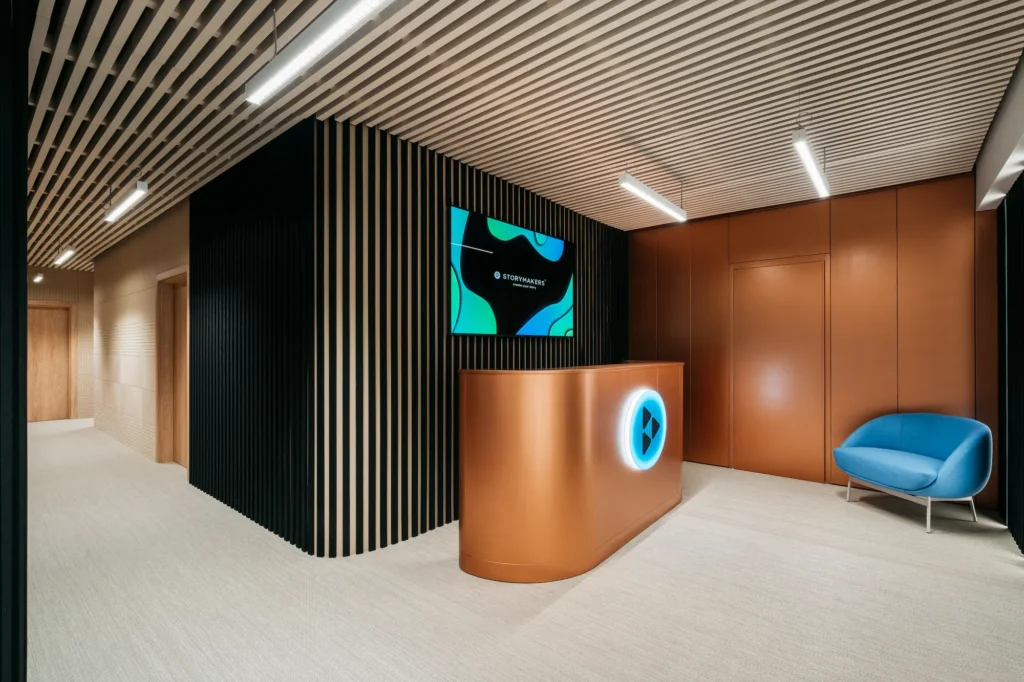
How much do acoustic panels cost? – From budget options to premium systems.
This answer probably won’t surprise you, but there’s no single answer to the question “How much do acoustic panels cost?” because the price depends on the material, size, and level of customization. However, it is possible to present investors with a range of options, from budget-friendly solutions to those that become part of a premium design.
At the lowest price point, you’ll find thin foam sheets and sponges. These are often materials sold at home improvement stores, tempting customers with prices of a few dozen zlotys per meter. They’ll work well in a home music studio or a bedroom, but in offices or restaurants, their durability and effectiveness are limited, and they lack the necessary approvals and certifications. After a year, they usually look unsightly, deteriorate, and the reverberation returns.
The next level consists of flat panels made of PET felt. Here, prices start at around 100 zlotys for a sample 60×60 cm module. This is a solution that an architect might recommend for apartments, home offices, kitchens, or clinics—it’s easy to install and provides an immediate improvement in acoustics.
The middle segment consists of geometric panels, milled panels, or modular wall systems. Here, the price goes up because production requires CNC precision, and design plays just as important a role as acoustics. The buyer pays more, but gets a wall that becomes a design element—it not only dampens sound but also adds character to the interior.
At the top of our range, we offer custom-made acoustic panels and artistic collections. Examples include the TileScratch custom panel systems, SilentScape islands, lamps, and felt wayfinding systems. Their price depends on the design: from the chosen form, colors, and mounting method, to the option of printing or milling a logo. We’re talking about custom quotes here, since every project is unique. This is a segment where you’re buying not only silence but also an aesthetic that enhances the prestige of the interior.
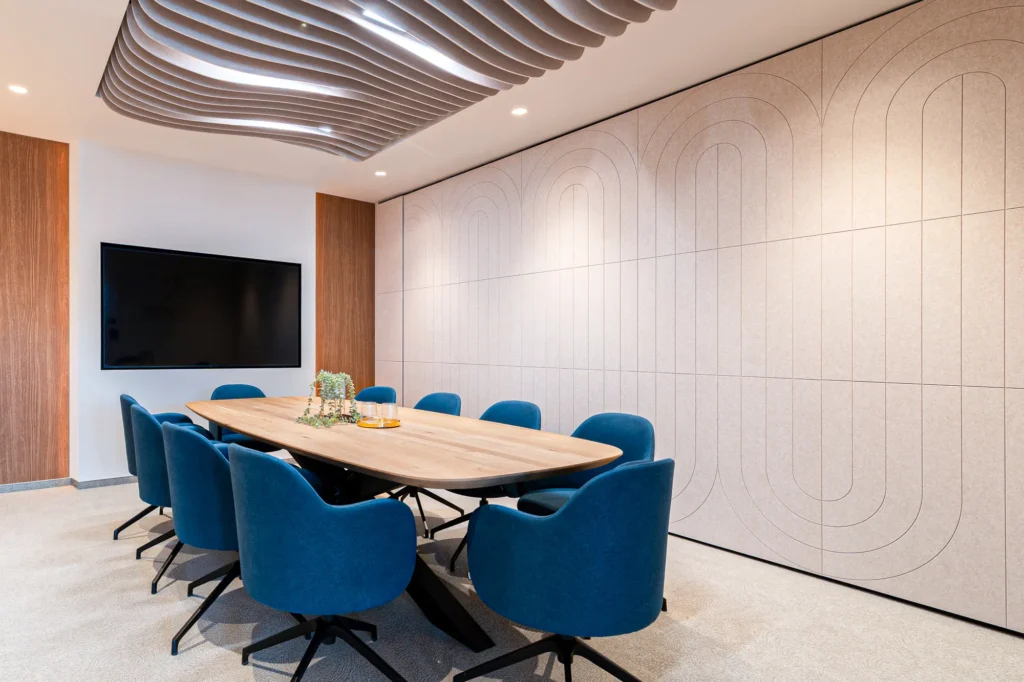
How do you discuss price with a customer?
It’s worth remembering that the price of an acoustic panel isn’t just PLN/m². Customers are more interested in the end result: whether they’ll be able to talk in a normal tone of voice at the office, whether guests will stay longer at a restaurant, or whether a movie at home will sound just like it does in a movie theater. That’s why, instead of focusing on numbers, it’s better to talk about the benefits: quiet, comfort, and interior aesthetics.
If you’d like to see more tips on how to present acoustic panels from the perspective of customer benefits, we’ve prepared a separate resource: “Felt Acoustic Panels—A Guide for Architects and Designers.” This is a practical guide that will help you more easily make the case for choosing a premium solution over a cheaper alternative.
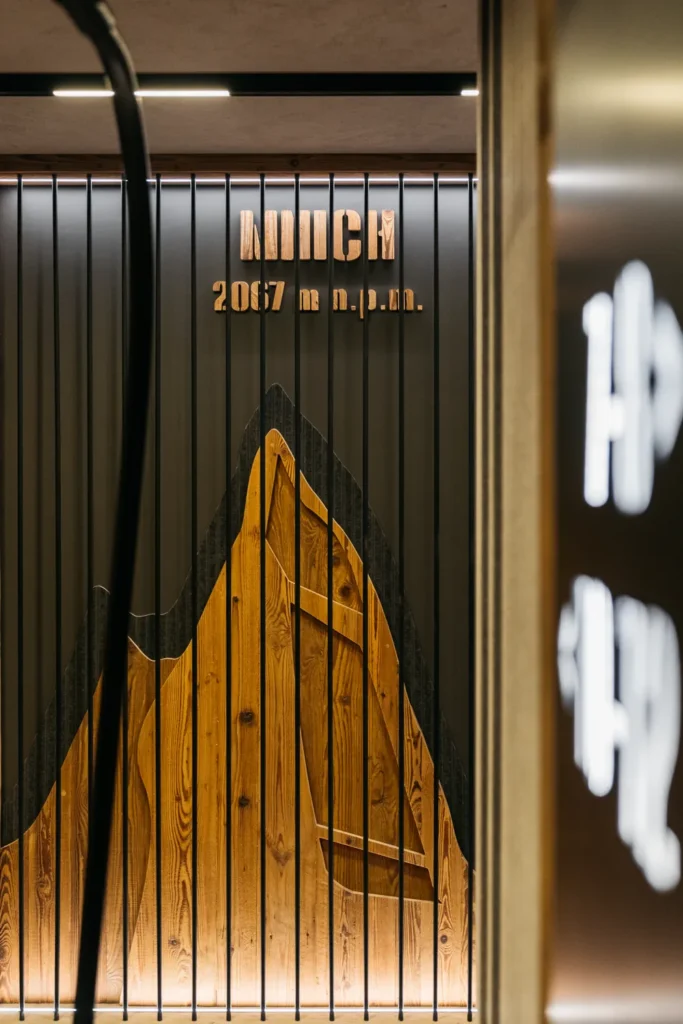
Custom-made acoustic panels aren’t an expense—they’re an investment in the quality of the project. The cost depends on many factors—from the material, through the thickness and design, to the installation method and customization. Cheap solutions may seem appealing at first, but in the long run they can end up being more expensive because they need to be replaced and do not meet standards. PET felt panels, such as Feltdecor, offer more than just that: durability, safety, and an aesthetic that complements any interior style.
For architects and designers, this is a factor that cannot be overstated. You can present your client with a solution that not only looks good but also genuinely improves the comfort of work, rest, or meetings.
If you’d like to see examples of our projects and check out specific collections, take a look at the Feltdecor catalog or contact us—we’ll help you choose acoustic panels that are perfectly suited to your project.