Skip to main content
Skip to footer

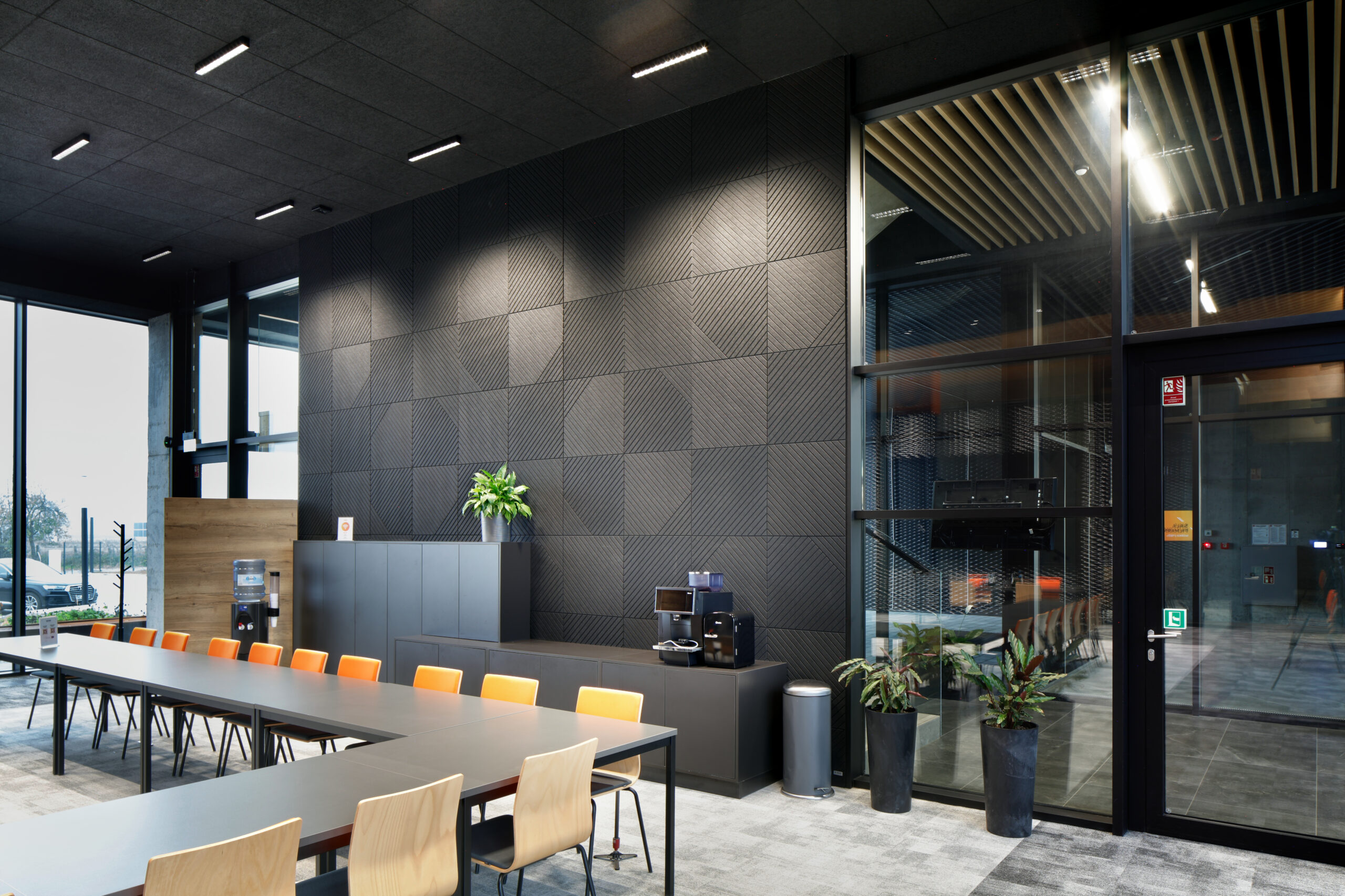
A conference room is one of those places where acoustics instantly reveal the quality of the interior design. If sound bounces off the ceiling above the table, conversations start to overlap, and video conferences become exhausting. When the walls are hard and hollow, even the most elegant space sounds harsh and unwelcoming. That’s precisely why felt panels for a conference room shouldn’t be treated as a decorative afterthought at the end of a project, but as an integral part of the functional design.
In practice, one thing is crucial: in an office, it’s not enough to simply “install some panels.” They must be selected for a specific location and the role they are intended to fulfill. The ceiling above a table functions differently than the wall behind meeting participants, and the side surfaces—which absorb the most reverberation—function differently still.
The best results are achieved by combining systems designed for different purposes. Placing a SilentScape acoustic cloud above a conference table allows sound to be absorbed precisely where the most reflections from above occur. Meanwhile, wall panels such as TileFlex, AbstractTile, and other felt wall panels optimize acoustics at the listeners’ ear level while contributing to a modern office design.
This is of great importance for aesthetics. A modern meeting room must not only be quiet but also presentable—it must look impeccable during client visits, important presentations, or online broadcasts. Felt offers a huge advantage here, as it naturally combines technical performance with the softness of the material, rich color, and a distinct texture. As a result, the panels can serve simultaneously as sound absorbers and striking elements of interior design.
Below, we’ll examine how to best select acoustic systems, when a SilentScape ceiling system is essential, and in which situations it’s worth supplementing it with TileFlex or AbstractTile wall panels.

1. Why a table and a screen alone aren’t enough in a conference room
In many projects, the design of a conference room is limited to the layout of furniture and technology: a table, chairs, a monitor, lighting, and possibly built-in furniture. Everything looks great in the renderings, but the reality when you walk in can be disappointing. Voices echo, the ends of sentences blend together, and when there are more people in the room, a tiring hum sets in—even if no one is speaking in a raised voice.
This is a natural consequence of having materials in a single room that are not acoustically favorable: a large, hard tabletop, smooth walls, glass surfaces, screens, and the absence of any sound-absorbing structures on the ceiling. In such an environment, sound constantly reverberates throughout the interior instead of dying out immediately.
For this reason, acoustic panels are now standard. Not only do they enhance the comfort of meetings, but they also have a real impact on whether presentations and business conversations are clear to the audience.
The area directly above the table itself poses the greatest challenges. That is where the participants’ voices intersect and where the strongest reflected sound waves are generated. Installing a ceiling-mounted system directly above the conference table allows you to address the root of the problem. Such a ceiling captures sound precisely where it is emitted, instantly quieting the entire room.
However, the ceiling is only half the battle. If the walls remain smooth, reverberation will still occur in the horizontal plane. Only by complementing the design with wall panels, such as TileFlex or AbstractTile, can you fully control the situation at ear level, completing the project both visually and functionally.
An office isn’t just about creating a “pretty” space. It’s about ensuring that hours-long discussions don’t lead to fatigue. Acoustics should be incorporated into the design from the very beginning to avoid costly revisions after the first uncomfortable meeting.
2. SilentScape acoustic modules above the conference table—when is this the best choice?
Sound waves generated during a conversation naturally travel upward, bounce off a hard ceiling, and return to the room, drastically reducing the Speech Intelligibility Index (STI). To improve the acoustics where conversations take place, it’s worth focusing on the space above the table.
How is the SilentScape system designed?
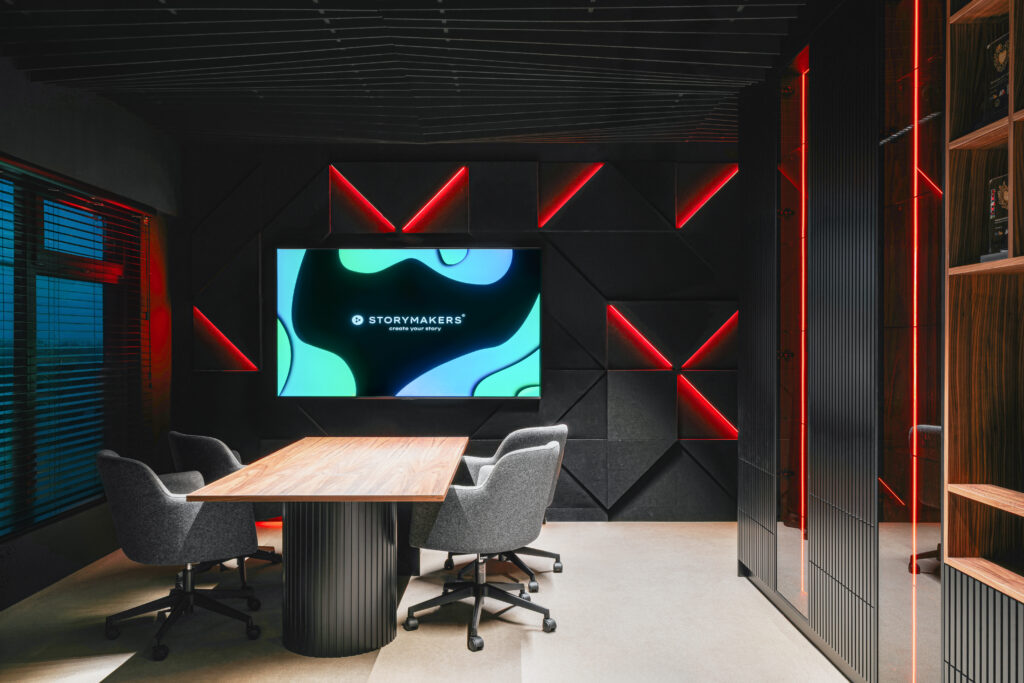
SilentScape is a lightweight, three-dimensional structure based on an arrangement of spatial slats (so-called baffles) made of soft, porous PET felt. Instead of a flat panel, we get an openwork form with significant spatial depth (up to 21 cm in height); sound penetrates deep into the module and is absorbed from multiple sides simultaneously. The modular design allows individual elements to be combined to create perfectly tailored ceiling islands above a conference table or to build complete, cohesive ceiling systems.
Flexibility and Interior Aesthetics
Designers appreciate SilentScape for its spatial form and varied visual appeal. The collection offers a variety of design lines—from geometric grids (HarmonyGrid) to subtle waves (WhisperWave) and orderly linear arrangements (SilentLink or SilentTune). The modules are installed without the need for complex support structures—all that’s required are lightweight system suspension systems on steel cables or dedicated profiles. This allows for the discreet concealment of in-ceiling installations and the precise positioning of the acoustic cloud directly above the meeting area.
This solution works perfectly in situations where:
- The conference table is the central and most important feature of the room,
- The room has a bare ceiling (e.g., concrete) and smooth, unadorned walls,
- The interior calls for modern systems that don’t evoke a technical, office-like atmosphere,
- The priority is to improve acoustics without having to install a costly full suspended ceiling.
SilentScape does not have to cover the ceiling from wall to wall. Concentrating the panels directly above the seating areas produces an excellent acoustic effect while maintaining the visual lightness and spaciousness of the interior. When arranging a conference room with these types of modules, it’s a good idea to base the layout on the dimensions and size of the table where people will be seated.
Felt ceiling modules organize the space above our heads, introduce an architectural rhythm to the interior, and elevate the room’s prestige. If you’re looking for a starting point that will bring about the quickest and most noticeable change, a ceiling system is the most logical step.
3. TileFlex, AbstractTile, and wall panels—what benefits do they offer in a conference room?
Sound travels in all directions, so the ceiling alone may not be sufficient in larger or taller conference rooms. Sound waves will continue to bounce off the side walls and the surface behind the participants. Comprehensive noise protection requires the combined use of horizontal and vertical surfaces.
This is where wall panels, such as TileFlex and AbstractTile, play a key role. Their purpose is to absorb sounds at the level of users’ speech, preventing words from becoming muffled as they speak.
TileFlex is a panel system measuring 600 x 600 mm and 9 mm thick, manufactured from eco-friendly, partially recycled PET plastic. A wide range of colors and unique patterns of grooves give architects the freedom to create geometric, textured wall compositions. This panel effectively reduces reverberation time while also serving as a modern wall decoration.
AbstractTile, on the other hand, features a lighter, more graphic design. It works perfectly in situations where a wall is meant to establish a company’s unique visual identity and introduce a subtle rhythm. This is particularly valuable on walls that serve as a constant backdrop for cameras during video conferences and online meetings.
When planning wall panels for conference rooms, it is important to consider the following above all else:
- on the wall directly behind the people sitting at the table,
- on the side walls along which the sound wave travels,
- on large, previously empty surfaces that acted as acoustic screens reflecting sound,
- anywhere design must go hand in hand with function 😉
Integrating the SilentScape ceiling system with TileFlex or AbstractTile wall panels creates complete synergy: the top captures vertical sound waves, while the sides stabilize sound in the horizontal plane.
4. How to Choose Felt Panels for Small and Large Conference Rooms
The strategy for arranging sound-absorbing materials depends on the size of the space. An intimate meeting room for a few people requires a different approach than a formal boardroom designed for a dozen or several dozen participants.
Small conference room
In small rooms, moderation is the key to success. An excess of textural and color elements can make the interior feel visually overwhelming. For this reason, we advise against covering the entire surface of walls and ceilings with felt panels—doing so can easily result in what is known as “sound deadening” (an acoustically dead space where voices sound unnatural and tiring).
A proven standard for such spaces is a clear layout:
- the SilentScape system suspended centrally above the conference table,
- one selected wall designated for TileFlex or AbstractTile wall panels,
- A balanced, cohesive color scheme based on a repetitive rhythm.
This setup is more than enough to eliminate unpleasant reverberation in a small room, while ensuring an attractive, uncluttered look without making the room sound too muffled
Large conference room
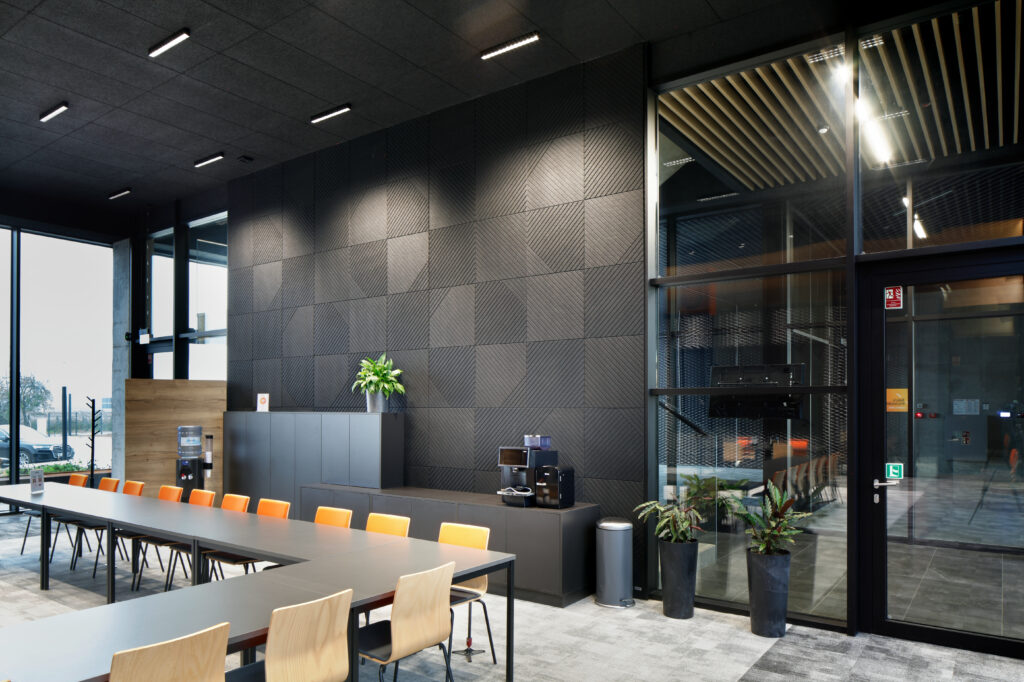
In large spaces with high ceilings, sound waves have much more room to travel. A single wall or a small ceiling panel cannot compensate for the energy generated by a large group of people. Here, the issue must be addressed in layers:
- an extensive, multi-module SilentScape structure spanning the entire conference table area,
- wall panels installed on at least two large vertical surfaces, covering at least 50% of the wall’s surface area
- a close relationship between the geometry of the panels and the lighting axes, the furniture layout, and the direction in which the participants are looking.
This is crucial if the room is used for hybrid presentations, where microphones pick up sound from throughout the room. In large spaces, felt panels must cover a proportionally larger area to effectively control the acoustics.
Three universal principles for designing felt-based acoustic solutions:
- Start with the conversation area:the conference table is the most important element; sound-absorbing panels should be installed around it first.
- A wall is more than just a backdrop:smooth vertical surfaces drastically worsen the acoustic performance of a space. Actively using walls as sound-absorbing surfaces radically improves workplace comfort.
- Ensure visual consistency:Acoustic systems should serve as a natural extension of the office’s visual concept, aligning with the brand, the corporate identity color scheme, and the furnishings.
The use of the SilentScape, TileFlex, and AbstractTile systems allows for flexible adaptation of technical specifications to the interior’s dimensions, ensuring a modern and professional office image.
Summary
A well-designed conference room should facilitate the exchange of ideas, not force people to constantly raise their voices. A conscious choice of felt panels and their implementation as a permanent element of the design guarantees success in both layout and functionality. In a modern office, design and acoustics must work in harmony.
The acoustic panels above the table help reduce sound waves near the ceiling, while the wall-mounted systems effectively perform sound absorption, reducing reverberation throughout the room. In small rooms, we focus on minimalism and localized sound absorption, while in large rooms, we rely on comprehensive, large-scale systems.
It’s worth remembering, however, that these are general guidelines that work well in most interiors, but there is no single universal formula for perfect acoustics. Every room has its own unique characteristics, which is why we always recommend a customized approach. We’d be happy to measure the reverberation time for you and propose an optimal, tailor-made solution.
At Feltdecor, we take a broad view of PET felt. To us, it’s not just high-performance sound absorbers, but above all, versatile materials with enormous design potential that allow us to create the atmosphere of a modern business. We invite you to explore our product lineup and the “Projects” section, where we showcase the full spectrum of possibilities for using felt in commercial spaces.