

Wondering if felt sound-absorbing panels really work? Discover their benefits, applications, and practical tips on how to choose the perfect solution for your project.
You know that feeling when, after a full day of work, you crave a moment of silence. You walk into a room, a living area, or a restaurant—and instead of calm, you hear conversational echo, clattering plates, or soundsbouncing in from the next space. Sounds familiar?
That’s acoustics—something we often remember only when it starts to bother us. That’s exactly why more and more people are paying attention to acoustic comfort: a quiet, balanced sound environment that actually allowsyou to rest.
One of the most effective—and at the same time incredibly stylish—ways to improve acoustics is using sound-absorbing felt panels.
This seemingly simple material, known for hundreds of years, is now making a strong comeback. Felt has become a symbol of silence, sustainability, modern design, and the coziness we want to bring into our interiors. Solet’s take a closer look at what felt acoustic panels really are, how they work, and how to choose the ones that will perform best in your space.
For an architect, it’s a material that opens up the possibility of designing acoustics just as consciously as lighting or colour schemes. Just a few sound-absorbing panels can transform a space from noisy and chaotic into warm, calm, and quiet.
What is a sound-absorbing felt panel?
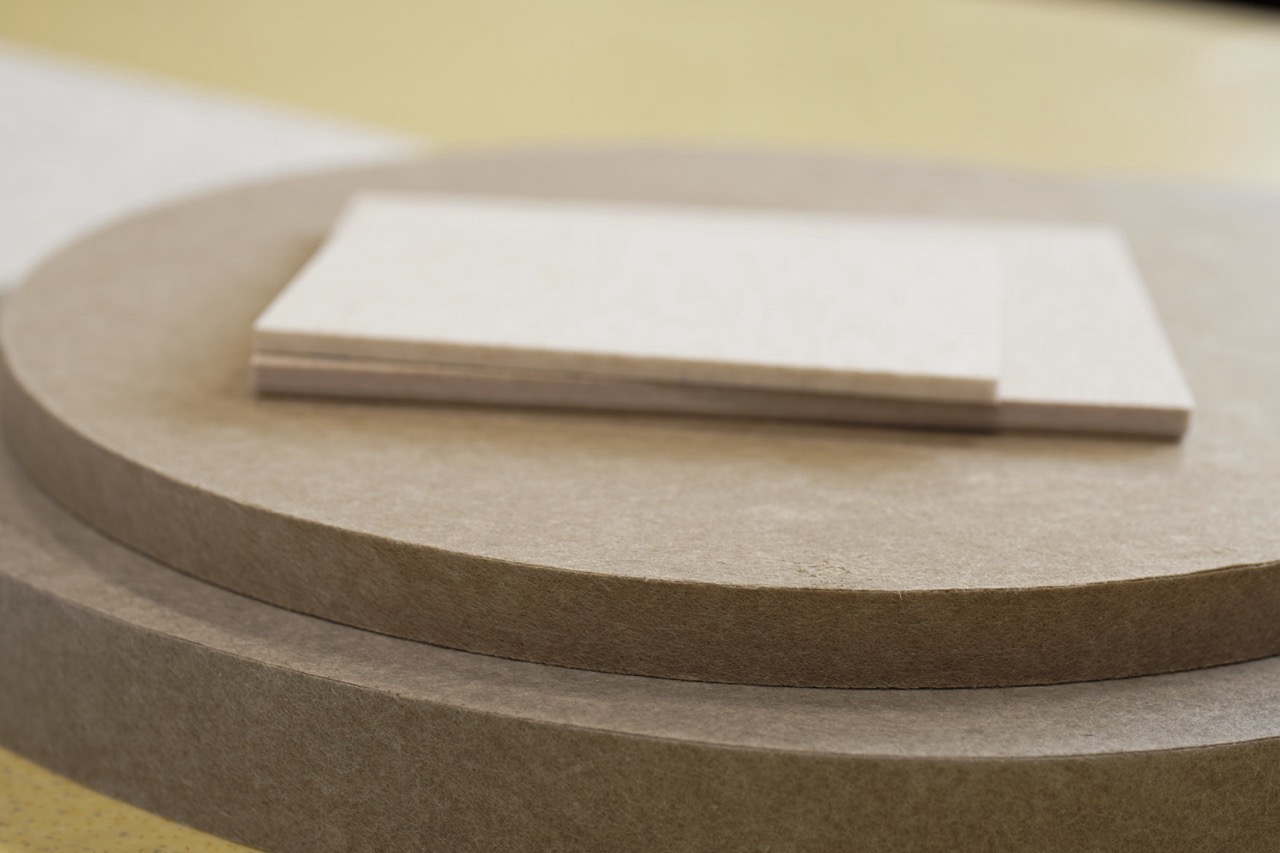
A felt panel is made of densely compressed polyester fibres and works like a filter for sound. Depending on the project, it can be made from natural (wool) felt or from recycled PET fibres. Yes, you read that correctly—modern office walls are often finished with panels that used to be plastic bottles. It’s a simple, eco-friendly solution that gives materials a second life while improving the quality of life in the spaces where they’re used.
A high-quality sound-absorbing felt panel stands out because it:
- absorbs sound across a wide range of frequencies,
- does not deform or yellow—even in heavily used areas,
- is safe—meets fire standards (e.g., B-s1,d0),
- is easy to install and keep clean,
- is environmentally friendly—made from recycled material.
That’s why felt panels are increasingly used not only in offices and restaurants, but also in home living rooms, children’s rooms, and relaxation areas. Silence becomes part of the interior design.
How does a felt acoustic panel work?
Anyone who has ever walked into an empty apartment or an unfurnished conference room knows that feeling: echo bouncing off walls, glass doors, and the floor. Sound circulates through the room, waves overlap, and acoustic chaos appears. This is exactly what can make even a beautifully designed interior feel tiring after just a few minutes.
A felt acoustic panel works like a soft noise barrier. Densely compressed fibrous PET material absorbs sound energy instead of reflecting it. Part of the sound wave is trapped inside the felt structure and converted into heat—imperceptible to you, but enough for the sound to lose its intensity.
You could say that felt absorbs excess noise before it has a chance to return to your ears. That’s why felt panels work so well in large open-plan offices, where dozens of conversations and devices can be heard every day. But they also perform just as well in home living rooms, where TV sound can fill the entire space, or in children’s rooms, where joy—and noise—have no limits.
Want to learn more about the material itself?
See the article: What is acoustic felt and how does it affect sound in an interior?
Benefits of sound-absorbing felt panels
- Acoustic performance
Let’s be honest—this is the main reason we choose panels. Properly positioned elements can significantly reduce reverberation time, which translates into real comfort. In quieter spaces we think more clearly, speak morecalmly, and relax faster.
- Aesthetics and variety of forms
Today, an acoustic panel isn’t a boring board on the wall—it’s a design feature. You have virtually endless choices of colours and cut patterns, thanks to technologies such as V-cut used by Feltdecor. You can choose hexagons, 3D panels, colourful mosaics, or even felt slats. Anyone who has ever designed an interior knows how difficult it can be to combine function with aesthetics. Felt panels do exactly that—they beautify and quiet a space at the same time.
- Sustainability
Many of us make purchasing decisions more consciously today. When you hear that panels were made from recycled PET bottles, it simply feels good. PET felt is an example of eco-friendly design and proof that you don’tneed to sacrifice beauty to benefit from better acoustics.
- Easy installation
You don’t have to be a specialist to install a panel. All you need is mounting adhesive or simple suspension systems. It’s a solution that can transform an interior in just one day.
- Safety and durability
Felt is flame-retardant, antistatic, and UV-resistant. It doesn’t fade and doesn’t lose its shape—so once installed, it can decorate a wall for many years.
Here you can learn what adhesive to use for installing acoustic panels.
 Where felt panels are used
Why is conversation a pleasure in some cafés and restaurants, while in others it’s hard to hear your own thoughts? The secret is acoustics. With panels, you can reduce unwanted sound. Felt panels work perfectly in offices, open-plan spaces, restaurants, conference rooms, homes, and hotels.
Want to know more about the material itself?
See the article: What is acoustic felt?
Types of felt acoustic panels
As you know, not every panel is the same—so it’s worth understanding the differences before you decide. Here’s a quick overview of panel types:
Wall panels
The most universal solution. Installed directly on the wall, they absorb sound reflections and eliminate echo. They work well in offices, restaurants, and homes. In our TileFlex system, you can create geometric compositionstailored to any interior.
Ceiling panels
Ideal for high rooms where sound “returns” from above. Lightweight installation and high effectiveness, especially in open-plan offices or lobbies. In the SilentScape collection, they come as suspended modules.
Acoustic islands and partitions
Mobile, modular, and very practical. They divide space “without walls,” improving acoustics exactly where noise is highest. Perfect for open-plan offices and meeting rooms.
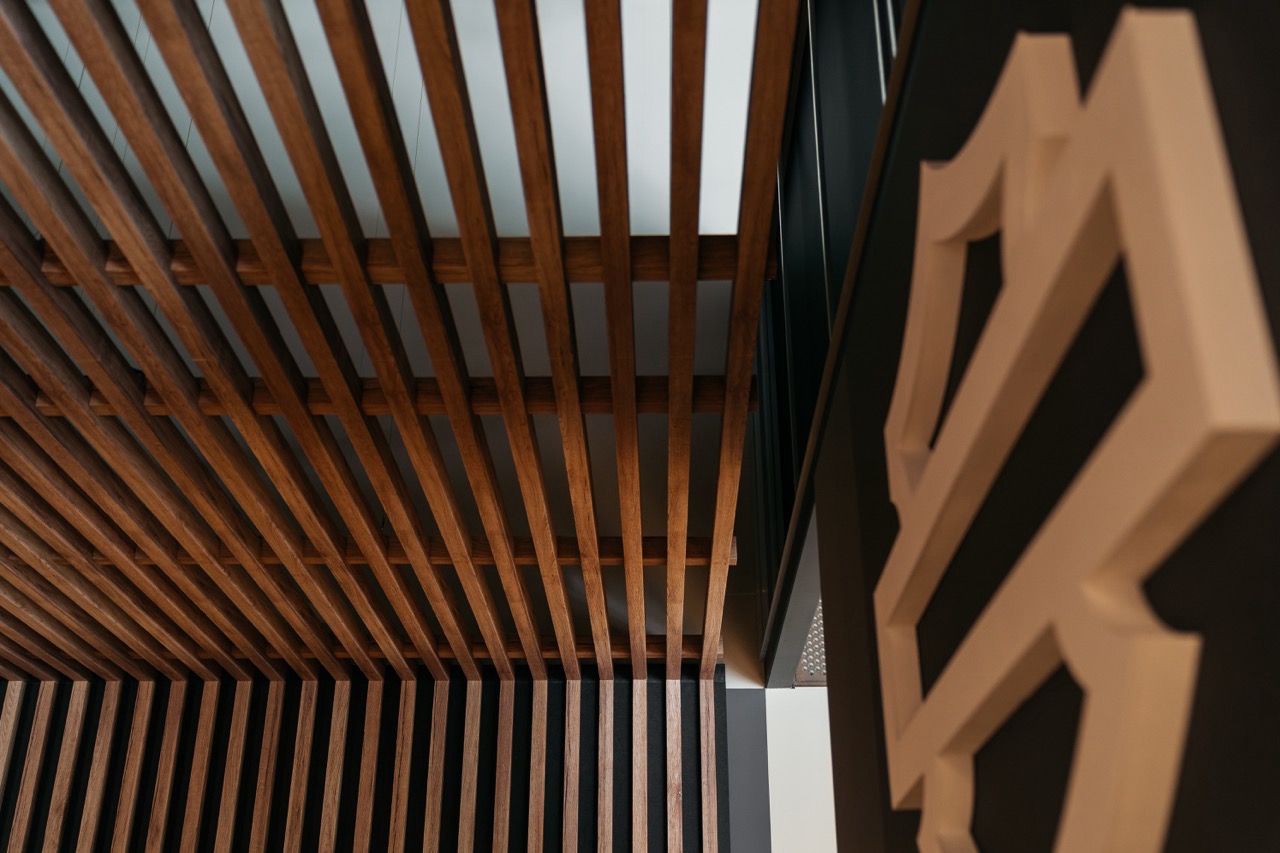
Felt slats
Spatial felt products with a linear form and the option of decorative printing, such as wood or stone textures. A great choice for representative areas, receptions, and residential interiors.
See also: the article How acoustic panel thickness differs.
What should you check before buying?
Before you click “add to cart” or place an order, pause for a moment. Here are a few things worth checking before choosing a specific model:
- Acoustic parameters
Not every panel absorbs sound in the same way. Check the sound absorption class (A–E) or the αW coefficient. The higher the value, the more effectively the panel reduces reverberation and improves speech intelligibility. To select panels correctly, it’s worth reviewing the acoustic standards for the specific type of space.
- Panel thickness
A simple rule applies: the thicker the panel, the greater the sound damping. Thin panels (6–9 mm) are ideal for homes and small rooms, while thicker ones (12–24 mm) work better in large offices, halls, and restaurants. Thickness should be matched to room size and noise level—any designer can find the right balance between aesthetics and performance.
- Material
Felt can be natural (wool)—soft, luxurious, warm—or synthetic (PET)—durable, eco-friendly, and easy to clean. Recycled PET felt is the most common choice today: it combines good acoustics with a responsible approach to the environment. It’s hypoallergenic and doesn’t attract dust. It’s also more affordable than natural fibre, while the visual effect is very similar.
- Colour and form
Panels are not only technology—they’re also part of the interior design. Consider colour, texture, and shape: do you want geometric patterns, irregular forms, or something more artistic? In collections like TileFlex and TileScratch, you’ll find both minimalist modules and decorative panels. You can adapt them however and wherever you want. You can also combine them with ceiling solutions in a way that can truly surprise with form and shape. See an example of our project in this style [here].
- Installation method and placement
Before buying, check how and where the panels can be installed. Some are mounted with adhesive, while others require a substructure or cable suspension. The installation method should match the surface type (wall, ceiling, glass) and the function of the space. In offices, easy removal often matters; in hotels—durability and user safety.
Is it worth choosing felt acoustic panels?
A well-chosen felt panel means effective noise reduction, years of durability, and a timeless look.
Felt on the wall – inspirations and trends
Interior designers are increasingly using felt to create full wall compositions. We’ve seen soft-industrial offices where grey felt pairs perfectly with concrete, and Scandinavian living rooms where pastel panels add lightness. Everyone can find something for their own taste—from geometric hexagons in a child’s room to elegant slats in a hotel reception.
Take a look at our article on 2026 trends.
A sound-absorbing felt panel is more than decoration. It’s a way to create a space where you actually want to be. Silence, elegance, and sustainability—these three words describe this solution best. So if you’re wonderingwhether it’s worth it, the answer is simple: yes. A well-chosen felt panel is a long-term investment in quality of life—in calm, in comfort, and in beauty you can hear… or rather, beauty where you no longer hear anything atall.